

Ed Latimore is a former professional heavyweight boxer (13 1 1), a competitive chess player, sobriety advocate, physics graduate, U.S. Army National Guard veteran, and a bestselling author of Not Caring What Other People Think Is a Superpower and Sober Letters to My Drunken Self. He grew up in Pittsburgh’s housing projects and fought poverty, addiction, and trauma with the discipline of boxing and the clarity of stoic philosophy. His newest book, Hard Lessons from the Hurt Business: Boxing and the Art of Life, was released last year.
—
Listen to the podcast here
Ed Latimore On Learning Hard Lessons And Not Caring What People Think
Our quote is from Muhammad Ali, “Don’t count the days. Make the days count.” My guest is Ed Latimore is a former professional heavyweight boxer who went 13, 1 and 1, a competitive chess player, sobriety advocate, physics graduate, US Army National Guard Veteran and a bestselling author of Not Caring What Other People Think Is a Superpower and Sober Letters To My Drunken Self. He grew up in Pittsburgh’s housing projects and fought poverty, addiction and trauma with the discipline of boxing and the clarity of stoic philosophy. Ed’s newest book, Hard Lessons from the Hurt Business: Boxing and the Art of Life was released in 2025. Ed, welcome. It’s great to have you on the show.
Thank you. Great bio, by the way. Great intro. Only one tiny correction. I just fought again after eight and a half years off. I fought in the summer and one.
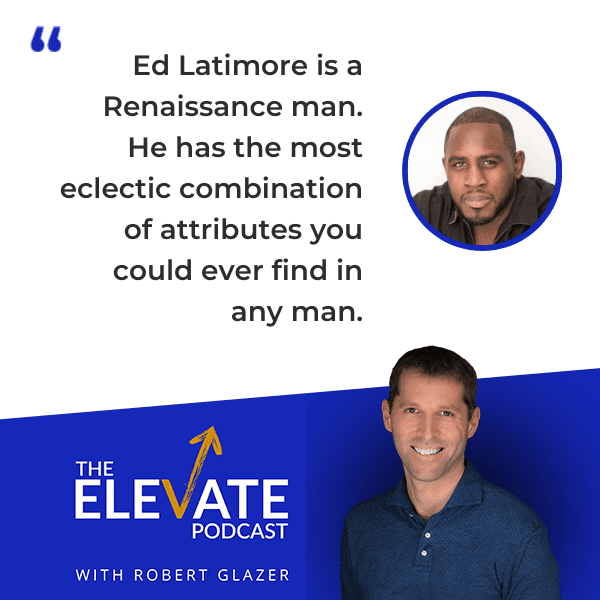
I had that as a question later. We’ll talk about that, but you are a renaissance man for sure. That has got to be the most eclectic combination of career attributes that I’ve read in any of my interests.
Thanks. As you said in that opening quote, I’m just trying to make the days count.
Army Veteran And Bestselling Author Ed Latimore
A lot of times I’ll ask the guests like, tell me about growing up or whatever, searching a little bit for the connection between what they do now and back then. In your case, the bridge is not that much of a secret. As I mentioned, you were born and raised in Pittsburgh’s public housing projects and raised mostly by your mother. What do you remember most from that? Particularly the early experiences formed your philosophical approach or what your mom parted to you in terms of value and ethics?
There’s two parts there. I’ll tackle the easy one that leads into the first. When I think back about my mom, a lot of it, but not all, was very strong examples of what not to be and how not to conduct myself. When I think back about my childhood, at least prior to age fourteen. Not a lot of happy thoughts ,a lot of stress just because of school. My school was relatively violent. I know at other schools, kids are getting shot, even the middle school. No one got shot in my middle school when I was there at least, but I fought a lot. The same thing in elementary school.
Did you win those fights?
You win some. You lose some. All that matters is people know that you’re not the guy to mess with because it will cost something. You’re always got to stand up for yourself. My elementary school was right in the heart of the project and my middle school was a collection of other projects that came together. There was a lot of stuff there. At home, there was constant abuse on different levels, physical and emotional mainly.
Those were like big deals. I learned early on that the best way to win a lot of games is to not even try and play them. I didn’t even know there was a word for my approach to things until I became an adult. That it’s called Stoicism. I was just like, “I got to control myself and do my best to stir clear of consequences and outcomes and keep myself safe. Retreat tomorrow in an inner space where I can control things and regulate things.”
It’s interesting in terms of thinking about what we control and don’t control. As you said, I’m sure you did not have the word for stoicism at the time. Someone once said to me, “If you don’t want to get into a fight, don’t start it.” They meant verbal. How many times are you in a screaming match with your partner and someone’s like, “I didn’t understand your point of view correctly. “You’re right, it never ends. You start with a verbal blow and they come back with a blow and it degrades from there. When someone said that, I was like, “That’s a pretty good idea.” Avoid it in the first place.
There’s a fairly big difference between a verbal and a physical education. Many verbal altercations I had growing up would turn physical. The general idea that you’re talking about is still the same. Also, prevention is worth a pound of like your analogy. What can you do to avoid this situation? No matter how it goes, it’s going to turn out bad.
The best way to win a lot of games is to even try to play them.
Both a verbal and a physical fight feels good for the first five seconds to throw the first punch and then the punches come back.
In a physical confrontation, you realize, “I might not be that guy. I’m not going to do this.” In verbal confrontations, you realize that you are probably wrong. Now, at that point, in a verbal conversation, you get the ability to express some humility and go, “My bad. I was incorrect here. Let me learn from it.” As you said, though. That’s not how most people react.
Starting A Boxing Career A Little Bit Late
Sorry, I didn’t understand your point of view. I had a note. You started boxing at 22. It also says rose to win the Golden Gloves in the national amateur championship while still excelling academically. I have three questions that go into this. You can answer them in any order. One, that seems late. Were you fighting in some other way?
No. It is late. Even for the heavyweight division where the fighters tend to start later for no other reason than if you trained your whole life.
They’re usually at gyms at fourteen years old.
If you trained your whole life from boxing because it’s such a catabolic sport, you just are not going to build the frame, unless you’re like 6’4” or 6’5”. A lot of guys do start later, usually after another sport where they put on some muscle. I started late because I was wasting my life and somebody called me out on it. It was embarrassing at the time, but it turned out to be one of the best things to have ever happened to me. It holds the trajectory of my life because it made me decide, “I’m going to go try boxing. Let’s see how it is.”
Who was it that reached out to you?
She didn’t have to reach out to me.
Who was it that gave you a lecture?
This girl I was dating. Her mom is a college professor and this is relevant. I dropped out of college the first time I tried to go and I was wandering. I would like rag on the whole college system and talk about how worthless it is and how much you can succeed without it. I still mostly hold that opinion with some nuance. The difference is I got a Physics degree. One day, she finally got tired of it and she was like, “Let’s pretend you’re right and college is a waste of time. Why don’t you tell me what you’ve done with your life for the past few years other than show up here and eat my food?” She then threw me out.
I was sitting there thinking. I was like, “She’s right. I haven’t done anything. If I die now, what do people want to say about me?” I played a little bit of college ball and I drank a lot. I said, “Let me start with the most interesting man in the world. Let’s start beefing up my obituary.” I was looking at two passes and I chose boxing. The other path was to enlist in the army, but that was right around 2008, when we were in Iraq. I said, “I want to change my life but not that badly. Let’s go do that.” That’s how I started. That was like the first time I made a decision. Not the first time but I went into a completely foreign environment. I had never been into a boxing gym in my life and I said, “Let’s see how far those will go. Let’s keep working out and getting better.”
It’s interesting. I had a guest Malik Muhammad on the show where he has this formula for change. He says, connection plus challenge equals change. Some people need a connection in order to challenge themselves. Some people need a challenge in order to connect. It sounds a little bit there. There was some respect there and so she challenged you and you listened to it.
It’s because I didn’t have role models growing up. I tell people all the time and I tell my coach. I’m like, “You’re definitely the first guy that I had as a role model.” I didn’t meet my current coach until I was 28. There was no one like God to show me anything. If my mom had said something, if she thought that I was doing badly enough, but I understand it’s so different and off. I wouldn’t have respected anything she said, so hearing that from somebody who was in a good position in life. She didn’t insult me or anything. She had broken down and it stuck. I can still remember what it felt like but that motivated a change.
To this day, I tell her because I’m still friends with the mom. I haven’t seen her daughter for years. I have no idea what’s up with her. I know she’s still alive because I haven’t heard that, but I still tell her, “You are the reason that my life changed, even if you don’t think of it that way probably.” I still do like to do the work but that started a path that opened up a lot of doors for me.
Going Back To School In The Most Unusual Time
You’re doing well academically, you were rising up and doing boxing or better.
The timeline is always confusing. I didn’t go back to school because initially, I dropped out. First off, I didn’t even graduate high school. They just let me walk and I was playing ball. I slipped around some cracks. I got to the school, the University of Rochester. I shouldn’t have been there. Not even close.
What year was that?
That would have been 2003 or 2004. I dropped out and then I didn’t go back to school. I didn’t start. I didn’t go. I’m going to fix this. My first class was the year I turned 30. My birthday is in February and school starts in January, so 29 to 30. Way deep in my boxing career I said, “I need to go back to school.”
What was different? Did you have the discipline then? What had changed?
Discipline is part of it but not as big as a part. Maybe, because you can’t phone physics. When I left high school, I was terrible in high school, and then subsequently terrible in my first attempt at college. My confidence and my ability to learn anything was shot. I was very much a fixed mindset type of guy like, “I’m here. This is what I can do. That’s it.” I watched how I developed boxing because I was terrible when I first started.
You wouldn’t know unless you knew the game because I was going in there and knocking guys out. That takes no skill. If they get better, you can’t knock them out. As I watch myself go from this guy, I wouldn’t say that joke of the boxing community. As anybody who knows boxing knew I was going to go far if I continued to level. To get into the point where I won a State National Golden Glove and then went on to win a national title then went on. I got the sponsorship and got this ranking. I said, “I can do this with my body. I’ve got this strategy for learning, acquiring information and putting it into practice.”
You started yourself to get better in one area.
I said I did this with my body. There’s no reason I can’t do it with my mind. It originally wasn’t Physics. It was going to be Engineering and then it was going to be Math then it turned into Physics. Either way, I knew I had to fix my biggest weakness, so I just did what I didn’t boxing. I went all the way back to where I was having trouble, which is what fractions and started moving up the ranks and learned. I’m absorbing every piece of content to find, solve all problems. I turned myself into a math person because I stopped believing that there was such a thing as a math person interestingly.
In terms of the timeline, the boxing is going while you’re back to school. Was the alcohol all weaved into this?
The whole time.
Were you like a functioning alcoholic?
I was certainly functioning.
When you were training from boxing, were you still drinking a lot or you would go through?
This thing was between amateur and professional boxing. In my amateur career I was full blown alcohol and it only got worse throughout my amateur career. It was probably not as bad as it could have been because the way amateur fights are structured and amateur tournaments are structured are always like on the weekend late at night. That’s no different than a professional rank. I cared enough about doing well in boxing that if I knew I had a fight coming up, I wouldn’t drink that week. On a lot of weekends, I would not drink because I’m fighting and getting ready for a tournament. I’m being protected by this. It wasn’t until my third professional fight because I started in 2008 and turned pro, in 2013.
It wasn’t until almost to the end of 2013. My first pro was January 26th, 2013 and my first day of sobriety is December 22nd, 2013, so my whole amateur career is functioning. In terms of the boxing ring functioning, great. Not as good as I could have been but great. The rest of my life was in shambles. Boxing saved me from myself a few times. There was this time I was very much about to figure out why I was going to have to live. Don’t you know, that is the same weekend that after I won the state, I went to the nationals.
I beat be the guy who ends up representing us in the Olympics. The people who sponsored him are like, “Why don’t you come on to LA for a while and see how you like being part of the program we put together?” I ended up out there for sixteen months and if it wasn’t for fighting. I’m winning those fights and gotten lucky being paired with that guy because I could have been paired with anybody else and they wouldn’t see me. I would have been in a bad spot. Boxing saves the day, though.
How Ed Become Sober In 2013
Was there a straw that broke the camel’s back moment in 2013?
There were two things that happened in 2013 that helped me get sober. The first long game was 2013. That’s the year I enlisted in the National Guard. When you’re enlisting in the National Guard, you have to still go through basic training and AIT or Advanced Individual Training for whatever your MOS is or your Military Occupation Specialty. You still have to go through all of that, then you go back to your base or wherever you’ll be drilling out of.
I was gone for almost all of the second half of 2013. During that time, that was the first time in my adult life that I was making friends, building connections and meeting people without alcohol as the context. Basically, it’s a little harder because nobody is talking and interacting. AIT is like pretty much college, except there’s no booze around. I’m making friends and being a school dude.
I start to see myself as a different guy. I’m like, “This is cool.” Now old habits die hard. I came back. I go out for two or three nights. I get drunk on the 21st or the 22nd, I should say. I wake up and I’m at my buddies house. I don’t know how I got there, but I know I drove because my car was outside. I was like, “I have a lot of stuff to lose now.” Finally, I had enough self-respect.
Was that it? Was that the last day?
I was like, “Let’s get this on point.” I gave a speech about this. It’s my only TED Talk where I talked about identity and how it was an addiction. One of the stats I found when I was putting all the talk together, the average number for relapses is two, but the median is like seven for people who quit. For a lot of people, the first time they decided to quit.
Many people do it on the first time.
A lot of people take a lot of trials. I was one of those people that took a lot of trials. What finally got out of the stick is I finally had enough stuff to care about and just because you’re drunk that doesn’t mean you’re stupid. I’m looking at what I could lose and what losing looks like.
Just because you are drunk does not mean you are stupid.
That was those relationships, the opportunity. What was the biggest thing for it?
The big four things. One, I was in the army now. If I get pinched in the Army doing something stupid, not only do I have to deal with civilian justice. I got to do with the uniform code of military justice and messes up my whole life. On top of that, I lose the reason I enlisted, so I can get money to go back to school. My career was taking off. I had to turn pro before I left for basic training. I had three fights and things were going very well so I said I don’t want to mess that up.
I had just met the woman who’s now my wife and the mother of my kid. I’m like, “This is a very nice girl. I don’t think she needs to be exposed to this craziness.” All those four things came together and I don’t want to lose her. Once you have some type of personal awareness of the people you’re interacting with and your responsibility towards them and how your actions affect them. You either get to become a better person.
You need to be letting people down that aren’t yourself
I’m like, “I don’t want to do that.” At the very least, what I didn’t want to do was hurt her. That’s what it was. I was like, “I know how things have gone before when alcohol gets involved. If it’s not going to go well because of the person I am, not the person I am when I drink.”
A Modern Take On Stoicism
We talked before but you write quite a bit about stoicism tied with modern wisdom. I’m curious. This is before Ryan Holiday’s books became well-known. How did you get exposed to stoicism? Have you made it your own? What is the modernization component of it?
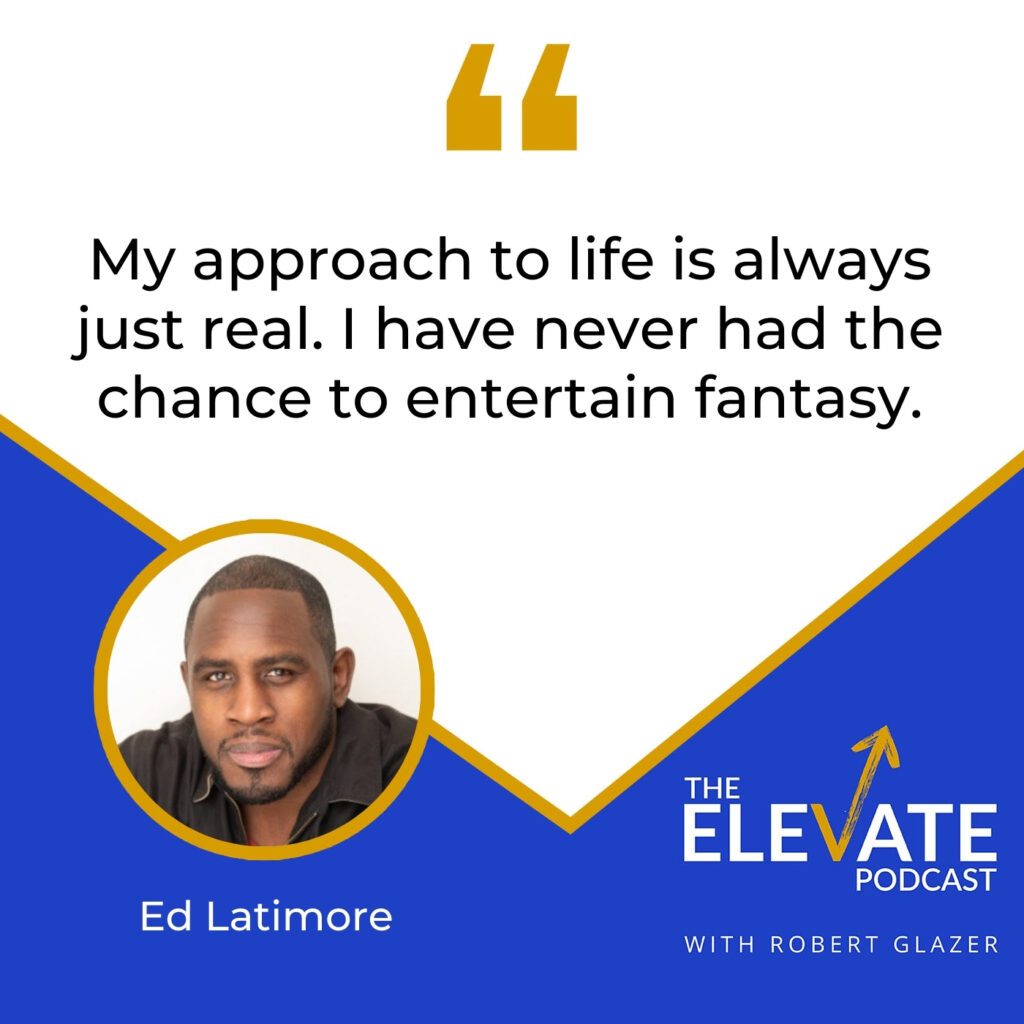
I’m pretty sure my exposure to it was somebody using it as an insult for me because of my approach to life. How I grew up has always been real. I have never had the chance to entertain fantasy or illusion about anything. I’ve had to learn to tamper so I could relate better to people and this all ties into the modernization aspect. I got called one time because a lot of people say, “It’s like Spock.” That’s what they say from the old Star Trek. My mom used to say that to me too when she figured out what I was doing. I realized that officially this is like stoicism and I guess Spock is stoic, at least people think of.
I never thought of it that way, but that’s interesting.
That’s how I was like, “That’s what this is,” and I do a little more reading. I’m like, “I resonate with all of these principles.” This, at least to me, when I look at all the problems people get into. It typically stems from them trying to control things they can’t control or reacting to things impossibly. I said, “If I can continue to harness and polish this, I’m going to be alright. At the very least, I won’t make any big mistakes.” Thank goodness, that’s what it’s been.
As far as the modernization aspect of it, I don’t think I put a modern spend on anything. What I think is I expose or focus on what would be the corollary or the downstream effect of all of this. Which is that it makes you better at dealing with people because you’re able to control yourself. You don’t let yourself get drawn down to the level of a petty disagreement or petty argument. You stay in control. Whether that makes the interactions better or not, what it does is it makes sure you don’t ruin the interaction because of your misinterpretation.
I strongly believe that your relationships with other people are the most important thing. If you lose those, then what’s the point of anything? I tell folks all the time. I go look, “Imagine you succeed in every way possible. You come home and there’s nobody to talk to about it. Nobody wants to talk to you about it. You have no friends. On the other hand, that’s good. One of my favorite quotes is from the rapper, J.D KC. He goes, “I’d rather be broke than to be rich alone.” That always stuck with me.
We have a loneliness epidemic, particularly among boys and men these days.
It’s a very big deal.
Do no let yourself get drawn down to the level of petty disagreement or argument. Stay in control and do not ruin the interaction.
An interesting thing on stoicism and I’m curious how you define it. I think there’s a big lie we tell ourselves sorry between where the break between stimulus and response is. I would say like, you and I could get into a car crash. I could be like, “That could have been worse.” It’s a $500 deductible and I go to work. I have a great day, I close a big deal and I go home to my wife and kids. I tell them about the great deal and the car crash and how the day ended up great.
I should have made myself the bad guy. You’re like, “This is the last thing I need.” You go to work and you fight with everyone. You lose the deal and then you go home. How was your day? You’re like, “Everyone’s fighting with me.” The best example of this for me was a restaurant during COVID. You had a set of restaurants then COVID hit. No one could control COVID. It shut down the world. That’s the uncontrollable piece, but yet a bunch of restaurants were like, “Until we can go back to what we were doing before, we’re not going to do anything. We’re going to wait and see.”
Most of them didn’t make it. Other ones were like, “We got to figure out DoorDash and every delivery thing in the world. We set up outside tables. We’re going to sell wholesale food. We’re going to do whatever business we need to do to keep our staff busy.” Again, taking the piece that you can control. We couldn’t control COVID during the shutdown. I certainly can decide to put my head in the sand and be angry or go do everything that I can do to try to mitigate the situation to make it better.
That’s difficult for people, and here’s my secret to it. It’s a combination of gratitude and perspective or rather a perspective that is driven by gratitude. People push back when I say this but I say you always have to ask yourself. Could this be worse? You can find a way it’s going to be worse.
Eighty percent does it could be better and 20% does it could be worse on average.
For me, that is not just a mind trick. I have vivid memories of my childhood and what I experience growing up and I’m aware of that. For a long time, that was my baseline. Everything was great. Everything is still great but it wasn’t until I started to travel. I would see the shanty-like towns around Mexico City that’s just metal. There is no running water. Kids are playing soccer on the concrete. We’re down the Dominican Republic in Punta Cana and we were doing a little volunteer thing.
These people have floors. There was like a basing on the floor. Whenever it rained, the mom would just wash everything out. I’m like, “Oh, okay.” Now I’m always careful to say I grew up as poor as you could grow up in America. Now my baseline is, there’s a whole lot of people around the world that’s not like that. We were in Morocco up in the Berber Villages and it was like the open markets. They were selling meat and they were covered in flies. I was like, “This is not something I would eat, but this is life. This is the regular thing. Everyone seems to be throbbing and doing alright. Nobody’s dying.” Either it’s not that bad or my perspective is like no.
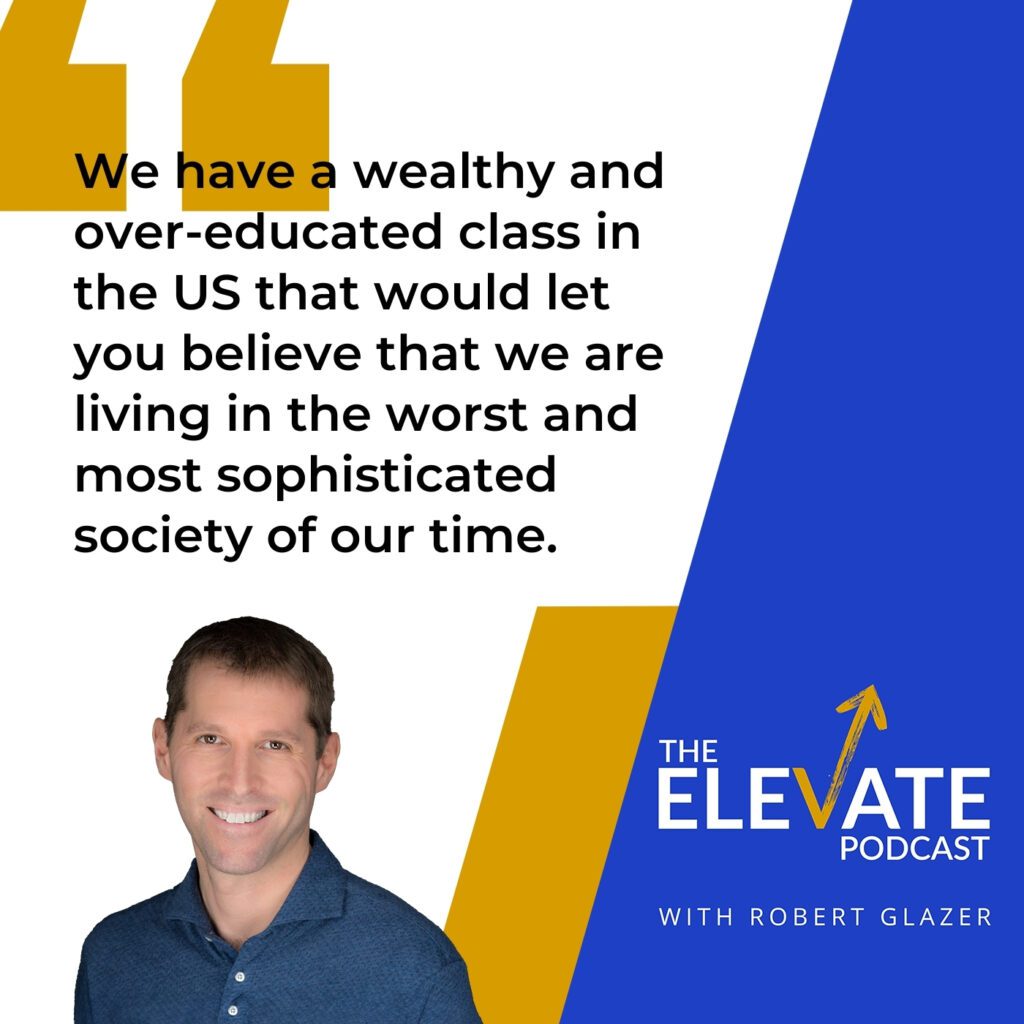
This is so important. I talked about this a lot because we have a wealthy, over-educated class in the US that would let you believe that we are living in the worst, most suppressive society of our time. I’m like you to travel. I’m like, “You got to go visit some other places or some other societies.” If you think this is the worst part but you’re standing with your laptop and your iPhone and calling an Uber and Starbucks, “We need to tear this all down.” That, to me, is just rich.
It’s incredible but that’s what happens. One thing I find interesting in this regard is that, when you look at the people who commit suicide after losing things. Compared to people who’ve never had something. The suicide rates are lower. Change is the problem. It’s not being poor. It’s the change. If all you’ve ever known is one thing and that thing is great. Your floor is high. You have a long way to fall.
High expectations are not good.
That changes your perspective because in reality you have a long way to fall. In your perspective, you’re at the bottom. You think, “It’s so bad. It couldn’t possibly be worse. It’s absolutely worse.” When I see people complaining on social media, I’m like, “Do you understand that you are holding a thousand dollar minimum device to make this complaint or you’re on a computer and you’ve got a fairly reliable electric system.” If you need some food, you can just go pick it up. If you don’t want to eat it, then you can put it in the refrigerator.
It is weird because if you go on the Twitter ecosystem or TikTok, you think it’s the worst thing ever. Weirdly, humans are the nicest to each other on aggregate now that they have been in history. It doesn’t ever feel like that but it kind of is.
I always see these people go, “Why would you ever have a kid during these times? How can you bring a kid into this war?” I’m like, “Me, as a Black man, I’m so happy that my great-grandfathers didn’t feel that way.” That always freezes people in their tracks.
Who are probably in the midst of the great depression or a world war or something.
We just go back. You got the great depression, the world wars, Jim Crow. It’s actual slavery, but here I am because they didn’t go, “This is kicking our ass.” We should not continue to make the next generation. We should just give up.”
Ed’s New Book Hard Lessons From The Hurt Business
The new book Hard Lessons from the Hurt Business. I love the title Boxing and the Art of Life. It’s a memoir, but I know you’ve called it a survival manual for those feasting addiction, poverty or self-doubt. Probably self-doubt is the largest one of those. They were double counts with a lot of these things. What are some of the core lessons from the book that helped you overcome these points of adversity?
The overall theme as I look back because writing is crazy. You got this idea, tell the story, step back and go, “That’s the point. That’s the theme.” I wasn’t even trying to make that a thing I was just writing. As I realized, looking back on the theme, the main idea here is that we can summon it up in two sayings. One, the difficulty of something is irrelevant if it’s vital to your success. I have lived by that. It doesn’t matter how hard it is. If I need to do it to make progress, then I do it. A funny thing happens. It’s always harder in your imagination than it is when you go to do it. If people can get out of their heads and just take action, they’re going to be in a much better place.
Everything is always harder in your imagination than when you actually go do it. If people can get out of their heads and take action, the world would be in a much better place.
The second idea is they’ve given enough time. For me, specifically, it was giving enough time. I could learn anything assuming I want to. More generally, you have to be patient with yourself and realize that if you are committed to taking on a challenge that will be difficult and is vital to you making progress or attaining something you want. It’s going to take a little while but it’s not like that’s wasted time. You’re getting skills, making connections, and becoming a better person.
Believe in gratification.
I got this fresh haircut hours ago and I’m talking to the barber. He’s built up his practice over 15 or 20 years. He said every time he tries to bring a young kid in, to have them developed their skills. They always want to get the big client booked immediately. He said, “It doesn’t work that way. I’ve been doing this for longer than you’ve been alive some of you. You got to be patient.”
This is what DoorDash and cell phone and the world events and gratification, unfortunately. It’s just waiting. It seems hard. We don’t even like waiting in line. We get too distracted to wait in line these days.
It’s crazy how our perception of time has changed. What used to be a long time, it feels like an eternity and what used to be a short time feels like a long time. You remember 6 to 8 weeks. That’s like the standard for something being shipped to your house.
You order something and it says it’s going to be five days now. You’re like, “Oh my God.” I ordered a lever on Amazon. I was helping my brother-in-law assemble something and it showed up at his house two hours later. It was unbelievable.
Nuts. That’s the world we live in. That’s changed everyone’s expectations for processes and outcomes. That’s a terrible thing because I can’t think of anything worthwhile that you can gain shortly. It all takes a process. We were talking about COVID earlier. My wife is a travel agent. She books pretty high in trips from people. During COVID, we were very much a single income house because nobody is traveling. Her business built right back up because it was built slowly over time, referral, client back and it was slowly expanding. That made it more robust against any type of change. Travel gets wiped out. No one travels.
That’s also where loyalty is, how people credited you, how they took care of you and how they acted. I think people remembered all that stuff.
People remember how you made them feel long after they forget the job you did or what you said or anything. Being likeable goes a very long way in life.
A couple quotes from the book I want to run by, “If you can’t beat your environment, change it.”
When I first got sober, I didn’t think that was a thing. About 3 or 4 years later, I came to understand the power of your environment. A big reason why I am not a statistic and a demonstration of survivors bias is because when I was fourteen, back when I was saying how my life changed. I went to this high school completely across town in a completely different social economic environment. It didn’t seem like a big deal.
I didn’t think it was a big deal, but over time I realized it was a big deal. It was a huge job. I was on a different environment. It allowed me to be a different version of myself. It’s the same way with drinking, too. Which is a very conscious decision that I was aware of what it could bring me and do to me. I couldn’t be hanging out with people who always drinking.
I was going to say, “If you don’t want to drink, don’t live in Newcastle, England.” I go to the bar at 2:00 PM every day. Will power is not that good.
At least not at first. Now, I can probably go kick it if they’re not. I would be, “I’m good. It’s part of me.” When I was building a new sobriety habit, I had to change the environment. I had to make everything a reflection of what I was trying to do. and that made what I was trying to do appear stick.
The harder you work, the luckier you get.
Lucky is a weird thing. People don’t realize that luck is a moral. It’s not good or bad. The only thing that matters is your position relative to the unintended events that unfold from it. If you are trying to do something constructive, what you tend to create or downstream unintended higher order effects that are also constructive. Some of those are going to come back around when you least expect them. They’re going to be putting things in motion that you’re not aware of. It’s only going to matter if you’re in motion, if you’re trying to do something.
It’s like the story that I talk about how that sponsorship saved me. There’s the luck of who I drew to fight and the year it happened. All types of things that I can’t control. I could control busting my ass in the gym. That, I could control and I took complete control over that. That put me in a position to even have that opportunity because you don’t just get an invite to a national tournament. You got to win the state level.
How To Get Rid Of The Blame Culture
The other theme in your book is finding self-mastery through forgiveness, embracing the blows and tying purpose to adversity. How do you think about guiding readers to move beyond blame? We seem to have a culture where it’s not even the things that were done to you. There’s a victim mindset, whether it was my grandparents or great-grandparents.
I challenge people to point to me, to a great leader, or someone who’s accomplishing who’s whole thing was agreements. I haven’t had anyone point me an example, but we just see this talk. It’s like, “You’re not responsible for yourself or your reactions,” because something happened. You might objectively be in a good place. This just seems like the total opposite of what you’re talking about. How do we get people away from a blame culture into more empowerment and what they control?
Two big things come to mind immediately. The first thing is with a lot of this conversation. We have to focus on what’s in front of us and what we can’t control. One of the downstream effects to that is that means focusing on objective fact and dealing with it. No one is going to deny for example that there was a heavy amount of institutional racism in this country. No one will deny that.
Some people probably would. We should not deny that. That should not be denied.
We’ve changed the legislation and we’ve made this a very wonderful place. My wife is Portuguese. If you look at on the street, she looks like a regular old white woman. People forget that up until 1967, half this country, we wouldn’t even able to get married. My mom was born in ‘62, but this is the past. This is the world we live in now. We can’t move forward if we continue to cling to the past. We’re clinging to the past because we have not embraced this idea of we can only work with what we can control and we need to deal with that.
Forget everything goes. Now, there’s some other underlying things. I always say, you can’t trust activists who are not part of the group they’re advocating for. The incentives are all misaligned, especially if money is involved. To deal with that means you have to take in a spirit of self-control and focusing on what matters. That’s part one. The second part of it is, I’ve wrestled with this idea a lot. I’ve gone back and forth between humanity’s hopeless and we’re going to wipe each other out before an asteroid gets here to there might be some hope now.
What I’ve centered on is you can always find an offence if you’re looking for one. What if we collectively just went, “We all messed up. Let’s just start anew. We’re going to wipe the books clean and then move forward.” Again, the incentives are grossly misaligned, especially in the media. That’s the worst. If I were to wave a magic wand and I couldn’t imbue a certain set of traits or perspectives on humanity.
It would make it possible for us to move away from, what we’ll use a nice blanket term here, this victimization culture. I would have people focus on what they can’t control where they develop self-agency in all areas of their life. Two, understanding that nobody’s perfect. I can’t judge a photograph because the photographer has taken the time beforehand. What I can judge is a live movie from what I’m watching.
What I do and how I show up. I’m going to get the time for a soul quote. It’s so good. Have we reached the ultimate definition of insanity that we judge someone not by their actions now but by what someone did before they were even born? We’re taking away personal responsibility from a lot of people. We’re saying, “You agreed for this reason or you’re wrong for this reason and so you can behave badly.” I don’t see how that ends well.
It’s the worst and a practical example. This comes up in different categories. When I was getting sober, I always say once I figured out why I was drinking so badly and why I had that problem. A lot of it stems from my childhood. Imagine if I’m in front of the judge after I killed somebody and got a DUI. You got to understand my mom whoopped my ass man badly. I had boy friends and they whoopped my ass when I was a kid. I had no choice but to drink. I should have taken care of that before you got behind the wheel and messed up. That’s the problem we encounter. If I could do that, and a lot of people can’t, though. Only because it happened to you, it doesn’t mean you need to go do it to somebody else.
The people invoking this generally inversely have had less direct negative things. It’s like it was you and it was ten years ago, versus some of the people invoking this. It hasn’t even impacted their life and they’re showing up with a pre-built-in excuse for it.
It is problematic. It’s the worst condemn problem because if you don’t deal with the consequences of something that you try and get someone to do. You’re going to get them to do all those things. There’s no incentive for them to take the best path for themselves because you’re directing them. What you see a lot of times and not that it will go off the rails but it’s here. When you look at a lot of the activism in this country, what you see is that. You see, the people who are least affected by these things are the most angry or even worse, which I find hilarious.
When you look at a lot of activism in the United States, the people who are the least affected by social issues are the angriest.
I always tell my sister-in-law. She lives in Center City, Philadelphia. Philly has got a crazy crime rate in general. There were just fun stories she was telling us or this message exchange. Where there were these kids running down the street. It looked like they had guns. It turns out they had Nerf guns. She says she found all bad about calling the cops. I was like, “Chill out. That White kid is going to get you killed. You absolutely should have called the cops.” What you get is like you get people who didn’t like for whatever reason.
Sometimes it’s not this pure incentive. A lot of times they legitimately feel guilty. Now, I have no idea how White guilt feels for a lot of reasons, but I see this a lot. It’s like, we’re going to excuse some things because it’s not their fault. You don’t realize when you don’t hold their feet to the fireman, they don’t know how to move the right way. There’s a great Law and Order episode about this, too. Where a girl decides she’s not going to press charges against her rapist because of where he’s from and everything like that. That’s my guilty pleasure when I’m in a hotel.
Is this SVU?
That’s the only one that comes on.
That’s the point. My family and I have watched all twenty seasons.
It’s crazy. I didn’t even know there were so many seasons and I went on YouTube.
It’s been running for two decades.
I’m just old. That’s all that.
Going Back To The Ring After A Hiatus
You mentioned this before, but you originally finished professional boxing in 2016. You return to the ring in 2025 after an eight and a half year hiatus and won by TKO at age 40. That’s an incredible feat. Why did you decide to do it? How did you do that both mentally and physically?
I have four straight answers to this. One, I have a book coming out about boxing and the role it played in my life. When I was looking up how certain books like, mine performed and what tended to drive the performance. I kept coming across David Goggin’s Can’t Hurt Me. That kept coming up no matter how many angles I took.
People who haven’t read the book don’t realize that he’s a special Ops guy, but most of the book is about his running. I said, “This seems like a good plan.” That’s reason one. Reason two was I had started coaching a few years ago. I wanted to make sure everything that I was teaching stood up in the boxing court of law. Spoiler alert, there’s no such thing. Boxing is very superstitious in the sense that God’s wouldn’t do something without having a basis for it just because they saw at work one time.
I won’t even say even if because there are a lot of guys coming into the sport with a background in physics or biomechanics or even just basic athletic training. Boxing is the only sport with somebody who has never competed or can decide they’re going to coach one day. It is insane and it happens all the time. As I was doing this, I said I don’t want to be that guy even though I competed. I want to make sure I’m teaching well.
What I discovered and I figured it out were some of the weaknesses and why I had those weaknesses when I was competing. I got curious. Once I worked out how the body should move in the boxing ring, I can do one of two things with this information. I can either argue with coaches all the time. Coaches who don’t have even a shred of my experience, but they’re going to argue. Maybe I can go prove that what I understand works. Being me, I said, I’m going to go do this because it aligned with the book. Reason three, I discovered two health issues that I had. I started working with this telehealth concierge service called Rebel Health Alliance.
I haven’t heard of that.
It’s a great program. They have great doctors. One of the things they do is they do a genetic analysis and a deep blood work analysis. It turns out, I have a form of hypothyroidism and I’d wonder, “Why the heck can’t I get below 225? This is stupid.” I’m watching my calories. I’m looking at my work level and nothing’s happening. I’ll dive into the weeds about this. It turns out my reverse T3 was super high and my free T3 was super low. I got 25 micrograms of artificial T3, liothyronine. In ten days, I had dropped almost 10 pounds.
Now, I walk around very lean and very healthy. Also, my asthma was coming back. I didn’t realize that either. My blood CO2 was creeping up. It looked like I had COPD, but I’m like, “This is nuts. I don’t have a COPD. I’ve never smoked a cigarette a day in my life.” I got it looked at and they say, “You just need a daily inhaler.” I got on that and bam. I’ve been fighting before I was a pro. It’s like a car with a bad engine with low mileage, but now everything is fixed. It’s like, “This is crazy.”
The COPD might as well take the car out on the highway.
Here’s the last one sticking with that analogy. I was like, “If I’m a truck, I’m a little truck man fighting big trucks.” I’m a small heavy weight. I’m only 6’1”. The average height in the division is 6’4” and that is skewed heavily to the left. Most of them are over 6’4”. They’re all weighing like 235 minimum. I said, “I should have been a cruise away,” but the cards never worked out. The sport changed in terms of the height and size of these guys right as I was turning pro. I had built everything up around being a heavy weight. I was like, “Let’s just stick with it.”
I realized it should have been a cruise weight, where we’re like they won’t be so much bigger and so much stronger. This last fight I had was the biggest weight difference I encountered. I came in at 215 because I’m lean now. This guy came in at 258 and I was like, “This is going to be a hard time.” He hit me with a good right hand. I was like, “I’m in danger if I don’t end this fight.” I was able to swallow those things and come together. That’s why I’m doing it. If it was just one or even just two of those things. I don’t like the sport enough.
It’s a lot of work.
As far as how, because I had put all that work and understanding of biomechanics. I had a plan now for what to do and how to work that along with a lot of the stuff my coach had independently converged on but from a different angle. It’s like the art of it versus the science. I was able to get in there 3 or maybe 5 days a week, but it was like 90 to 120 minutes of very focused work on what mattered. It made a big difference, and I’ll tell you how I know aside from winning. The TKO was a body shot. Anybody who knows the game, knows the body shots. It’s something you rack up over time and they paid dividends.
It’s rare to see a guy get dropped in the first round with a body shop. Not only that I do it. My coach have for the guys fighting that week and we’re feeding off each other. He’s taking the ideas that I brought from biomechanics. I’m integrating those and feeding them back to them, but what he’s giving on the art side of it, is how to train the footwork. One with the body shot, the other guy, Daniyar and Paul, second round body shot and the other guy had a knockout with a right hand then I got won by decision. That’s three guys who won at their fights with body shots early.
The one got Daniyar, because he’s a gold medalist. These weren’t scrubs. His opponents were like 265, he put him down in the second round with a nasty body shot. It was so bad that the ref ruled a slip. He was telling him to get up and he couldn’t get up. He said, “He knocked him out. That’s a bad look.” He waved it off.
He had a cheat code and it worked.
It’s only getting better because as I learn more, it’s like I have a whole new brain for this stuff, which is nice. It’s fun.
It’s like big data when it comes to boxing.
I’m like one of the only people who looks at it this way. Boxing is the broken master sport. There’s not the big money and the big media that cover like the big four, basketball and football.
If you had AI or some accounting op where you did the damage. That’s interesting.
It’s difficult to teach because to get this you have to know how a body should move and how we generate force. It’s a heck of a thing to figure out but I’m happy I took the time to figure it out because I kept myself healthy. I’m not drinking. I’m eating well and staying active. It’s not as difficult. It’s difficult for other reasons because when I was fighting before, I didn’t have a kid. Now, I have figured it out. That was the challenge, because some nights you weren’t sleeping and then I had to balance time on my wife. We live by the calendar because she works for herself, too.
Get In Touch With Ed
Ed, where can people learn about you and find your book and anything like that?
If you’re born with the name, Ed Latimore, I feel sorry for you because I’m Ed Latimore everywhere. My website is EdLatimore.com. I’m on @EdLatimore on Twitter, Instagram, YouTube and on LinkedIn. As far as where to find my book, you can type Ed Latimore into Amazon or you can type Hard Lessons from the Hurt Business to Amazon, Barnes and Noble or wherever books are sold.
You will find him. Ed, thanks for joining us and sharing your story. You have incredible insights on resilience, transformation and how to bounce back from some of life’s hardest blows. I appreciate you joining us.
I appreciate you having me on. I never take a lightly when someone has me in their platform.
You can learn more about Ed and his work on the episode page at RobertGlacier.com. If you enjoyed this episode or the show in general, I just have a small favorite ask. Do you mind taking a minute to share this conversation with Ed with someone you think will appreciate it? The show’s grown almost entirely through word of mouth. I know that I read when two or three of my friends say, “Have you checked this out?” It’s still the best way for new me users to discover the show. Thank you again for your support. Until next time. Keep elevating.
Important Links
- Ed Latimore
- Ed Latimore on LinkedIn
- Ed Latimore on Instagram
- Ed Latimore on YouTube
- Ed Latimore on Twitter
- Not Caring What Other People Think Is a Superpower
- Sober Letters To My Drunken Self
- Hard Lessons from the Hurt Business
- Malik Muhammad – Previous episode
- Can’t Hurt Me
- Rebel Health Alliance


