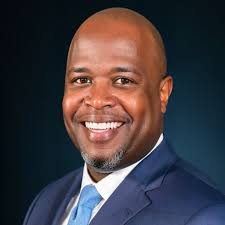

Mick Hunt is the host of Mick Unplugged, one of the most popular podcasts in the world, especially in the leadership space. Mick is a highly in-demand motivational speaker for the Fortune 500 and top universities, with audiences as large as fifteen thousand. Mick is a leadership trainer and executive coach to the world’s top leaders and is also a member of the Forbes Coaches Council and Forbes Business Council. And he is the author of a new book, How To Be A Good Leader When You’ve Never Had One.
Mick joined Robert Glazer on the Elevate Podcast to discuss his remarkable rise, the qualities of good leaders, and much more.
—
Thank You To Our Elevate Podcast Sponsors
- Shopify: shopify.com/elevate
- Indeed: indeed.com/elevate
- Headway: makeheadway.com/elevate (Promo Code: Elevate)
Listen to the podcast here
Mick Hunt On How To Be A Good Leader (When You’ve Never Had One)
Welcome to the show. Our quote is from Les Brown, “Shoot for the moon and if you miss it, you’ll land among the stars.” Our guest Mick Hunt is the Host of Mick Unplugged. One of the most popular shows in the world, especially in the leadership space. Mick is a highly in-demand motivational speaker for the Fortune 500 and top universities with audiences as big as 15,000.
He’s a leadership trainer and executive coach of the world’s top leaders and is also a member of the Forbes Coaches Council and Forbes Business Council. He’s the author of a brand new book called How To Be A Good Leader When You’ve Never Had One. Mick, welcome. It’s great to have you on the show.
Robert, I am glad to be here with you. I’m honored to be here and a wonderful introduction, by the way.
Mick Hunt’s Childhood Experiences And Influences
Thank you. I always like to start at the beginning with your childhood and your book opens up with a very powerful anecdote about you and your mother on Christmas Eve when you’re ten 10 years old. You made this pretty easy for me. Can you tell me about that story?
It was on Christmas Eve 1988. The ten-year-old me was wanting to be outside when I heard all the kids outside. I’m from the South, so we don’t have snow. It wasn’t dramatic out there but you’re out of school. Everything’s going well, but I wake up to sobs from my mom. I knew exactly what those sobs meant. Every day for the first ten years of my life, I witnessed my mom go through physical, emotional and financial abuse from my father who lived in the same household.
I decided at that point that enough was going to be enough. It’s ironic that you chose the Les Brown quote as the quote of the day or the quote for this episode because what was going on was I heard Les Brown say on those portable TVs, “Shoot for the moon because even if you missed, you’ll land amongst the stars.” I told my mom, “I’m going to be great. I’m going to change our life. I’m going to change your story so that you can be happy every day.”
My mom’s tears stopped. She came up and gave me a big hug and said, “Shoot for the moon but don’t miss.” Les Brown is one of my mentors. He’s like my spiritual father. We talk every day and I always tell him, “You need to change that saying now. You got to shoot for the moon but don’t miss because my mom said I couldn’t afford to miss.” I knew exactly what she meant. If I was going to change her life or change the trajectory of her, I couldn’t make mistakes and miss. That’s been the foundation of me for all of my life.
I know you describe that moment as what turned you from a child to a man. What did you mean by that?
I couldn’t be a ten-year-old anymore. If I made a promise to my mom and that became my because, my deeper purpose, I had to fulfill that every day. Being ten-years-old and having your mom depend on you, count on you and want the best for you was something that most ten-year-olds couldn’t do. I tell my story all the time. At that point, a ten-year-old boy died and I became a man. I literally started thinking differently. I started thinking about the future. I started understanding what we call emotional intelligence now.
It’s like learning how to read people, how to listen, how to be careful with the words that I chose and the words that I spoke. Unlike most kids who want to play and go spend the night at a friend’s house or house sleepovers. I was focused on, how do I change my mom’s life every single day? I was no longer a ten-year-old boy. I literally had to become a man.
There’s been some incredible positives of this for you, your mom and everything you’ve accomplished. It’s hard for me when I hear someone say that but I also think it’s important. I have a friend who says, “Pain and purpose lie very close to each other.” When you say the 10 ten-year-old died that day, that also has a little bit of a cost.
The cost was I sacrificed some friendships, which now I can say that I did. I’m not going to say I’m upset about it. It cost me not living a childhood as a child. Again, I’m not complaining about that. I’m not saying I would go back and do anything different.
You’re like one of these adult Disney World people now?
I’ve never even been to Disney. It’s all the kids and wife. You guys enjoy that, but no. I didn’t. It’s funny. I will talk now. I don’t think I’ve ever seen a Disney movie. I didn’t do the ten-year-old things. I’m not saying that I was like this rigid ten-year-old that was dressing in a suit every day and all that jazz. I’m just saying my mindset was much different. It wasn’t that we grew up poor or anything like that. I knew that in order to change lives, I had to do different things. I had to think differently.
Mick’s Most Memorable Mentors In Leadership
You talk about being naturally drawn to leadership at a young age. I’m curious. What was your model of that? You had some negative models. Sometimes, that’s the model. Who were the mentors of effective leadership when you were a child or a teenager?
As a teenager, I remember very vividly at sixteen years old sitting at a doctor’s office looking at a magazine. In that magazine was Daymond John, and he was talking about growing FUBU and all the things that he was doing with FUBU. I’m sitting there like, “This isn’t an athlete. This isn’t an entertainer. This is a business person who looks like me.” I started taking in those principles of focusing on the small things and making sure you keep the main thing, the main thing and how to strive and grow a business.
Also, for the first time, I saw and got to meet a real business owner who invested time into me. At sixteen, I’m doing internships just trying to pick people’s brains on how you grow a business, what things to look out for and asking questions that I didn’t know the answer to, but I wanted to know. I’ve always had a business mind. From a leadership perspective, I was always the leader. I’m the oldest of my first cousins.
I was always the leader on the football, the basketball team and whatever sports team. I was a leader in school. I worked on those skills. Some people think you’re naturally born that way. Maybe, but I think that you have to work on the skills of leadership, so I worked on those skills. As far as having a vision, it started with Daymond John and then just local businessmen in the area that allowed me to pick their brains.
That is an angel question, are leaders born or made? It’s like everything. It’s probably a little bit of both. You need to have a natural incarnation. I used to say, no matter how many times I practiced baseball. I will never swing like Manny Ramirez. He’s got some talent, and if he practices hard then, that’s at a different level.
Everybody that’s 6’7” isn’t a basketball player but it puts you ahead of the rest. You still have to do certain things to get there. There are things that you were born with or you genetically have, but to be the best, to continue to strive and grow. You’ve got to invest in yourself and continue to develop skills and not just in leadership. It’s just other things.
Leaders must invest in themselves and continue to develop their skills in order to strive and grow.
Nurturing Emotional Intelligence And Staying Present
I’m curious. If you thought about now and your definition of a good leader and you thought back when you first saw Daymond John and those things. What has evolved in how you view leadership overall?
Emotional intelligence first and for most. Growing up, we didn’t have the internet. We didn’t have social media. When we are told something, it’s pretty much hard to believe in. We didn’t have a lot of time researching them. Now, Robert, by the time you finish saying a sentence, it can be fact checked. It’s one of those things.
I’m not sure our truth is getting better.
I’m not saying the truth is getting better. I’m just saying the logic behind it can be researched faster than it was back then. Emotional intelligence wasn’t a thing back then meaning, power was hard and I don’t mean like complicated. I just mean your hard power, like your title gave you hard power. Now, you do need the soft power to understand how to relate to people as humans have modernized more, as society has evolved more or changed more.
There’s different needs for people. Understanding what inspires Robert is critically different than what inspires Mick or what inspires someone else. Emotional intelligence is that. I would say presents. Always being present probably has changed a lot because we went from a closed door policy to an open door policy. Now, if you have an open door policy, you’ve missed the mark because, Robert, I promise you. If you have an open door policy, I’m only coming in to give you a resignation letter.
I’m not coming in to say hello. Leaders have to be proactive with being out and I’m using a proverbial floor. You’ve got to be out on the floor. You’ve got to communicate more with your team. You got to get to know your team more. I would say those two things have drastically changed 20 years to 30 years, even 40 years.
It’s funny because I had a mentor who had a saying, which maybe is in some ways opposite of what you’re saying. He always said, “I have an open-door policy but my door isn’t always open.” His perspective was, he would give people all the time but sometimes, he didn’t want them coming in as soon as they had a thought or interrupting him at any time. He would say, “That’s great. Let’s plan a time on Thursday. Let’s talk it over,” and they’d figure it out by that.
For me, I just believe in being more present as a leader, even in hybrid or fully remote situations. Being visible, being present matters. People need to see that. Trust and transparency are the new currency for leadership and you can’t get that sitting at a desk.
Where the rubber hits the road and I’ve had some conversations with people on this show. If you have a crisis, you need to be out in front. These days with social media, if you’re not out early, you lose the narrative very quickly.
I agree with you.
Lessons And Takeaways From Insurance Sales
You started your career in sales. Tell me, what was the role? What did you learn from that?
Insurance sales. Insurance has been the career I’ve had for many years. I started the day I graduated college because I got a job offer. I wasn’t looking to go into insurance or sales.
You’re looking to be employed.
All of my friends were going to interviews. I got a job offer and so I started with a nationwide insurance agent who had goals and visions of being the biggest agent in the State of North Carolina. I learned how to say yes and solve problems a lot. To me, that was the biggest thing of sales. People just don’t call their insurance agent to say hello and see how you’re doing. When they call, there’s a problem or they’re looking for something new.
I got to figure out how to say yes and solve problems and that poured into me as a business person and as a leader. Again, those are traits that every great leader should have too. Maybe not always saying yes, but knowing when to say yes and how to say yes. Getting to the root of problems and making sure that you care about the experience. That’s how it started.
Being a problem solver is generally a good approach in business or leadership and followership. We had a guest earlier and we’re talking about how you are a great employee in a tough market? It was, figure out the most important things and have your boss see that you’re trying to solve them.
Wholeheartedly. My grandfather taught me a long time ago. I was the oldest grandchild. He was like, “You go cry to your mom. Your mom cries to her mother and she cries to me. Who do I cry to? Figure out how to solve problems.”
What was your first real leadership role? Was it there?
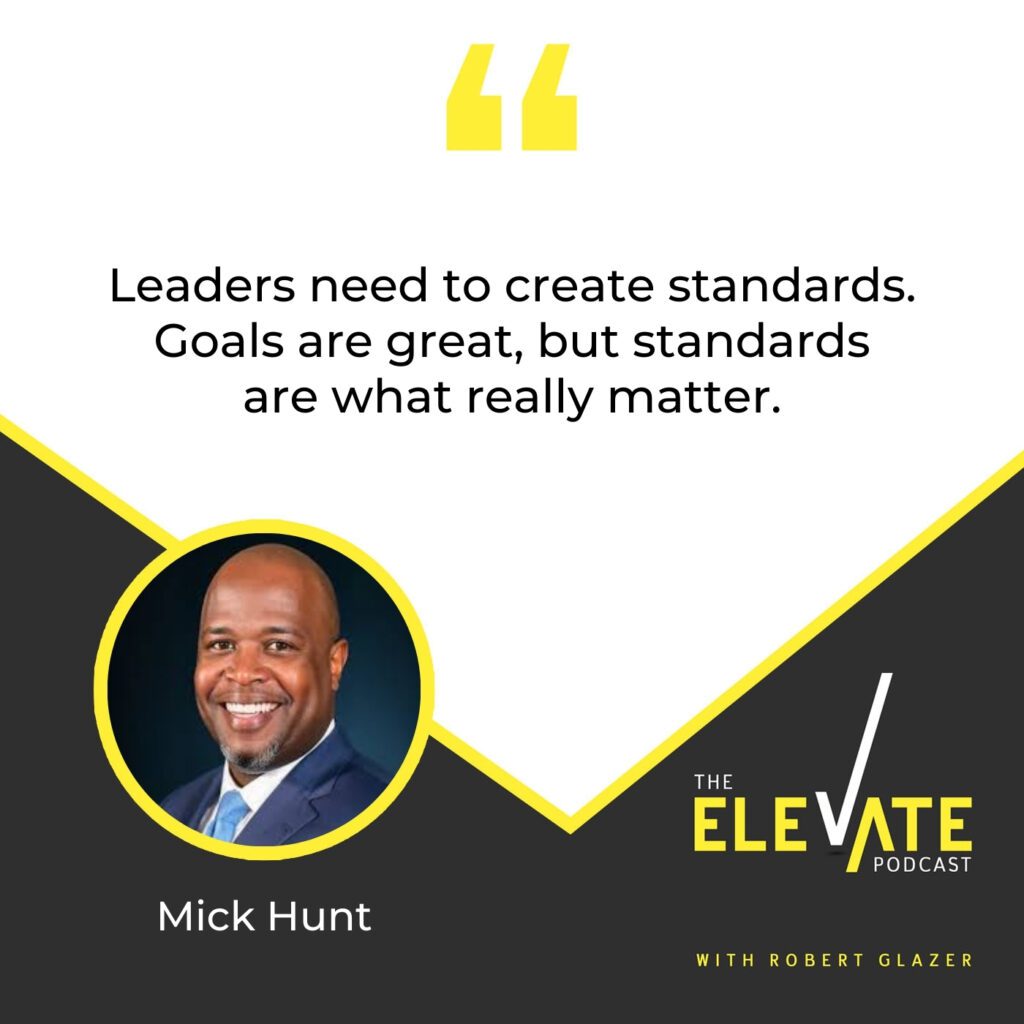
It was there. I was the sales manager. I had a team of salespeople and we had to learn how to initially hit goals. What I learned was, you need to create standards. Goals are great but standards are what matters. My first leadership role was leading a sales team of ten and figuring out how to go from $2 million to $5 million and $5 million to $20 million, then I said, “I should do this for myself.” That was my first role.
I love that you said that because one of my friends, Eric Kapitulik leads a group called the Program. They do a lot of leadership training and he was ex-military. He said, “You have these lofty goals. You’ll get some of them. Sometimes, if you get 90%. That’s great, but standards are non-negotiable.” He made a big distinction between the two.
Wholeheartedly. To me, goals are personal. We set the standard. You set your own goals around what you want to do but the standard is a standard. That’s been one of my core values from day one. It’s set the standard. Robert, I know you’re the same way because you just had an amazing article published as well too. I don’t believe in vanity core values. My core values are action items. We have a few but the standard is one.
That passes my test. That’s worded in the right way. I approve, set the standard.
I’m glad that you approve.
It’s very different from integrity. I have to talk people out of integrity and family are not helpful worded values.
Trust and honesty.
Respect. We need to keep going with this. I don’t want to veer into this topic. I’m passionate about that but what you said, I think you might agree but feel free to disagree. This, to me, has been the number one problem on college campuses in the last couple years. These are rules that you’ve already had and you can’t find a way to enforce them and let everyone know what they are. The lines keep moving and you have a mess.
Importance Of Creating Your Very Own Standards
Again, it’s important for leaders to hold that standard. Even if maybe you don’t agree with that outcome that it produces like Bill Belichick was known for this. Tom Brady probably got annoyed at this at the end of his career. He got in a snowstorm and was late for practice. He was going to get the same treatment as someone else. Even if you had showed up every day for ten years and most people just aren’t good at that.
For leaders, it’s critically important to set the standard because here’s why. Your team is never going to rise above the leader’s bar. If you don’t set the standard where the standard should be, if you don’t set expectations or speak with clarity. You can’t expect your team to ever do that.
I want to spend some more time in this because to me the values are embedded in standards a little bit. There are things you can always do. Whereas, meeting a sales goal or meeting something else. There’s some karma, timing and universe, but you can always show up and be on time. You can always be respectful and tell the truth. There’s plenty of things that don’t require any external forces.
Every standard doesn’t have to be measurable. The standard could just be, to your point, you’re going to show up on time. There’s no KPI around every standard that you create, but it should become your culture. This is another thing that I learned early, too. As a leader and even as a CEO, you don’t run the business. You run the culture and the culture is what runs the business. If you don’t have standards, if you don’t set the standards, if you don’t articulate the standards, you have no culture. What you end up doing is talking about how great your culture is. Culture speaks for us.
If leaders do not set and articulate their standards, they will have no culture.
As soon as you become arbitrary or play favorites or move the line on a standard, you’ve lost the plot at that point.
I agree.
Why You Don’t Want To Be A Great Leader
Your book has an early chapter that’s provocatively called, Why You Don’t Want to be a Great Leader. What do you mean by that? What’s wrong in your view with the typical picture of “great leadership?”
It’s almost goals and standards. Goals are personal and standards are the bar. Good is what you can be. Great is always someone’s external opinion of you. There’s no such thing as other than Muhammad Ali saying, “I must be the greatest.” No one else ever declares them great. For whatever reason, when we debate, we debate the top five greatest of this or the top three greatest of that. If we focus on being good, you never have to worry about being great. Again, a lot of times we focus on being the hero, which I think people are trying to be great instead of just stacking goodness together.
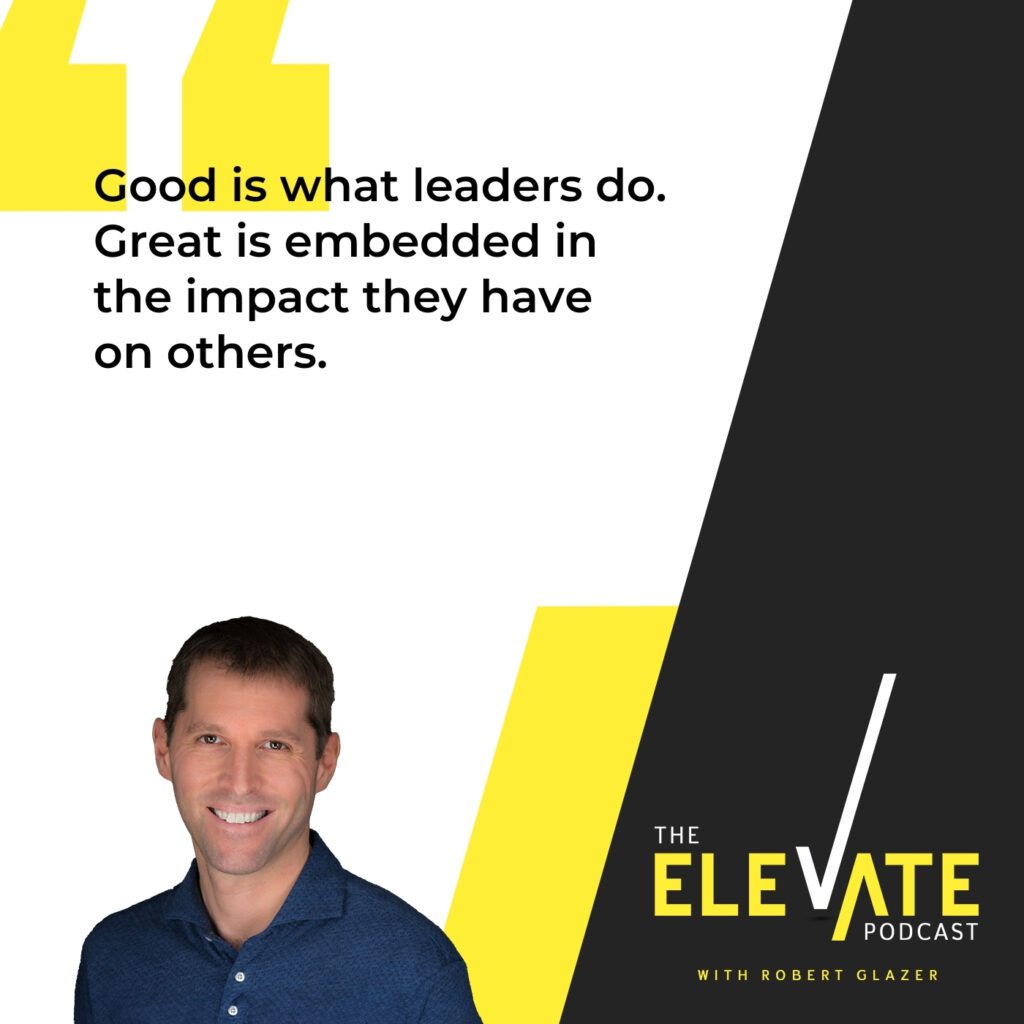
Good is what we do. Great will be embedded in the impact that we have on others. This reminds me of this drives me nuts and again, I’ll keep saying we probably agree but that’s a dumb way to preface a question. That’s priming. I’m so frustrated with this concept of legacy now. It’s become so egotistical. Legacy is like you live your life and other people determine your legacy. Everyone now is curating their legacies and building their legacy. That is literally the opposite. That’s a narcissistic view of legacy.
Again, external versus internals is what I’m always in alignment with.
The leader is about their team, their people and building other people. If you think it is about you, and in fact, the threshold that I’ve seen over the years where people fail the cross over into leadership is where they don’t look at the success of their team as the success of the people. They look at it at the things that they did.
I’ve struggled to get a job. I’ve coached a lot of companies . If you are not evaluating the leaders on their leadership, as the first metric on their scorecard then that’s a problem. If you’re measuring them on production metrics then what does it even matter if they’re good at leading or not?
Robert, we have so much in common. It’s one of the first things when I work with and I’m not going to name a Fortune 500 company but there’s one that’s all about the numbers. ACME Inc is so focused on numbers and those numbers could be revenue production or EBITDA, but they’re so focused on numbers. I said, “Tell me how this is a leadership quality. Tell me how this is a leadership metric.” I could have Sally the superstar salesperson that carries all the weight for these numbers and metrics that you’re looking at. Sally is just the salesperson.
The leader gets credit for it. I’m not saying the leader didn’t influence or coach or train Sally, but Sally is the one that did it. Where is the leadership score on that number? ACME was like, “You’re correct.” We had to go create leadership standards, leadership KPIs and leadership metrics because every metric isn’t a KPI.
I have a very similar anecdote I tell. I used sales stories a lot. It’s clean and showing things that don’t make sense in business like inputs or outputs. Here’s an example that I use almost similar to yours. We’ll keep Sally in here. Sally is the leader and she’s got a team that she’s managing, four sales reps and they had a goal of a million dollars that year and they did $1.1 million. The poorly run company would say, “Sally, awesome job. You did $1.1 million. You beat the $100,000. We’ll give you a bonus.”
That’s a double click on this. Every rep has a $250,000 goal and it turns out, two of the reps are at $100,000. They’re way below their goal and Sally hasn’t dealt with them. One is like at $250,000 their average but they’ve been there for a while. They’re not improving. Sally is jumping on a lot of their calls and closing the deals for them and then there’s Kate.
Kate sold a half million dollars and doubled her quote and hasn’t been promoted or given anything. Sally’s doing a pretty crappy job like leading because she’s helping the mediocre person. She hasn’t cut the poor people and she hasn’t promoted the person who’s killing it. The numbers just don’t tell the story.
Amen. All day long on that one.
Learning Your “Because” Instead Of “Why”
Another framework that you use in the book and your coaching is to shift from why to because. I have to say I do love asking why. I’m curious about this one. Can you share what you mean by the importance of because?
Here’s what we’ll do. I’ll tell you the exercise and improve what I mean. It’s not to disprove Simon Sinek because you should start with your why. I wholeheartedly believe in that. Robert, what’s your why?
To share ideas that help people in organizations grow.
Why is that your why?
It’s almost a deeper why. It’s because.
What did you just say?
Because.
What you say after that is why you do what you do. I care more about that than I do anything else. My kids are my why. Great. I love my kids, but there’s a reason they’re my why and it is because I need to make sure that everything I do now can carry on their legacy and not just mine. When I know what you’ll be because now I get to know who you are, the things that inspire you, move you and things that challenge you.
That sparks deeper conversations in individuals but more importantly for businesses, you can throw away those mission and vision statements that nobody cares about that some marketing firm created for you. That’s just plastering on your website. When I know your because when I know what you stand for, now I get to know you. That’s the whole purpose of your because versus your why.
If I finish that sentence, it would probably be because people not meeting their potential is the biggest shame and there’s a very personal component to that to me.
Your because that’s literally what I care about.
Eliminating Micromanaging And Celebrating Small Wins
It’s your why, why. You can trademark that. I always joke about why stuff is powerful but Simon wrote this book. It was like, go figure out your why. It turns out, it’s not that easy to do and as a guy I work with who came up with these why characteristics. It made it a lot easier. The title of the book is interesting. It’s for people without a ton of leadership experience and even people in their first role. What are some of the key points of advice, particularly for first-time leaders? If you were looking at yourself now, what did you do wrong as a first-time leader?
What I did wrong was everything was about me and I don’t mean that there was an ego or anything like that because I never had that. I was so focused on making sure things happen. That it was about me wanting to make sure that things happen. Whether that was youth sport, a sales scene that I led or the company that I’ve created. I realized that it’s about the team and we have to celebrate small wins. I am so driven, Robert, and I have to coach myself on this on a weekly basis.
I love that you coach yourself. What’s your rate?
Go ask my wife. She looks at the bank account. Not me.
I meant to yourself.
That’s what I mean. My wife charges me, but I’m so driven and so focused that I forget the other people. Everybody doesn’t run hard and I’m not saying everybody should run hard. I’m not celebrating running hard, but I forgot to create milestones and to celebrate milestones. I would say for leaders, because you’re so focused on you and so focused on running hard. Celebrate the small wins and create milestones regardless of how small they appear to you. Your team needs to celebrate success.
Even though they are running hard, leaders must never forget to celebrate small wins and create milestones.
I’ve always been bad at that. I’m a type of achievement minority. We’re bad at celebrating for ourselves. We get to a peek and it’s like, “Where’s the next one?” It’s probably not healthy for us or other people.
That was the first thing that I learned and I would say most leaders get wrong is that. The second one I would say is we over micromanage. That’s the simplest way to say it. I was going to give you something bigger than that but we over micromanage and we call it like delegation. You’re not delegating. You’re micromanaged in the heck out of Sally, Johnny, Jimmy and Susan. You’re calling it empowerment. You have the creative freedom to do whatever but you’re checking in or you have a checklist of 87 steps to get one thing done. Most leaders fail at that. They don’t know how to let something just mature. Something takes time.
This is where parents need to look at themselves as leaders and where they suck at this these days. Some lessons just have to need to be learned and you’ve got to have some struggle, some failure and get it wrong. We learned this in our business years ago and we got feedback. We have these weekly reports and I set a very high standard of not having mistakes on these reports to clients and stuff like that. What happened was, managers would be reviewing reports before they went out to clients and the people would feel micro-managed.
I wouldn’t say this or I wouldn’t do this or whatever. The feedback was we’re getting micromanaged and I said, “The problem is, you’ve never let them suffer the consequence of one of these mistakes. They think you’re micromanaging them because it would be very different if they made the mistake and then you coached them through how to fix it. You’re stopping all these mistakes in advance so they’re not getting any real world feedback on this.”
Correct. The other thing adding to that too, is leaders forget that their people are leaders elsewhere, meaning they are leaders in their household or in their communities. If you take a moment and understand that, you’ll step away from the over delegation or the over micromanage.
You and I have to talk in about 12 or 18 months because my next book that I put on hold. I get myself overlapped and it’s just too much but it is looking at parenting through a leadership lens from an era of curiosity. The same as you, I operate a lot. It starts with an anecdote where you’re coming into performance review and I’m looking at mixed performance reviews. It says, “Mick is constantly fixing my problems and he tracks me on the computer. He doesn’t give me any space.”
We’d all be like, “Let’s get HR in here. We need remediation on Mick right away.” We know micromanagement is horrible. If you talk to any kid now and you asked them, “Tell me about your parents.” “They track me on the phone. They call my teachers. They solve my problems. They don’t let me make any mistakes.” It’s funny.
The book is not all about my view on parenting but it’s this observation that the principles of good parenting and leadership are the same. Professionals have been writing about it for hundreds of years. Somehow, we’re doing the opposite at home. We are doing all of these things that in the workplace we would say, “That’s terrible leadership,” and it has become the default at home and I don’t understand it.
I can’t wait to read this.
I love the anecdote. It’s funny and it was fun building that because in the first case, you’re like, “Terrible employee,” but you’re like, “I could see any kids saying this about their parents now.” I was at a conference. We were all remote companies from almost fifteen years. We’ve been doing it a decade before COVID and hiding it from people because they didn’t understand how we were remote. After COVID, I wrote a book and people asked me to speak.
I was at a conference and this woman in front of the whole room was like, “I have my team stay on Zoom all day long and put it on mute so I can make sure they’re working and see what they’re doing and all this stuff. What do you think about that?” I can’t embarrass this woman in front of 300 people but would you like to work like that? Who would want to work like that? That’s not a high trust environment. That’s an environment that lacks standards and goals where you shouldn’t have to watch how someone works every five minutes.
No culture at all.
Determining What Kind Of Leader You Want To Be
We’re going to talk about values at some point or later but being an authentic leader in your own style is important. One thing I noticed is, when a lot of people first start in leadership, they try a couple of things. I call it the patchwork quote, which is what are all of the things I like that some of my best leaders did? What are all the things I hated that some of my worst leaders did? The problem is like, it’s like other people’s clothing. Do you see that? Do people have a harder time figuring out what is authentic to me and how do I lean into that?
It’s two things. It’s exactly what you said. They’re comparing or trying to build off of others, good or bad traits. That’s one of the things. The second and probably the most critical is they’ve never taken the time to see who they are as a leader, meaning have they taken the proper assessments to understand how they make decisions? I will tell you this and I’m sure Robert’s going to tell you this. Leadership is all about the decisions you make. That’s who you are.
More good than bad. That’s the goal.
If you don’t understand how you make decisions in different arenas of business, you’re not going to know who you are. I spend a lot of time with leaders helping them, putting them through, and I don’t want to call it an assessment but just different scenarios. What would you do? These are the things that are going to happen, again, ACME.
With ACME, we create scenarios based on the things that ACME does as well. Part of leadership development is going through these real-life scenarios that don’t have the true impact at the end, so you’re not going to mess up an employer or a client or a prospect. You’re going to see how you would have handled said situation.
To me, that’s how you figure out who you are because there’s no wrong answer, for the most part. Unless you’re doing something illegal. There’s not a wrong answer. It’s, how do you operate in this type of scenario? What happens for these leaders that come out of this development program, is there equipped to be in the real world because at the end of the day, nothing’s perfect for you. You might have three or four days in a row where everything’s awesome. You’re going to have five consecutive freaking Mondays where it’s like, “I’m getting my head kicked in. How do you deal with that?” When you’re prepared, when you’ve seen it before. Now, you know who you are.
It’s been a lot of time but I think if you’re clear on your personal values, that is the ultimate decision making rubric. That and your company values. Do you know Garry Ridge? Garry was a CEO of WD-40. He went in there and little spray can company. He turned around the company over a decade from a 30% engagement to 90%. He did the company’s values increase by 2,000% and everyone loved the company.
He was very serious about the company values. He said, “If anyone makes a decision in service of one or more of the company’s values, they’re always safe.” That’s always been my standard for, do you have real values or not, because he believed enough in that. Garry taught at schools around the world and the story will resonate with you.
He would give three teams a problem to solve. He’d break them into three groups. In the first group he gives them problem solving and gives an hour and comes back. In the second group, he would give them the same problem to solve and he would say, “Your company’s values are X, Y, and Z. Solve the problem.” The third one, “Solve the problem and your companies are X, Y, or Z, and here is the hierarchy on those values.” After an hour the first group is almost never done. The second group, often done right at the time. The third group, done every time in the least amount of time.
The Ideal Process Of Creating A Vision
He’s in 100 schools in different countries and he took on different cultures. You need a rubric because decisions aren’t inherently right or wrong. Can you live with the consequences either way? In the book, you also talk about the importance of setting a vision. This is a hard thing for a lot of people, particularly who are tactical and if it doesn’t come naturally to them. How do you coach people to create an inspiring vision particularly if they just have a hard time seeing ahead?
Clarity over everything. To me, that’s the first step. The vision has to be clear. It can be overwhelming. It can’t be too much. It has to be clear. The vision has to be able to be understood. If it’s clear, step one. It has to be understood, second. Third, it has to be held to a standard. If this is the vision, that’s what we’re going to do. Now to answer the question, how do you create a vision? It’s starting with where we are trying to go.
What is it that I’m trying to accomplish in writing now? What are the must-haves for this thing to happen? Not getting granular in the details but going to the scenario you talked about earlier. We’re going to do a million dollars of revenue. What are the must-haves? In order to get to a million, you probably need to get half of them. In order to get to half a million, you probably need to get it to $250,000. Now that I’ve got it to the lowest common denominator, what’s the first step to get it to $250,000? That’s how I paint a vision.
It’s taking the big, breaking down the milestones or the must-haves. When I’ve got to the lowest must have that could possibly be there. What do we have to do to make that one happen? We build from there. Again, clarity. Everybody understands where we’re going. We’re going to make sure that the vision is written and we have standards that are held to us. Every milestone is going to have standards or every standard is going to have a milestone.
Create a vision by breaking down big milestones or must-haves. Determine what you have to do to make every goal happen and then build from there.
I wrote 3 to 4 years of visions for our companies over the years. I was inspired by Brian Scudamore of 1-800-GOT-JUNK and his painted pictures. That process is so hard. It’s so funny and so hard for some people to do it because I have coached some other people. I’m like, “It is the future.” It’s January 1st of 2030. What does this company look like or feel like? Every time they do it, they feel like this is a hokey thing and whatever and then they do it. They show it to their team and they’re like, “The feedback was everyone loved it.”
Now they know where they’re going and be like, “Do I want to be here? Do I like this journey? Is it motivating me? It’s so interesting. People think that it’s this softy. It’s great to have that lofty vision, but then you got to sit down on the planning meetings and turn it into years, quarters, weeks and all that stuff. People are always surprised at something that they think is this soft exercise on how much the team is like, “Thank you. It’s super helpful.” It’s just motivating. If you’re on a boat in the middle of the ocean for someone to be like, “We’re going that way on the horizon.”
All day. Again, I always tell leaders, “Don’t make it too micro.”
That’s their job. That’s the team’s job. What’s the pushback that you get about vision stuff?
The time. They’re like, “I don’t want to do this. We’ve got our three-year business plan. Why do I need to do a vision of that?” You’re the only one that knows it. It doesn’t help anyone if it’s just the same thing and you just delete and update numbers each year. That’s not a plan. A vision is different from a business plan or business statement.
Do people even do business plan? Do people even do those anymore?
They have them in stock somewhere but have they reviewed them, updated them or looked at them? No. Again, it’s probably very generic. They hired a firm to do that for them.
Bringing Back Values In Business
What I’m curious about is pulling out. The world seems a little short on leadership these days before talking particularly in the political landscape. I tend to believe the solutions are going to come from business and not the government. What do you think people are missing about leadership? What are we missing in our leadership culture?
I’m going to tie into what you love talking about, values. There’s not a lot of value in businesses and we’ll forget political stuff. Let’s just get into business and even school systems. There’s just not a lot of values that people have and I don’t mean like your personal value. What I’m getting out of those business values, those business must-haves.
Again, Robert and I can go to ten companies. I guarantee you, out of the ten, we’re going to see integrity, trust, honesty and respect probably in all ten of those. Nobody’s going to understand what that means as it relates to that business, though. Trust, what does that mean? I would hope we trust each other. I would hope we respect each other but that’s what’s missing. Truly having actionable values that make sense that everybody understands and that’s what we do at my company. We have action value statements. We’re going to deliver results. Not excuses, because nobody gives a damn about these.
Isn’t that the problem? The specific politics don’t matter, but I think the breakdown in some of the politics is the inconsistency with the thing that people say that they value and then showing a different behavior when they want to excuse someone on their own team, whichever team it is. That’s what I think. In the old days, it was like, “This is my value and it’s consistent. If someone on my team shows that they’re breaking that. I’m going to call them out.” That seems to be what we’ve lost. I don’t know whether they’re subjugating their own values.
Social media has this thing called likes. Everybody does everything now, whether it’s social media or not, for a like or for a potential viral sound or viral moment. That’s what’s caused a lot of the issues. We don’t do things for, “This is my value. This is what I stand for.” We do things for, “Robert wants to hear this. He’s going to give me a like if I say this. I’m going to say that and then Mick won’t see the opposite. As long as Robert’s not around, I’m going to say the opposite and get like that too.”
It’s all extrinsic and not intrinsic, essentially. I think that’s right because I look at some personalities. I’m like, “They have gone off the rails.” What people will say to me is like, “It’s working for them.” The more absurd stuff they say, the more “fans” they seem to get. That’s an incentive system in a way.
It’s not fair and it’s not genuine.
How Leaders Should Act In Times of Crisis
Talk about leadership during tough times and a crisis. When you’re not going to be able to make everyone happy or tell them what they want to hear. We have a lot of crises these days. I said to someone like, it’s no longer a Black Swan. Black swans are flying all around the place. It’s not a rare occurrence. What needs to change or our focus as you get into a crisis?
One, stay in the fight, meaning it’s a crisis. Sometimes you have to endure things, and I’m not saying that you don’t try to end the crisis like we’re in a war. You got to stay there. A lot of times, we look for what’s the quick solution and the quick solution makes the crisis last longer or it creates another crisis because you didn’t stay in there.
I tell leaders all the time, stay in the fight. The second thing is you have to be clear with your intention. You have to be clear with the words that you say because people are listening and watching. When you’re in a crisis, your words matter. Your actions matter so make sure that you are very clear with your actions and your words and focus on how we end the crisis. Not, how soon can we end the crisis?
It sounds a little like the Stockdale paradox, which I’ve always been a fan of Jim Collins, which is, you have to give people an optimistic future looking viewpoint while also sharing the brutal realities of what’s going on now.
Also, leaders have to understand you’re going to have a crisis.
Again, you can paint a very great picture but life happens, business happens, or Monday’s happen. You’ve got to understand.
I’m always picking on Monday like, maybe some people like Monday.
I don’t have Mondays. I tell people all the time, “I don’t have Mondays.”
That’s a good book title, how to not have Mondays anymore. Maybe that should be your next book.
Co-written by Robert Glazer and Mick Hunt. How about that?
I’m in. All these people just read this. Now I’m co-owner of the intellectual property but this is an interesting point. I have been talking about this a lot lately. I think there’s a misunderstanding, particularly in a crisis. When you make a values-base because of social media and the instant nature of the world. People often make a decision that makes the problem of the day go away or the X mob or whatever because it feels so intense.
Often, that’s the thing that costs you in the long run. The problem when you talk about living by your values and having values. In the short run, values and decisions can be painful and expensive. They’re usually almost always less painful and less expensive in the long term, but we’re only worried about the next 48 hours. That’s the problem.
Correct. We could do a lot together, Robert. We lined up together so well.
Mick’s Most Closely Held Values
We got a whole series of books coming out. Another thing you talked about since you were young and wanted to model certain values including for your brother. I’d love to hear what your most closely held values are.
I just talked about one, staying in the fight in business and in life. My biggest thing and this is what I had to learn early on, is do what to right… every time. The right thing might not be the popular thing.
What we just said, it’s usually not in the short term. If everyone’s running in the building, it’s easier to run into the building.
That’s one of my favorite ones. Grow or get left behind. At a young age, I understood that if I don’t grow, I can’t expect other people to grow either. I’m trying to think of something that’s not in the book. I want people to read some of the things that are in the books too.
If leaders do not grow, they cannot expect other people to grow either. They must learn how to grow or get left behind.
We won’t give it all away, but it occurs to me. I was facilitating with a group who had read the book and done the values work. I was helping them flush it out and I was like, “You know it’s a value when you can connect it to something very meaningful usually at some point in your life.” Speaking about the first question I asked at that moment as a ten-year-old. A lot of those things run right back to that. That’s how you know they’re real and they’re deep.
Asking about my brothers, you’ll see it in the book when you read it. My brother was born three days before I left for college. My brother is eighteen years younger than me. For my brother, I am like an older brother, I am a best friend and I am like a father figure. Again, when we talk about me. My biggest value was do the right thing… every single time because I needed him to understand that too.
I needed my sister to understand that I’m trying to build what manhood and fatherhood should look like for you because we didn’t have that example growing up. I had to do the right thing. Even when I’ve got friends over here that want to go do X, Y, and Z. It’s cool to go do that. We’re going to have an amazing time but the right thing for me to do is be the example. The right thing for me to do is to talk to my sister about a challenge she’s having. The right to do so is to send home money. My parents divorced when my brother was a little bit older. He can experience everything that I explained growing up as a child, too.
Was right always clear to you or did you always feel like that was clear or did you struggle in some cases because you had a lot of modeling about what was wrong?
I’m going to say, even now the right is not always clear. Anybody that tells you that is not living correctly or they’re not telling you the things correctly. Sometimes, right as a guess and you’re hoping that this was the right thing to do, but I have the conviction that I’m doing the right thing. It’s not always going to be clear, but I’m going to be convinced that I’m doing the right thing.
The Mistake Of Doing Everything Yourself
If you consciously know you’re making the easier choice, the immoral choice, or the wrong choice. That’s the stuff you can’t live with. We won’t give too much of the book away. Let’s get people to buy it. I’ll ask you the question I always ask. It’s the last question. It’s multivariant. It could be singular or repeated or personal or professional. What’s a mistake that you’ve made that you’ve learned the most from?
That is a great question. I don’t know if I’ve ever been asked that question.
By the way, that’s like my love language when someone says that.
I would say the biggest mistake I’ve made that I’ve overcome.
It could be what you’ve learned from. It doesn’t mean you’re still not making it. I’m still making mine but I’m trying to get better at it.
The biggest mistake that I made was thinking I could do it all myself. By all, I mean in different facets of life, in my personal life thinking, “I can figure it out. I can do it all.” Not appreciating the contributions of others was the biggest mistake that I made because that is always going to be someone’s thought of you. That is always going to be who you are and I learned it though when I lost eighteen members and it was because of me. I didn’t appreciate enough team contribution. Again, type A. We finished a project onto the next one. If I can go and burn out, you can go and burn out too. I realize quickly that’s not good. That’s the biggest mistake, was thinking I could do it all.
That occurs to me a classic strength overused as weakness because at ten-years-old you probably said, “I’m going to depend on myself and I’m going to get it done.”
I told my mom I was going to do it and that’s where it started from. I told my mom “I” was going to do it, so I felt like I had to do it.
Get In Touch With Mick
I think weaknesses are just strengths over used. That makes a lot of sense to me. Mick, thank you for joining us. It’s easy to see why you’re speaking inspires such a big audience. I’m excited to see you get this book into the world.
I appreciate you. Thank you so much for having me on.
You can learn more about Mick and his new book on the episode page at RobertGlazer.com. If you enjoyed this episode or the show in general, I have just a very small favor to ask. Would you mind taking a minute to share this conversation with Mick with someone you think who would appreciate it? We’ve grown almost entirely through word of mouth and I know I usually find a new podcast because someone I trust sends it to me and says, “Read this.” I’m hoping you can do the same. Thank you again for your support. Until next time. Keep elevating.
Important Links
- Mick Hunt
- Mick Hunt on LinkedIn
- Mick Hunt on Instagram
- Mick Unplugged
- How To Be A Good Leader When You’ve Never Had One
- FUBU


