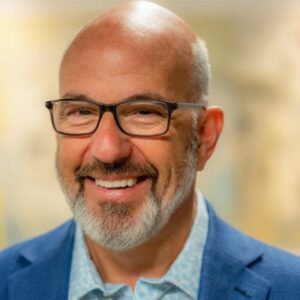

Jeff Hoffman is a perfect example of a business leader who has used his success to give to others. He is an award-winning global entrepreneur, proven CEO, worldwide motivational speaker, bestselling author, Hollywood film producer, a producer of a Grammy Award winning jazz album, and executive producer of an Emmy Award winning television show. In his career, he has been the founder of multiple startups, he has been the CEO of both public and private companies, and he has been part of a number of well-known successful startups, including Priceline.com/Booking.com, uBid.com and more.
Jeff joined host Robert Glazer on the Elevate Podcast to talk about his leadership career, his vision for life and his tireless work to give back and make a big impact in the lives of others.
—
Listen to the podcast here
Jeff Hoffman On Building Priceline And Giving Back
Our quote is from Paul Stanley, “When you’re positioned to have gotten so much, the gift at this point is giving back.” Our guest, Jeff Hoffman, is a perfect example of a business leader who’s used the success to give to others. He’s an award-winning global entrepreneur, CEO, worldwide Motivational Speaker, bestselling author, Hollywood film producer, Producer of a Grammy award-winning jazz album, and Executive Producer of an Emmy award-winning television show. In his career, Jeff’s been the founder of multiple startups, both as the CEO of public and private companies, and part of a number of well-known successful startups, including Priceline, Booking.com and uBid. Jeffrey, thanks for joining us on the show.
Absolutely. I’m excited to be here.
Award-Winning Global Entrepreneur Jeff Hoffman
I always find it interesting to start with childhood and origin story. You’ve talked a lot about growing up in the desert and as a young person getting this desire to build your own perspective through travel. Can you talk a little bit about how that developed for you?
Absolutely. Yeah, I grew up in the Arizona desert. The whole area is now Phoenix, but back when I was growing up, most of it was just desert. A nice place to grow up, though. I absolutely loved the desert, but I had a single mom who had four kids and multiple jobs and was always working to try to take care of her children.
From a young age, obviously, I didn’t know the word entrepreneur, but I understood that if you wanted stuff, it was better to go out and find a way to earn it. Knocking on people’s doors, asking if I could clean their garage or mow the lawn or anything I could do for a few extra bucks so I could buy sports equipment, as an example, without having to bother my already overstressed mother. I got that sense of working hard to get things you wanted real early on, just because we were trying to not stress mom any further than she already was growing up. Mom was always wheeling and dealing. She was an entrepreneur.
Where were you in the birth order?
I have two older sisters.
All right, so you were even further down the food chain.
Having two older sisters, usually mom was handling whatever drama that was on any given day.
How many businesses did you have before the age of ten?
Every little thing I could think of. I remember one time, because I saw a magazine ad of all things where they send you seeds and you knock door to door and convince people to plant their own garden, but you’re just selling them the bags of seeds. That was super fun, especially when you live in the desert where a lot of stuff doesn’t grow. There was landscaping right in 115-degree heat. Delivering the newspaper because back then, they had paper boys. I would go deliver. The answer to your question is lots. Whatever I could.
In this society nowadays where failure is such a negative, I think if you had to do any of this door to door selling stuff and have people tell you no and close doors in your faces, it just develops a certain level of resistance that I feel like the average person doesn’t have.
Yeah, but you know what else? It helped me learn, which I didn’t realize until much later, customer discovery. Over time, if you’re paying attention, which you have to modify your quote sales pitch, you start to notice that in 30 seconds, I’d get to a point where the person that answered the door, within the first couple of words exchanged. I was like, “I’m wasting my time. He’s not going to buy,” or I’m like, “Okay, she’s my person. I’m going to close this.”
Was it because it wasn’t the right person, or you knew the pitch didn’t work?
No, because it wasn’t the right person. You are correct. Over time, you’re perfecting the pitch, but you get to a point where the pitch is good. Now, what you have to do is not pitch it to people that are never going to buy from you. I tell that to businesses now. They’re like, “We’re not closing sales.” It’s because you’re marketing this to someone who was never going to buy this product. Picture your targets more intelligently.
I had a guy that called me, he’s called me ten times, so I finally answered the phone. It inappropriately got approved on my spam filter. I figured I’d figure this out, whatever this was, once and for all, and he is selling these 25-person corporate package event strategies. I was like, “I’m not really in charge of a company anymore.” When he found that out, he just kept going. I’m like, “Do you need 25 tickets for you and your customers? This isn’t even remotely like a fit.” Even after I told him I wasn’t a fit, he tried the pitch over again. I was like, “I’m not involved with that business anymore.” It was very interesting.
What’s interesting about that, I give a little masterclass or whatever you call it on sales and marketing and branding, but part of what I talk about is salespeople are trained, they take classes called overcoming objections. Salespeople are trained to overcome no. I always tell them, “Why isn’t there a class called finding yes? Why are you overcoming no instead of just finding yes?” I don’t waste my time doing what that guy did to you.
If I was the ideal customer and I was just being resistant, but I identified that’s your early comment that I was, he’d be better off saying, “If you have a friend who’s looking for twenty tickets for the World Cup for a $100,000 corporate event, I’m your guy.” Someone might ask me about that in a few months.
I got the sense of that way back when I was a kid, because when I would talk to people, I started making a bet with myself. “I bet I can close this one.” There’d be other ones where I’d say like, “I need to get out of this conversation fast and go next door. I’m wasting my time.” I got better at it. It was like a game for me. Predict. “I’m trying my hardest, but I already know this isn’t going to close,” or, “I really think there’s no reason I shouldn’t close this one.” By the way, you asked me about the travel piece. That all came from when you live in the desert.
You want to get out of the desert.
Yeah. I loved it, but it’s in the middle of nowhere, and I was aware that there was this whole giant world out there that none of us were seeing. I was doing a book report on a Mark Twain book, and it was the one where Mark Twain has a quote in the inside cover of the book that said, “Travel is the fatal enemy of prejudice.” I paraphrase that, but I just remember reading that and just stuck in my gut. I remember I went home and asked my mom, “What was Mark Twain trying to say?” My mom explained it to me, “If you really want to be a citizen of the world, you have to go see it.”
If you want to be a citizen of the world, you have to go see it. You cannot judge people that you do not know.
You can’t judge people that you don’t know. You need to get out of your bubble and get to know people that don’t look like you. I was like, “I’ve got to go see the world.” That Mark Twain quote made me really think about it. That’s when I set the goal. There was even another thing. My grandfather came to visit after he’d been traveling. I don’t remember what countries, but he brought me currency from these countries.
I looked at all this colorful money and I was like, “What is this?” He said, “Every country has their own money.” I’m little at this point. I’m like, “Wait, what?” I started realizing and he’s like, “Son, on these bills is their culture. These are their leaders, their animals, their people.” I started looking and I was like, “There’s another whole planet of people that don’t care at all about our country.”
Was this your 50 dinners goal?
Yeah, that’s when all that started. I was like, “I’ve got to get out of here. I’ve got to go meet these people and see these places that are pictured on the currency, etc.”
What was that goal and when was it?
That was about seventh grade. I actually started thinking about what would make your life epic even then? What do you want your life to be? When you look back someday, what do you want to look back on? For me, I was thinking about that way back then. For me, and part of the reason why, though, Robert, was that the people that I grew up with, a lot of them, I would say, “We’ve got to get out and see the world,” they’re like, “No, I’m good.” I wasn’t judging people, but a lot of the people I grew up with have never left the same five square mile area their entire lives. That was fine, but for me, I was like, “There’s a whole world out there and we’re not seeing it.”
They’re like, “That’s fine. We’re happy here.” That made me even start to wonder more about what’s out there. I was thinking then, “I don’t want to wake up 50 years from now still here and have really experienced nothing.” Again, I’m not judging other people, but there were other people who were saying, “We’re good. We’ll be here forever.” That made me ask myself, “What do you want X years from now? When you look back, what do you want to look back at?” I said, “If I look back at my life towards the end and I have traveled to 50 different countries, then that will have been a great life.” That was a random but huge number for me. That’s where I came up with that idea. I added the part, “I’ve got to get to know people.
That was the dinner addition.
What if I was to get a chance to break bread with people all over the world and just chat with them and learn about them? That’s where that goal came from.
Some of my best ideas have come when I’ve been out of my own town or country or otherwise. People just don’t understand that how you do things is so influenced by your culture and that it’s done totally different ways. One of the things I fought with people over time is a lot of the US culture of tipping and restaurants and work, and everyone’s like, “It has to be this way.” I was like, “It just doesn’t exist in the rest of the world. You’re offending some people, but their thing is like, “It couldn’t possibly happen any other way. That’s not true. Culture’s powerful, but that’s not true.”
That’s actually a great example because I just came home from Africa. There was one place where I was asking about a tip and they were completely confused. “This is my job. I get paid to do this job. I don’t understand.” Actually, the concept even. In our country now, everything you do, every time you swipe a card, things that never had tip say, “Do you want to add a tip?” No, I’m buying something. What am I tipping for?
Here’s the thing. It actually doesn’t make sense, but you’ve come to normalize it. If a foreigner came to here and was like, “You spend half an hour with a person in the retail store and you don’t tip them, but then the takeout at the grocery store wants a tip, you’d be like, “It just is how it is.” It doesn’t actually make sense.
You gave a great example. The person in the retail store that’s helping you, you would not tip that person. You would just buy the product.
My son worked for years in a, in a ski store. He spends half an hour with families putting boots on their feet, trying it, whatever. He’s gotten 1 tip in 3 years. He’s particularly like, “Why am I tipping for a bottle of water?” He doesn’t understand it.
Where did you grow up, though?
Outside of Boston. I also remember, when our kids were young, we were traveling to Australia and pretty much every restaurant that wasn’t a nice restaurant, you paid for whatever you were ordering at the bar, whatever. If it’s not a super nice restaurant, so you pay and you want another thing, you pay and then they bring it to your table, and then when you’re done, you leave. I was like, “This is amazing with kids.” We’ve already paid, we get this over upfront with a service fee. When you want to go, you leave. You’re just like, “How come no one’s doing that?” It’s interesting.
What happened to your accent?
The Boston accent? I think over generations, it’s going away, but it’s very specific pockets.
Also, specific words.
Achieving Success On Your Own Terms
If you talk to my wife’s father, you would hear it. It’s worked its way out. You’ve been incredibly successful as a CEO investor, have done everything you want to do, helping lead Priceline and Booking.com and all these companies. Your story, listening to you speak before reminds me of something that people don’t understand. That’s the difference between success by other people’s definitions and then fulfillment on your own terms. How do you think about that and encourage entrepreneurs and folks that you mentor to ignore what the rest of the people in their lives in the world thinks that successful means?
That comes up a lot, so I think about it a lot. To be honest, I bought into the same societal message that success is the goal. When I got there, what I realized is success is not the destination. It’s just the platform. Once you get there, you finally have a platform to go do stuff that really matters.
For highly achievement-oriented people, the view does not provide the satisfaction
Literally, it’s disillusioning. You’re like, “That’s it? That’s what everybody’s out there honking?”
You rush to climb the next peak thinking that that’ll solve it, right?
Right. The discovery, which was really accidental on my part, was that the true fulfillment does not come from the being successful itself. It comes from the fact that you are now in a position to make other people’s lives better. The first time you do something that you could not know, to be honest, you could not have done without being successful because a lot of problems actually require money to solve. That’s not the only way you can make a difference. There’s time, treasure, talent.
The first time you discover that by using either your position or your resources to solve someone else’s problem and make somebody else’s life better, all of a sudden, you realize, “That was way better than closing another sale.” I just came back from the orphanages that we built in Uganda and I spent a week with the children.
These children were all abandoned kids in the jungle. Now they all live in our home. They all go to school, they all do their chores, they do their homework, they have career plans, and you just sit there and soak that in. It’s a whole different level. It’s a whole different feeling than we close another deal. I’m not saying those things are bad, I’m just saying that when I sit with those kids, that’s the stuff that I’ll remember that means way more to me than any business deal I’ve ever done.
Finding The Right Place For You
If you were advising a twenty-year-old, I know my daughters around that and has gotten mixed advice on this because she’s someone very interested in advocacy work and is looking at law. There are different streams of advice right there. There are people that’ll say, “Yes, go do this and join the nonprofit.” There’s a whole, like, “Do not do that. Go make some money, become an expert in something, get a platform, you’ll make a bigger contribution.” Historically, a lot of these nonprofits are actually terrible organizations to work with and struggle and otherwise. Where are you on that spectrum if you were giving advice to a twenty-year-old?
The problem is that the advice can’t be generic because it’s DNA-based. It’s really individual to the person. There are people that have the desire, the passion, and the skillset to go build first to create other things. We were selling hotel rooms for a living. That’s not exactly saving the world. Nothing altruistic about that. However, by doing it successfully, it enabled us to be able to go do those other things. Not everybody’s cut out for that.
When I am mentoring a twenty-year-old, which I do a lot, I love mentoring young people, the first part as a whole discussion about what’s important to them. What resonates them, what drives them, and then a self-aware understanding of what your strengths and weaknesses are. For some people, you wind up concluding, with that tool set, you should go build something first because you are correct. If you’ll go out and come become “successful” first, you can have more impact and help more people than you could otherwise.
By becoming successful, you can have more impact and help more people than you could not otherwise.
How you’re good at helping. Helping means a lot of things it does. Am a strategist, am I a marketer? Am I a fundraiser? What am I?
You’ve got to find your place. That’s why it’s a customized answer to the people. By the way, that goes both ways. If you find your place, not only will you contribute more and be more productive, but you’ll feel that way too. When people are in the wrong place, they feel it. “I’m not succeeding,” they feel bad about themselves, and they don’t feel like they’re in the right place. I’ve had times where I’ve told people, “This is tough, but you really not cut out for entrepreneurship. You should go work for a nonprofit. Just go find the right one.” It’s a very individual answer to what moves you and what skillset you have.
It is interesting because the advice does seem to really break down, but it makes sense if you just get absolute joy out of going and helping and dig latrines, and you just want to be there and help. If you have material idea of something that you could build, that direction might make more sense.
What’s nice about your daughter’s generation is, as you already know, they care way less than my generation did about titles and salaries. We care about impact and experiences. There are most definitely people in her generation that actually do want to go dig water wells. They actually do derive a lot of satisfaction from that, and don’t care whether they’re driving a BMW or just using public transportation. It’s hard.
There are people in my generation that sometimes have a hard time believing and understanding that. They’re like, “Who wouldn’t want to drive that?” I was like, “She doesn’t care whether she drives a Mercedes or a Hyundai. It makes no difference to her. She wants to know if she’s making a difference in the world.” There’s that generational gap that sometimes I just shake my head as like, “You just don’t get it.”
I was just having a conversation with someone earlier. I said, “I find it very funny now as a Gen Xer to hear how the Millennials talk about Gen Z. For a while, it was all lumped together.
I love the Gen Y want to help and spirit and otherwise, the, “I’m 22 and I am the gift to the world with no experience,” that’s the balance. I don’t actually believe in paying dues to pay dues, but I believe you’ve got to go learn. The advice I would give my twenty-year-old self is, and when I look at a lot of incredible successful people, and you find out who their mentor was or what training department in, or who they were, they got amazing learning experiences in their twenties. They started using that later on.
I give that advice pretty frequently too. People that want to be entrepreneurs ask me about a corporate job. A lot of times I tell them, “If you can get educated, trained, and experienced in an organization that already has all that, go do that for a little bit because then when you come out, you’ll be much better equipped than you would be if you had none of that experience.”
Jeff’s Formula For Success
We’ll flip back but I want, we’ll flip around here a little bit. I want to talk about some of your business wisdom. You shared a formula for success in self-determination. It’s shockingly simple. I think a lot of people could learn from it, which is study an industry, solve a real problem, become valuable to key players. Can you talk about that a little bit?
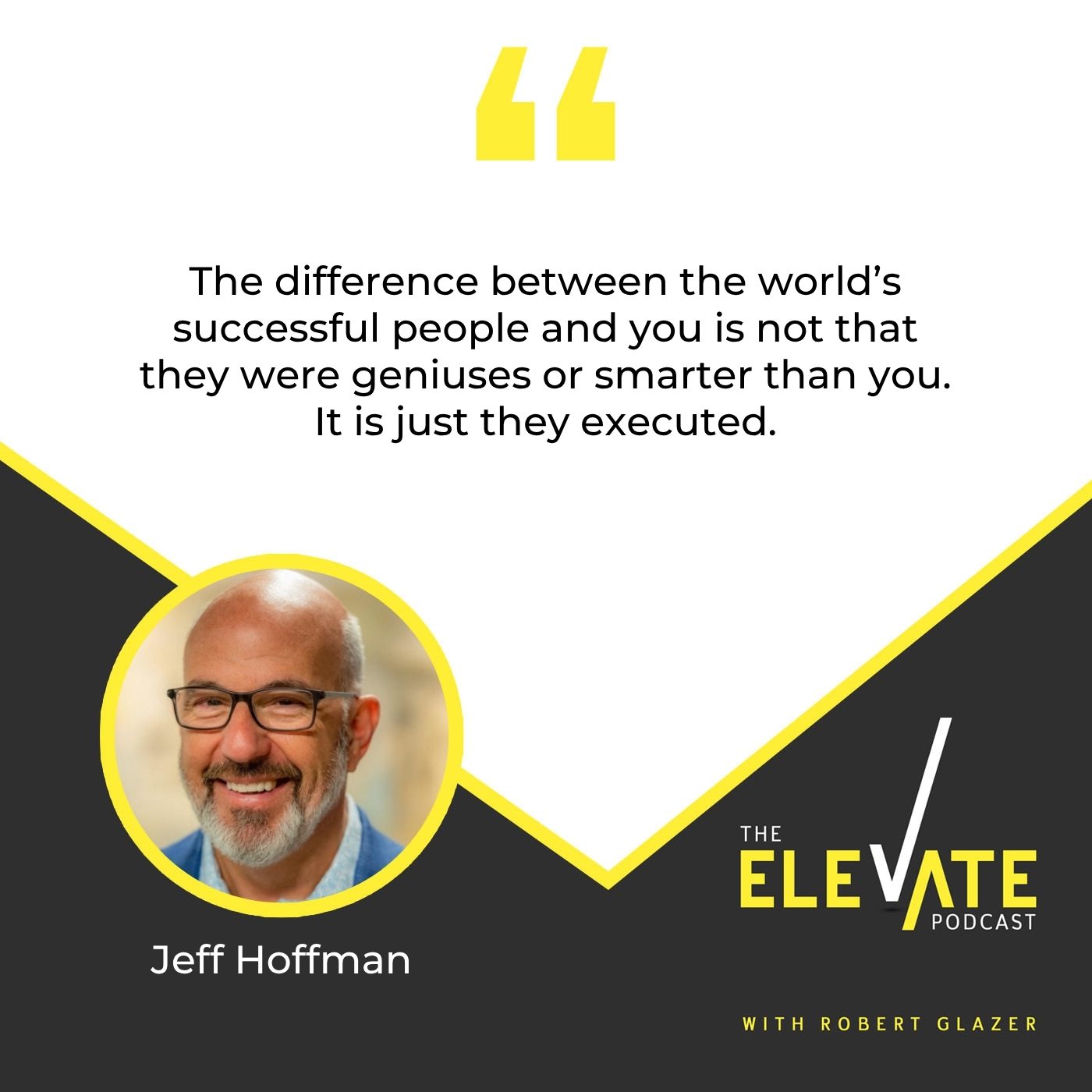
Yeah. It is funny they said that though, because so many things, when people ask us about the things we’ve had success in what’s the big magic secret, all of it was simple. It’s just that nobody does it. We did nothing that was rocket science. We did nothing complicated. The point is we just simply did it. Sometimes I tell people, “The difference between the world’s most successful people in you is not that they were geniuses or smarter than you. That’s an exception. It’s just that they executed. While you were trying to figure one in your head, trying to solve all the problems and remove all the doubts, they were just out there in the hot sun with a shovel, digging.”
I also like the prism laser metaphor, where some people take all this energy and they disperse it like a prism, and you get pretty little lights and the others focus it and you get a laser that cuts glass.
That’s definitely the difference. So many of the formulaic things that we did and the same reason some of it translated, for example, from tech to the music industry was because the fundamental blocking and tackling of winning a game is simple stuff. People just have to be able to execute it. I got that, but a lot of the things that I talk about are reverse-engineered. None of these were things I knew otherwise, I would’ve gotten there faster. They’re things that, after looking back, when somebody said things to me like, “How’d you get there,” I would walk away thinking, “How did I get there?”
In the music journey as an example, this was a point where we were doing the pop stuff, and we were involved working with doing tours and concerts, and we were part of the Britney Spears tour, and I was doing stuff with NSYNC at the time. People would see me with the NSYNC guys, and they’re like, “How are you part of that? How did you ever get there?” There would be times I would sit down and say, “How did I get there?” The reverse engineering is where I came up with that formula. What I started to realize was that if you want to lead your version of an epic life, first you have to decide who you want to be important to.
If you want to lead your version of an epic life, you first have to decide who you want to be important to.
One of the examples was I was doing a big charity concert that Elton John and I did together and hanging out backstage with Elton. Elton asked me to be on his board at his foundation, and I was doing some things with him, and people were asking me, “How did you ever get there?” That was the one I really backed up. I realized, if you want to be around somebody like that, so you pick your target, “I want to be around people in the music industry,” then you have to be important to those people.
You better understand the music industry.
Yes, and the way you become important to people, important people, is by solving, having something they need. The thing that people need most is a solution to a problem they can’t solve. How do you find a solution? How do you even identify a problem is you dig deep. When I into that industry and studied it, so I’m a tech guy, but before we went into music, I was up every night for months reading every article, studying the music biz tours, concerts, cold emailing, people tell me how the business works.
How do tours and concerts work? How do you plan them? How do you budget them? What are the pitfalls? I’m just cold calling people, cold emailing, and 99 out of 100 people won’t answer you, but then 1 does. He is like, “You can buy me lunch. I’ll take up your offer. I’ll tell you about what I do for a living.” Suddenly he’s like, you know what? I want to introduce you to so and so,” and all of a sudden, you have a foot in the door and people in the industry are teaching it.
I’m asking them, “What are some of the most difficult problems to solve,” and they’re telling me. Now I’m studying those and saying, “If I had solutions to those problems, the people in the industry would need me.” I’d say, “I know what your problem is and I can solve it.” They’re like, “Really? Let’s have lunch.” When I reverse engineered how I wind up walking out on a stage in front of 30,000 people and saying, “Are you people ready for Elton?” My friends are like, “How’d you ever get there?” I’m like, “Elton and I want to welcome you to our show.” I can hear myself, and I’m like, “Wait, what? I’m just this kid from the desert. What am I doing standing next to Elton and welcoming people to our show?”
The answer is what I just said. The formula is you’ve got to become the go-to person. By the way, this became even more, the words even. Years ago, I got a phone call from Derek Jeter. First of all, I didn’t even believe it was him, but I was, “First of all, why are you calling me and how’d you even get my number? What are you reaching out?” Derek said, “I have a business problem. Everybody says, you’re the go-to guy.” I was like, “You’ve got to become the go-to girl. You’ve got to become the go-to guy. You do that by having deep knowledge of an industry and having something those people want.”
Someone told me years ago about venture capital, it sounds like this is something you have honed in on, but it’s far better to be selling painkillers than vitamins.
Yeah. That’s funny. Yes. True. Anyway, that’s the formula. Studying the industry, find a problem that you can solve that people need a solution to, become important with that solution to the people you want to be important to. You become the go-to person. I got the same call the first time that I had a meeting with Pitbull, the singer. I said, “What can I help you with?” He said, “Everybody says you’re the go-to guy for this. I want to explain to you what I need help for.”
You did all this work, studied the music industry, what was the problem you had figured out how to solve?
Are you talking about in his case?
Sure, or just in general. What did you became known for? You must have figured out a few large, generic problems to solve.
The big one on the front end is Beyoncé doesn’t book herself. She doesn’t pay herself. She doesn’t hire herself. Neither does Pitbull. The money in the music business, as you know, it used to be selling music, but that died many years ago. All the money comes from live performances. Every artist wants to go on tour and they want to do concerts.
This is why every and any artist you’ve seen since you were born is out on tour, even if they’re in wheelchairs at this point.
All of them are music people. All their friends are music people. Their management, our music management and agents. What they don’t have around them is people that know how to put together a finance package and a business deal. I was pretty shocked that working with a friend of mine, putting together a package for a tour for Beyoncé and Alicia Keys to go on tour together. That’s why I said that Beyoncé doesn’t book her herself.
Isn’t this what their business manager does?
No. Their business manager handles the daily schedule when they’re on the tour. They don’t ever create the tour. There are a limited number of companies that actually do, and mostly the big giant ones like Live Nation. They create tours, but there’s way more people that want to go perform than there are slots on a Live Nation tour. A lot of them were saying, “I need to be on stage, but we don’t know how to do that. We don’t know how to fund it. We don’t know how to design it.”
They had just been like Hugh Grant living off the residual for 20 years and then that went away. That’s interesting. You’re saying all these guys had to go back to concerts and stages in an era that they might not have not have even understood or been involved with.
Right, because the record labels used to do all that. Let’s look at the numbers. Of the small percentage of all artists who are even signed by a label, that means you’re signed, which most artists, probably 90% are not, of the ones signed, the labels only tour 11% of their artists. Even if you’re signed, almost 90% of them have no bookings.
They’re personal brands now, right?
Right. Everybody, all the time is looking for shows and tours to be on. I was like, ‘If we could figure out how to put the financing together, the marketing, the promotion, and help create tours and shows, all these artists would be calling,” and that’s exactly what happened. They’re like, “You’re putting a tour together? How do I get on it?” All the way up to the highest level. That one that I was involved in, we brought Verizon in, but we had to structure the deal with Verizon because they don’t really want to talk to music people. They want to talk to business people.
You never assume that a musical artist didn’t know how to go on tour. It’s amazing when you think about it.
They have no idea how the financing of a tour works, how tour support. They can’t actually build the spreadsheet to convince Verizon.
You need a funder and you need a revenue split. You need concession deals and merch deals and all this stuff.
Once we learned to put all those pieces together, all the artists started calling us, “Can you help me?”
Who funds the tour?
All over the place. There are typically two buckets. One bucket is sponsors, brands. Verizon presents Beyoncé. Major brands is one. The other bucket is the same way as films are financed. There are private equity groups, private money, if you have those relationships. The thing is they might love, let’s take Beyoncé or a Pitbull. They might love Pitbull’s music, but they know the guy is not trained in finance and they’re not going to say, “Here’s $2 million. I hope you don’t lose money on this tour.”
They don’t want to trust his bookkeeper.
Who is the business person that’s run a business before that we can hand the money to that we know who knows how to budget and manage it? That’s what they’re looking for. That’s why you were the go-to. These people would come and say, “I need a business person on my team who the people with the money already trust.”
You took this personal passion and you figured out a way to combine it with business and you became the go-to guy.
Yeah. It was fun.
Aligning With The Right People
That sounds like a lot of fun. You’ve been in a lot of leadership roles. You need to make good decisions. I was reading one of your most consequential decisions, what happened when you first got involved in Priceline, I think before you even joined the company. A lot of times, I think this is about going back to our values. Can you talk about how your principles of life design led you to that decision?
Again, I learned this over a long time. The most important decisions you make are not what you’re doing. It’s who you’re doing it with. Choosing the right people to be aligned with and in business with is critically important. I had moments where I passed on big-name people that everybody loved because I didn’t feel good about the people, even though the business was great and there was lots of money on the table.
The important decisions you make are not what you are doing. It is who you are doing it with. Choose the right people and business to be aligned with.
Unfortunately, for me, actually, there have been a couple of people in my career that I said, “Ho, thanks,” to that everyone told me I was an idiot that are both these people are in prison for fraud. Now, years later, there were people, I was like, “We just don’t share values.” They’re like, “That guy can make you rich. Everybody wants to work with him, but you.” I said, “Everybody should work with him. I’m the idiot, fine, and then the specific person I’m thinking of, he’s in prison for like, I don’t know, decades now for fraud. I was like, “I’m just not feeling it.” People are like, “You’re not feeling it? Are you stupid?” I said, “Fine, I’m stupid.”
You can’t do a good deal with a bad person.
For me, a lot of decision making was based around not the money on the table, but did I feel like it was a match in values. At the time, multiple times, people would ridicule me. “You’re walking away from a pile of money.” I said, “No, I’m walking away from bad values and I just can’t live with that. I wouldn’t want that money. We’ll figure out a way to make it work.”
It’s interesting. In my 20s and 30s, when I was thinking about working with different people, I would get very obsessed with the idea. This idea is a can’t lose idea. I remember being pitched by my friend, it was going to revolutionize cell phone service. The company was a toxic disaster and it never made it. Probably the tech sold.
They’ve gotten to 40s and maybe closer to 50 and then talking to companies around board roles or advisory or otherwise, they’re like, “What industry do you want to be in?” It’s really the people. I want to be doing interesting stuff intellectually with people that I trust and like, and they’re excited about it. I moved away from the can’t lose idea to the can’t lose person, I guess, is what you’re saying.
I totally agree. That’s what you want to look for now, that can’t lose person. Actually, Jeter asked me a funny question once because I just have some friends that have climbed their mountain have accomplished whatever it was, whether I have some friends that are Super Bowl champions or the heavyweight champion of the world, or Mr. Worldwide, as Pitbull calls himself, whatever. Some friends that have been successful. Derek said to me one day, “Can I ask you something?” I said, “What?” He said, “Do you have to win some championship to be friends with you?” I was offended. I said, ‘I don’t care what your accomplishments are. Why would you say that?”
He said, “It’s because a lot of your friends are Super Bowl champs in whatever in their space.” I was driving home that night after that and I started thinking about it and I realized what I’m attracted to is a set of personality traits that I want to be around. People that focus on positivity, not negativity. People that are abundance minded. People that believe in that very human thing. People over profits. There’s a set of things I’m attracted to the work ethic. The way they treat the other people. I realized that the type of person I want to be around is probably going to win a Super Bowl. I’m not attracted to them because they won a Super Bowl.
You’re in the nice guys finish first bucket, you think?
Yeah, completely.
Just not in high school.
No, It’s funny because we were talking about that. We got into a conversation with some friends about people who high school actually was the peak.
It’s never pretty.
Bruce Springsteen sang about it, and he was right. Glory days was real.
I’ve seen this. The more your satisfaction with something happens and the more away from the current time it was tied to your happiness, the more you are living in that movie. I don’t know. Do you know Derek Sivers at all? He’s a fascinating entrepreneur. He founded CD Now, one of the first eCommerce stores. Multiple businesses, sold it and then went off to become a circus performer and a clown. He has written five books. He’s like you. He’s very renaissance man.
When I introduced him as an entrepreneur, he was like, “I haven’t started a business in ten years. I’m a writer now. You can’t really call me an entrepreneur. This is a guy who said he loves more than anything in the world to have his mind changed. I was thinking like, “How smart is this guy? He’s done the opposite of everyone who’s living the glory days. He’s taken the baggage. He’s like, “I was an entrepreneur. I did that. Now I’m a musician and a writer. I don’t need to hang my hat on what I did 10 or 20 years ago.”
That’s really cool. In fact, I actually told somebody, “Do you want to hear some good news?” People get “depressed” as they get older. I said, “If somebody had told me in my 30s that where I am now would be the best years of my life, I never would’ve believed that.” As a matter of fact, I’m actually having more fun now. I had a very blessed 30s, building these great companies and making money. I’m actually having more fun now.
These are been the best years of my life. Being on the ground at these orphanages we built, just playing with all those children whose lives we’ve been able to change, that feeling, I can’t even describe. That feeling was so much more fulfilling and powerful than any business deal I’ve ever done. It actually gets better. It’s not a downhill slope. I’m actually happier.
Finding The Right People To Mentor
You’ve got to embrace the new identity. Honestly, that’s a big part. Let’s fully go there. It’s a big part of why I wanted to have you on, to talk about your approach to giving back, which I just admired since I first heard you speak and talk about it. You have a lot of rubrics, it seems, whether someone is trustworthy, business. How do you think about what opportunities to support and where you can make the biggest impact and where you’ll get the most value from it?
People ask me that when they say, “How do you decide who to mentor?” There are only so many hours in a month, so I can only mentor a limited number of people. Part of my answer is I’m looking at somebody and saying, “If you were successful, what would you do with your success?” I asked myself that question about them. What would they do? If I believe that you would use your success to make a lot of other people’s lives better, then I want help you be successful.
There’s nothing wrong with you buying a ski house, but if that’s your big goal, I’m probably going to pass. Go do that. More power to you. Congratulations. We were blessed that we were able to go build these orphanages and we raise abandoned children around the world. I’d rather find somebody that says, “My definition of success is if I’m able to raise children around the world.”
A platform that they can then preach from or act from, ideally.
We’re focused on that. Especially having learned that that stuff is just, again, way more of an important legacy for me than any business deal. I’d far rather of that be my contribution to the world. Our giving back is just that simple measure. What are you doing to make anybody else’s life better? If you have success, how are you using your success to make other people’s lives better? Success, whether it’s a platform like fame or power or money, any of the things you have that are tools that you could use to make change in the world, are you using them to make change? Over time were, were blessed with the business definition of success.
For me, personally, that just increases our obligation to do more, to make even more lives. The more success we have, the more other people’s lives we need to make better. That was our giving back pledge. That’s why we started our other nonprofit, the Global Entrepreneurship Network, which I’m still chairman of. We’re now on the ground in 200 countries, which is crazy to say. We teach people how to get a better life by helping themselves. Instead of just helping people, we teach them how to help themselves through the skillset of entrepreneurship. That’s work that I absolutely love.
One of your philosophies around this, which is you loathe a similar phrase that I loathe, either in nonprofit or in the business, which is someone should do something. That’s horrible. Someone should do something. One day, you found yourself watching the news and hearing a story about a shelter for abused women, which a lot of other people were probably watching and thinking, “That’s shutting down. Someone should do something.” What did you do?
It was a specific epiphany moment, because I heard myself say, “They should help those women.” I literally started thinking, “Everybody watching this news story is saying they should help those women. Which one of us is actually helping?” Nobody, because we’re all saying they should help those women. That was the day I wrote the four most important words in my life. I wrote, “There is no they.”
They don’t help those women. You do because everyone else is saying, “They should help them, including me.” That’s when I suddenly realized, “I actually can help them. We have money in the bank. They’re having their house foreclosed. All these abused women are being kicked to the streets. We’ve run a successful, profitable business. We have money in the bank. We could just buy the house and then and give their women their safety and take their stress away and pay their bills for them.
That was the, “There is no they,” moment when I said, “They aren’t going to do it, but I can.” I started asking myself, “Every time you see a problem where you’re saying they should feed those kids, why don’t you do it?” Sometimes people say, “If I ever make some money, I’ll do that.” It doesn’t have to be your money, but you could be the person that says, “We are going to feed those kids.”
You’re on the phone and you’re calling and you’re getting donations and you’re getting partners and sponsors. It’s not just because you have money. It’s not about that. It’s about owning the problem. Who is it that says, “They’re not going to feed those kids. I am. I’ll figure this out?” It’s about owning a problem and taking accountability. That was the first time I realized, “I’ll just fix it. I’ll just do it myself.”
Explain the mechanics, though, because it’s how you did it. It’s a good part of the story.
It was important to do this anonymously so that the story can’t be some internet guy bought this house or helped these women or whatever. The story had to be about protecting women in the community. The only way to do that was to do it anonymously, which meant delivering cash to the house instead of a wire or a check or whatever. It was fun.
If you showed you showed up with a bag of cash, basically, and hand it to the woman, she would have thought you were punking her, I think.
Absolutely. They wouldn’t even open the bag. They wouldn’t even believe me. In fact, getting the cash was a funny story because the bank teller went for the silent alarm and the bank manager was there and he knew me. He came out and he said, “Jeff, if you put an empty gym bag on the counter and say, ‘Fill this with money,’ that’s a bank robbery. They’re always going to hit the alarm. You can’t do that.” I was like, “My bad.” He’s like, “What are you doing?” I said, “I just want to withdraw this amount in cash.” He said, “Fine, but don’t do it that way ever again,” because I did just walk in and say, “Fill this with cash,” basically, and the teller was hitting the silent police button.
When I went there, the women were like, “Whatever we owe you, we can’t pay you.” They were angry. I kept saying, “Can you just look in this bag?” They’re like, “Whatever joke this is, it’s a sick joke. This is the worst day of our lives. Get out of here.” I said, “I’ll leave if you just unzip the bag.” She unzipped the bag and she’s like, “What kind of sick joke is this?” I said, “It’s none of the above. The money you need, plus an entire year’s worth of your bills is in this bag. You guys don’t have to move out. The house is covered and you can relax for a whole year without having to pay any bills.”
I left because the whole point was to do it anonymously. You go back home and you never feel guilty about making money again. What you think is, “I want to go work hard, take care of customers, treat my employees well, make more profits and fix somebody else’s problem.” Suddenly, there’s a connectivity between running a profitable business and helping people in the community that can’t help themselves. It gets you more fired up about making money, not feeling guilty about it, which I did at one point before that.
You have a purpose. As I say, your success becomes someone else’s success. It’s all tied together.
That’s the other thing. On the news that night, that woman said it was a miracle. “Some man came in with this bag of cash.” I was thinking, “It’s not a miracle, it’s just our hard work.” That’s the other thing I wrote down that day I wrote that your success is someone else’s miracle. To you, it’s just business success, but to them, it’s literally a miracle. The harder you work, the more miracles you get to create in the world.
Acting As A Dream Manager
I know you also took that to really helping people in your organization and figuring out when the organization was successful, what their life goal was, and surprising them with that. I know some people have heard this concept of a dream manager. Can you just talk for a minute about that?
It struck me one day because I went to a job interview even though I had my own startup. I went there just to see how other executives interview people, even though I had no intention of working there. In the job interview, what I heard was the owner of the business, the CEO, the founder saying, “Here’s the business plan, here’s the mission statement, here’s the vision, here’s what we’re trying to accomplish. Here’s a job description and a salary.”
What I was hearing was, “Here’s my dream. I started this company, this is the mission statement to achieve my company, my dream, my vision,” even though he wasn’t saying that. I was like, “Nobody wakes up in the morning and says, ‘I really want to go work really hard so Robert can buy a yacht someday.’” No one’s trying to make you successful.
I was like, “That’s what we pitch.” I started thinking in the car home, “What do I do? I tell people all about my company and my vision and our dream. That’s not their dream. That’s not why they walked in here to help me be successful.” I finally realized I need to ask them, “Why do you come to work every day?” It has nothing to do with me. The first employee I asked, he said, “Because I need to be successful enough to buy my mom a house. We grew up in an Airstream trailer that was rusted out, and we would freeze in the winter. All I think about all the time is if I work really hard in the world and I’m successful, I can move my mom into a house.” I was like, “That’s why he works here.”
He doesn’t work here because of our company’s mission statement. He works here because he wants to take care of his mom. I printed a picture of a house in Florida because that’s what he wanted to buy. I put it on the wall. The next day, when my employees came in, they’re like, “What’s that?” I said, “That is the reason that Chris comes into this office every day. What’s yours?”
I asked every employee to come tell me, “What’s your dream? Why are you doing this? What is your life’s dream?” I told everyone to bring in a picture. You would come into the office and what looked like random pictures all over the walls were not random at all. They were the reason everybody that works at our company works there.
It’s their dream. Building my company is not their dream. Building my company will enable them to achieve their dream. Once I started to understand what they dreamed about and what they were trying to do, it also put me in a position to be able to help because there were times I could say, “I could help them get steps closer to their dream as long as I knew what it was.” I would ask Chris questions about what his mother needed and what else we could do to help along the way because I was now aware that his life’s dream was to get his mom into a safe and better situation.
Anyway, understanding the reason that everybody that works for you, I ask people that now. I say, “Do you know why all the people that come in your office come in every day? Do you know what they dream about?” Of course they don’t. It’s just always silence. I say, “Why don’t you go ask everybody?” Why do you work here? What are you trying to do with your life? What’s your dream?
I have to tell them, “Your company’s mission statement is not their dream. It’s yours. You started this company.” They’ll work on the mission statement, but they’re doing it so they can take care of their mother. That was pretty life-changing. Also, I discovered a lot of the employees came back and said, “That’s why we love working here, because we think that you think achieving our dreams is part of your responsibility,” and I do.
You’ve got to tell the end of that story. Was it Priceline that you sold? Which company was that?
No. This was the company before that.
You went with him as he gave the house to his mom.
He bought his mom a house, but we tricked her because she thought it was my house. When we took her there, she was angry. She turned and said, “Take me back to the airport.” She turned to her son and said, “I live in this piece of crap Airstream trailer.”
You were like showing it off like, “Look, my boss bought this house?”
She’s like, “You brought me here to show me that your boss bought a second house in Florida with all brand-new furniture.” She was very angry. It was not until she went and opened the bedroom door and saw all of her own personal stuff. The moment she realized then that that was her house that her son had just purchased for her, it was an amazing moment. She was crying. I was crying. He was crying. She’s not even my mom. I’m hugging her, saying, “Mom,” and it was a moment.
I was like, “Yeah, this is why you become an entrepreneur, a business owner. This is why you work this hard, so you can create moments like this for the families of the people that made you successful.” My employees made us successful. To be able to return that favor to them and their families is a phenomenal feeling. She would call me every year on the anniversary of that day to thank me again. I was like, “Thank your son. I didn’t buy that house. Your son did.”
Get In Touch With Jeff
I can’t think of a better way to end it. Jeff, where can people learn more about you, what you’re doing, your work, and your nonprofits?
I do have a site, which is JeffHoffman.com. My foundation, where we raise abandoned children around the world, is called WorldYouthHorizons.com. I’m pretty active on LinkedIn and my Instagram is @SpeakerJeffHoffman. I’d love to hear from you.
All right. Jeff, thanks for sharing your story with us. I’ve wanted to have this conversation for a while and you did not disappoint.
Thank you so much for having me. We’ll talk again soon.
To our readers, thanks for tuning in. Thank you again for your support. Until next time, keep elevating.
Important Links


