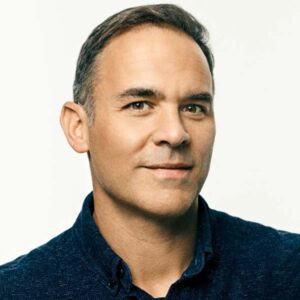

David Gelles is an award-winning New York Times reporter and bestselling author. He has extensive experience as a business reporter in particular and has reported extensively on, among other topics, Boeing’s safety issues, Bernie Madoff’s ponzi scheme, and the life and leadership of GE CEO Jack Welch. He’s the bestselling author of three books, including The Man Who Broke Capitalism, about Welch, and a new one, Dirtbag Billionaire, a deep dive into the life and impact of Patagonia founder Yvon Chouinard.
David joined host Robert Glazer on the Elevate Podcast for a wide-ranging conversation on Jack Welch’s leadership at GE, Yvon Chouinard’s extraordinary career at Patagonia, and much more.
—
Listen to the podcast here
Thank You To Our Elevate Podcast Sponsors
- Shopify: shopify.com/elevate
- Indeed: indeed.com/elevate
- Headway: makeheadway.com/elevate (Promo Code: Elevate)
Dirtbag Billionaire Author David Gelles On Chronicling Patagonia, Yvon Chouinard, Jack Welch’s Leadership And More
I wanted to give a special shout-out to some of our newest listeners who, based on our data, are joining in big numbers from Canada, Germany, and India. I am excited to see the global audience growing so much. Our quote for this episode is from Andre Geim. “Human progress has always been driven by a sense of adventure and unconventional thinking.”
My guest, David Gelles, is an award-winning New York Times reporter and bestselling author. He has extensive experience as a business reporter, in particular, and has reported extensively on, among other topics, Boeing’s safety issues, Bernie Madoff’s Ponzi scheme, and the life and leadership of CEO Jack Welch. He’s the bestselling author of three books, including The Man Who Broke Capitalism, about Jack Welch, and a new one, Dirtbag Billionaire. It’s a deep dive into the life and impact of Patagonia Founder Yvon Chouinard, which will be published the day this episode airs.
David, welcome to the show.
Thanks for having me.
How David Became A Business Reporter
I always like to start a question with childhood connect the dots. Did you have any particular passion for writing and journalism when you were growing up? Were you reporting on your teachers or other fellow students? Were you doing investigative reporting when you were younger?
I remember the moment I got interested in writing. It was when I was in high school. This sounds a little highfalutin, but it’s true. We had this great high school English teacher. We all remember those teachers who are able to break through.
The ones that make you want to be a teacher.
She didn’t make me want to be a teacher, but she understood the right book to put in the hands of the right kid at the right time. This is a little ridiculous, but as a teenager, she gave me a copy of Crime and Punishment by Fyodor Dostoyevsky. Since it was such a big, insane book, it was somehow unlike anything I had ever read before. I was like, “This is incredible.”
That’s when I thought about writing, not just as something you have to interface with, but as a craft. It was maybe the beginning of my thinking about writing as a profession. I didn’t imagine being a novelist. It wasn’t until I was in my early twenties that I got serious about trying to be a reporter. I was not in my college newspaper. I didn’t do any of that stuff. It took me until my early to mid-twenties to figure out, “This is my craft in the world as a professional sense.”
As you became a journalist, what drew you into business reporting?
Again, it was a teacher. I give real credit to the first woman. Her name was Lori. Now I’ll talk about a woman named Marcia Parker. I had been admitted into the Berkeley Journalism School. I knew I wanted to be a journalist, but I didn’t have any sense of what I wanted to specialize in. During the visiting day for admitted students, which was still the semester before I would start attending, we could go and audit any classes going on. Marcia was leading the business reporting class. I sat in on it, and I was wrapped.
She was talking about business and business reporting in a way that made it about people, not numbers. That clicked for me. I was like, “Business is all around us. Business makes the world go round.” There’s this temptation and instinctive dismissiveness, like, “Boring. It’s just business,” but all of a sudden, I was learning about people. I was learning about crimes. I was learning about scandals. I was learning about trickery, thievery, entrepreneurship, and making a ton of money. I was like, “I want to be a business reporter.” I decided on the spot, and I’ve stuck with it for twenty years.
Reporting About Business Scandals And Secrets
You’ve reported on some closely held secrets in business. You do have a little thing for the scandal side, as with Boeing. Getting that kind of information and having those sorts of conversations requires trust in the sourcing. How did you learn to go about building that level of trust?
I don’t think about it as trust.
Why do people want to talk to you about this stuff?
Trust comes from empathy at a certain level. I try to use that as my North Star when I’m reporting. Whether I’m doing a profile that’s not particularly combative, whether I’m doing a news story even where I got to talk to someone quickly and move on, or when I’m doing more serious investigative work or stories where I know that there’s going to be some edge and some tension, I still try to meet whoever it is that I’m speaking with, interviewing, and writing about where they are.
I genuinely try not to show up at a conversation with my mind weighed up, but instead try to understand where these people are coming from and what circumstances and situations have led them to act the way they are. Oftentimes, what I find is that these people aren’t necessarily inherently bad actors, even if they’re in a crappy situation where they’re involved in the not-so-good stuff.
It’s very rare, though, that someone is inherently evil. I don’t experience that in business malfeasance reporting. Instead, what I find is that we all exist, and especially people operating in business who operate in situations and contexts that don’t always optimize for the best behavior. When I am able to talk to people about that, they understand it, too. It’s in that zone, where we’re talking honestly about what’s going on and why they had to make the choices that they maybe had to make, that sometimes people are willing to share stuff with me.
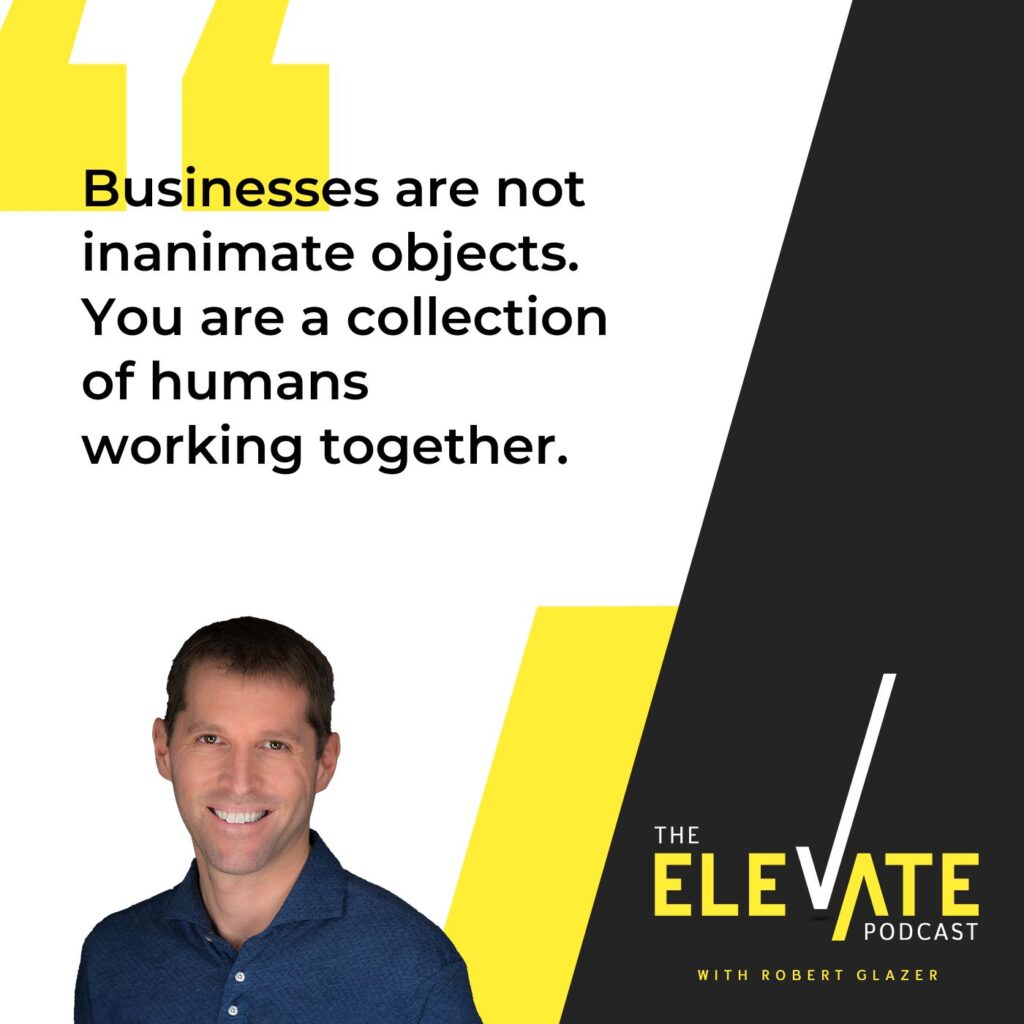
People have said, “We get the leaders we deserve based on our society.” I had Seth Godin on the show. This is one place I disagree with him. I think that businesses are not animated objects. You can’t go point to them or find them. They don’t exist. They are a collection of humans who have worked together. A lot of times, we abdicate the responsibility to the human. I wonder if we’re getting the businesses and the leaders that reflect our society at some points.
The system that we as humans have also designed informs how those businesses operate, as well as the constraints they put on people and the incentives they inject into the discourse that optimize for certain behaviors. It’s never nature or nurture. It’s some combination of the truth.
Business is all around us. It makes the world go round.
Covering Yvon Chouinard And Jack Welch
We learn how to play games as humans since we were little. You learn the rules, you play the game. In two of your books, you covered Jack Welch and Yvon Chouinard. It’s probably fair to say you see them as being on two different sides of the question, which you often pose, of whether business can be a force for good in the world. I know they have a lot that’s not in common. What do you think they have in common?
This has been a topic that I’ve given some thought to. I don’t address it in the book, but I have been mulling over this. One answer, though they went about it very differently, is both of their commitments to quality. Yvon Chouinard, from the absolute outset of his career, as I talk about in Dirtbag Billionaire, was relentlessly focused on quality. First, the quality of the climbing gear he was creating, then the quality of the clothing he made, and ultimately, the quality, not just of the clothing, but of the supply chain.
The quality of the impact of the company.
He has a truly holistic understanding of what quality meets. Jack Welch, CEO of GE for 20 years from 1981 to 2001, was also famously focused on quality in his own way. Six Sigma. All this work to elevate. He wanted GE’s products to be the best in class and best in the market. He found his way to try to do that. I would argue that the way Welch created a system to incentivize that at GE ultimately led to a real lapse in quality.
The way he used financial engineering, dealmaking, and short-term earnings manipulation to skew GE ultimately led to a real retreat in things like research and development and quality control. Nevertheless, his focus and his understanding that products had to be great for consumers or for customers to have trust in a business are somewhat aligned with Yvon Chouinard’s understanding of quality. In almost every other respect, these men could not be more different, though.
We live in a short-term world. A guy once told me he won’t even read books until they’re ten years old. This stuff needs to age, and it turns to wine or vinegar. I make this comment not to comment on your own writing, but I was at Penn from ‘94 to ‘98. I wasn’t in Wharton, but I did a program where I took a lot of classes in Wharton.
The thing I remember most from college was Jack Welch and the airplane interview. He’s the master evaluator of talent. Not only did he pick Jeff Immelt through this whole process of flying people around and asking them who died, but then three people were so good that he didn’t hire them. They went on to lead all these other companies. There’s this lore that everyone learned.
Until I read your stuff, I knew everything that had gone on, but I don’t think there is a wine that has turned into vinegar more than that story in terms of leadership succession, the types of leaders, and otherwise. Not only did Jeff Immelt extensively drive GE into the ground or have terrible performance, but the three people who lost went on to destroy other companies as well, and planted the kernel for the disaster that is still Boeing. I read your article in the book on this. I was like, “That closes that chapter. This is what all kids were fed on in business school for ten years, and it all wasn’t true.” That’s a lot, but that was very personal for me because I grew up when that was being taught.
I want to add a crucial bit of context here. You alluded to it in the setup, which is that it was true for a while. Jack Welch did make GE the most valuable company in the world. When you were at Wharton, the GE stock was still on this record tail. We can’t lose sight of that.
He was good at stock manipulation.
Fine. In this conversation around incentives, we live in a world where that was the metric that mattered. We defined success by how the stock was performing quarter over quarter. It made it very easy not to care about anything else. That is why in the Patagonia book, what was so compelling to me about a company that had been privately held for all 50 years that never reported earnings once in its life, how do you measure success at a company like that? It’s a different conversation.
For people who don’t know this, take readers through what happened when he chose Immelt. What happened to these other people? Where did they go? We’re going to talk about Chouinard, but this is an important lesson I’d like to dig into a little bit. It is fascinating. I remember before your book, I had pieced the pieces together. I remember sitting on Google one day and following them. It was 3M and Home Depot. It’s pretty fascinating. Give us a quick history lesson on that.
In the book that came out a couple of years ago, The Man Who Broke Capitalism, I describe not only Jack Welch’s rise to take control of GE in 1981, but also becoming the first CEO to operationalize that Milton Friedman doctrine of putting shareholders first above everything else. In this notion that the primary social responsibility of a company is to increase its profits, Welch was the first one who say, “That’s my job. I’m going to go do it.”
Other CEOs had been asleep at the wheel, if you will. He was the one who said, “I’m going to go do it.” He does it at GE, which is arguably the most influential company of the day in the United States at the time. He becomes known as Neutron Jack with this unbelievable bloodletting of mass firings, factory closures, downsizing, offshoring, and layoffs. He strips the company to the bone and then starts building it back up with mergers and acquisitions and a whole bunch of financial engineering.
Fast forward to the ‘90s and then the early 2000s, and what you see is that dozens, not just three, of Jack Welch’s deputies and disciples, who were all men who learned directly at his knee, go on to lead not three, four, or five, but dozens of other publicly traded companies around the country and indeed the world. At almost every single one, the same playbook happens.
They were able to juice earnings for a quarter or maybe a year, or maybe two years, but then this relentless focus on downsizing and stripping back costs, including research and development, catches up with them. The stock falls, and the wheels come off the company. It happened at 3M, Home Depot, Chrysler, Albertson’s, Nielsen, and Boeing. The list goes on and on. In every sector of the economy, some companies were infected with the DNA of Jack Welch’s management and ultimately suffered the cost.
Boeing is probably the best example. I know you’ve spent a lot of time. Alan Mulally was at the height of a good culture there. Alan’s an incredible leader who walks the talk. Boeing is probably still not out of this shadow. Talk about how that culture transformed. It gets down to the whole 787 debacle.
Both of them, the 787 Dreamliner, which has had problems, and certainly, the 737 MAX.
Trust comes from empathy.
The MAX, where they decided, “It would be expensive to recertify this thing, so how about we don’t tell the pilots that we put in this whole MCAS system?” or whatever it was called. It’s a crazy transformation of culture.
That process began, if you can imagine it, while Welch was still CEO of General Electric. In 1996, Harry Stonecipher, top GE lieutenant, one of Welch’s guys, went to the first takeover of McDonnell Douglas, I believe it was. McDonnell Douglas and Boeing then merge, but it’s McDonnell Douglas that buys Boeing with Boeing’s own money.
You fast-forward a couple of months, and McDonnell Douglas’ leadership is running the combined company. Harry Stonecipher is the CEO and starts implementing the Jack Welch playbook. All of a sudden, things like quality. Boeing was another company where quality came first, the kind of Yvon Chouinard quality that we’ll talk about. This was an engineering company that was driven by engineers who understood aviation and avionics in the most sophisticated way in the world.
Safety was a big part of their culture.
All of it, and he didn’t care about it as much. In the end, that culture led to a series of degradations in quality. Fast forward a few years, when Jeff Immelt gets the top job at GE, another one of the guys who was supposed to potentially be Jack’s successor, James McNerney, becomes CEO of Boeing. He continues to operationalize the Jack Welch School of Management in Boeing.
I didn’t realize it came from both sides. I knew that James came from both McDonnell Douglas and it was GE’s DNA.
A series of additional senior GE leaders, including those after Dennis Muilenberg was fired because of his mishandling of the 737 MAX crisis. The guy who replaced him, the guy who is already chairman of the board at the time, Dave Calhoun, was another Jack Welch disciple. He was the dark horse candidate when he was in his early 40s to replace Jack because they saw so much Welch in this young, early 40-something executive. He was in the running with Immelt. Fast forward 25 years after that, and he’s running Boeing in the wake of this epic disaster, which tragically costs 346 lives.
Patagonia has been going on for a while. Clearly, Chouinard was leading a different playbook at that time. Have business schools closed the chapter on the Welch legacy at this point? Is that now a cautionary tale? What are they teaching now?
I’m not in business school, but my sense is that Jack Welch and GE, as an individual and as a company, are not lionized in the same way that they were previously. At the end of the day, the incentive structure hasn’t changed. The goals haven’t changed. Corporate America, despite whatever the business round table might have said a few years ago, is still a shareholder-first kind of place.
For all the talk about stakeholder capitalism, I have yet to see real, meaningful, durable change in the way that management teams are allocating their capital, in the way they’re thinking about employment and employee retention, and in the way that they’re using the profits that they generate. A lot of that cash goes back to shareholders every quarter in the form of buybacks and dividends rather than to the communities and the workers. I don’t think much has changed.
Upholding Company Responsibility At All Times
What do you think the responsibility of a company is? What do you think Chouinard thought the responsibility of a company was?
This is a great question. There’s no one simple answer. Any company, I would hope, would understand that it has responsibilities to a lot of different constituents. Is there a fiduciary responsibility to make a profit if you are a for-profit company? I would argue so. Chouinard himself always said, “We’re not going to do this if we’re not profitable.” For almost his entire career, Patagonia has maintained roughly 10% profit margins.
That’s enough to keep you safe and not enough to be egregious.
Correct. It’s a remarkable feat in the apparel business where margins can slip below this. They can certainly get higher, but that’s a strong profit margin. He believed that making money was important. I don’t think we can lose sight of that. It’s also important to recognize that, I would hope, a company feels some measure of responsibility for its employees. This is one place where Jack Welch completely took a different page here.
For a small number of employees.
Executives, perhaps, but probably not everyday employees. He took over GE during the golden era of capitalism, and lifetime employment was coming to an end. He instituted a much harsher line with employees. I’m not saying that people shouldn’t get fired ever, or that companies don’t need to do layoffs ever.
When a company is employing a community of workers, I would hope that they recognize that not only paying them a fair and hopefully generous wage is a part of the deal, but that taking good care of them and making sure that they can afford the cost of living, and they have medical benefits in an era when medical costs are skyrocketing. There’s this broader part of the social safety net that companies fulfill in a country where the federal government has abdicated a lot of those responsibilities. Do companies have a responsibility there? I hope so.
In the community, on the suppliers with the second and third-tier suppliers, this is where companies get to decide how much influence they have. Patagonia, and this is the reason I wrote about them, has taken a truly maximalist view of their responsibilities, often to their own insanity. They try to clean up the labor conditions at a third-tier supplier. Most companies would never even bother with that. They don’t think about it.
Patagonia is the rare company that has said no. If a company is making thread that another company turns into fabric that we use in our product, we are going to take an interest in how that thread is made, in the ingredients in that thread, in the labor conditions in that thread, and even in things like the energy that is supplying the factory that makes that thread. We want to see if we can make that renewable. That is a God-level view of responsibility that is impossible to fulfill, but speaks to what a unique and differentiated kind of company Patagonia is.
I like the anecdote on profit. I think it’s great. I don’t know if you’ve heard of it. It says that oxygen isn’t the point of life, but without it, there is no life. It’s the same thing with a company. It’s not the point of it, but a lot of owners, founders, and CEOs, to their detriment at some point, will figure out how to make a profit, and then everyone is in danger in a different way within the company. I always like that explanation.
How Personal Values Drive Real Impact
It seems that values and personal values make a big impact on this. There’s an anecdote from the book when Chouinard discovered that the climbing equipment he was making was damaging the rocks on the most popular routes. He said, “My parents taught me, ‘If you make a mess, you clean it up,’” which inspired him to try to pursue an alternative to his own successful product. That seems like someone who’s pretty rooted in their values. Is that a differentiation you’ve seen in the leaders that you’ve studied?
I heard a similar story for a piece on values I was working on for HBR when someone was shot with a shotgun, and Dick’s decided to stop selling the guns. His reason was, “My parents told me, ‘You take care of the community that you live in.’” I thought it was a very interesting anecdote, and it turned out to be a good business decision. It was a values decision.
That’s right. A couple of pieces in there. I’m thinking back to the Dick’s news cycle, which I covered for the Times. I wrote those stories, and I had those conversations with that executive team. It’s a good point of parallel to Chouinard in many ways. I hadn’t thought about it. I’m thinking about other examples. It was CVS that decided to stop selling cigarettes because they were like, “We’re a healthcare company.”
That also turned out to be a good decision. It’s interesting when a founder or someone talks about “What my parents told me.” Adam Grant, I remember, did research for his book on why people helped Jews during the Holocaust, who weren’t Jewish when they hid them. It was almost something about, “My parents told me we are the type of people who help people.” They went back to formative parental values. It’s interesting.
Trying to dig a little deeper on that moral code, I’m thinking back to when Welch’s parents taught him to be aggressive and competitive. They made him gamble with his allowance. Maybe you’re onto something here. Back to that moment when Chouinard decides, “I understand that a product does this.”
How does he find out about it? Does he figure it out, or do people tell him?
He’s a climber.
He noticed it.
I don’t know if I heard him describe a particular moment.
It wasn’t like some climbing group came to him and complained about it.
I’ve never heard that there was one singular epiphany moment where people realized, “This is happening.” What was clearly happening was that as rock climbing became more popular, and we’re in the late ‘50s and early ‘60s here, and more people started going up those walls and hammering pitons, which are metal spikes that you’re hammering into granite walls, and then fixing a carabiner and a rope, it was obvious to the climbers. Chouinard was at the forefront of the climbing scene at that point.
They were like, “When we first climbed this route two years ago, it was pristine. It hadn’t been touched in tens of thousands of years.” All of a sudden, you see there are pockmarks and other carabiners left behind. You see pitons still stuck in. They could see the pollution. There became this moment where they decided, “That’s not going to work. We’re going to do this thing called clean climbing,” which is to say, “We want to climb these mountains without leaving a trace behind, leaving the minimal footprint possible.”
It was a radical business decision to do this because pitons, at that point in his career, represented about 100% of his sales. Talk about the innovator’s dilemma. He didn’t even have something that he had cooked up that was going to replace this, but he recognized that he couldn’t keep selling the thing he was selling. He resolved to stop, and that forced him to innovate.
He came up with this whole new line of chalks and other ways to secure ropes and carabiners into the wall that didn’t do as much damage to the rocks. It was all born from that very early fundamental decision of, “What we’re doing and the product I’m making is causing harm in the world. I’m not okay with that. We’re going to stop.” That pattern would repeat itself several times throughout his career in the life of Patagonia.
There’s another pattern I’ve seen in what we’re talking about here. Value decisions are interesting. They cost you something. The difference is that non-value decisions cost you something, too. The difference is that it’s usually a short-term cost versus a long-term cost. I don’t think you get a lot of credit when the river, your boat, and your values are going in the same direction, and when you have to put it uphill.
The other one I’ve followed that falls into this is the guys at Basecamp. I don’t know if you’ve covered them at all. Basecamp is a software company. They haven’t raised money. They were the first to do remote work. They don’t have a huge team. They have all the anti-things of a software company. David Heinemeier Hansson and Jason are brilliant guys who’ve written books.
Any company has responsibilities to different constituents while making a profit.
In 2022, in the midst of the political fervor and activism at work, they were like, “We do not like what’s going on in our workplace, the politics, and all this stuff. We are not doing politics at work.” I’ve talked to them about it. It was very personal. They felt like it was divisive. They had values of making people feel welcome and safe. These things went against all of their values because people were trying to tell you there was a right answer and a wrong answer to your politics.
They said, “No politics at work.” This was before Elon Musk bought Twitter, and Twitter was the tool of cancel culture. People came after them, and they lost 30% of their employees in a week. They offered buyouts to everyone. They said, “This is what we’re going to do.” Two weeks later, they didn’t dent the product. Everyone told them they were going to be on the wrong side of history. If you went back and found the notes, everyone was very righteous.
Suddenly, applications start pouring in. It turns out there are a lot of people who don’t want politics at work. Three years later, they have the best team they’ve ever had and the most profit. They’re going great. Everyone else who wades into this stuff superficially has gotten themselves in a lot of trouble, including Boeing, which was also in this pool. It’s interesting. These folks feel like, “This is the right thing to do. There is a cost, but there’s a cost to not doing it, too.”
The obvious point of contrast when it comes to Patagonia is that Patagonia is probably one of the most political companies out there. It attracts like-minded employees at almost every level of the company.
They have a certain type of politics. That is part of the game.
Not only a certain type of politics, but a very narrow set of interests that has everything to do with protecting the outdoors, protecting the environment, trying to combat climate change, and preserving natural lands. This is a niche interest company that attracts employees, whether it’s the CEO or retail workers in the store, who are all on board for this cause. That’s the full other side of the spectrum.
Prioritizing Good Quality
They both have integrity in saying, “This is who we are, and this is what we want to do.” At Basecamp, they wanted different ideas, and they wanted people to feel comfortable about that. I’m guessing they don’t want different ideas in that context there. You mentioned the quality thing before. Do you know where that came from, the quality obsession? Is that something that was consistent in his life? Did you get into that at all?
I get into it a lot because it’s like a maniacal level of consistency. I read every interview I could find with Chouinard over 50 years of his life for this book. It was hundreds of media hits. He didn’t do a lot. He hated the media. Attention makes this guy uncomfortable. Everything I could read where he did an interview, I read it. I’m not joking. From the ‘70s until the interviews I did with him for this book, he was using not just the same ideas, but he was using the same words and phrases at an unreal level of consistency.
As for where it comes from, this also came, at least in part, from his parents. He grew up poor. His father was a handyman. One of his early lessons that he remembers his father telling him is that, “When you buy a tool, you buy the absolute best one you can afford. The last thing you want is to spend some money on a tool, and it sucks. You break it, and you have to buy a new one two years later. That’s bad for you.” He wasn’t thinking about it quite at this time in this way, but it’s bad for the planet. It creates waste. It means you’re working with inferior tools of the trade. You want to be able to use great tools if you are going to do great work.
Finding The Perfect Fit For People
That’s interesting. I found being in the middle is the worst. Either buy the Ikea dresser if you know you’re going to be in a dorm for a year and it’s going to go in the trash at the end, or buy your forever dresser. It’s the middle that doesn’t help you much. It’s interesting how much of this stuff is built in. Back to the values piece, another thing they did differently, and people talk about it, was that he seemed to give important management jobs to people who put culture fit above management experience. When outside people came in who had great business experience, but they didn’t get the culture, they struggled. Do you need both, or can you get by if you only have one? Can you be a good manager if you’re a culture fit, but you don’t know how to lead people? What’s your thought on that?
I haven’t thought about it quite like this. I’m processing in real time here. There’s an important point that I want to try to articulate here. I’d start off by saying that, in the way that GE was studied for decades as being a proving ground of great managers and great management, I don’t think anyone would ever look at Patagonia and say, “This is a company that was particularly managed well.” That is not what makes Patagonia a great and unique company.
In fact, almost everyone I talked to for this book, hundreds of interviews with people who have worked there over all 50 years, the one throughline was that it was often chaotic and often a mercurial direction from the top. Sometimes, Chouinard himself would say one thing, go on a climbing trip for three weeks, come back, and say the opposite thing. Even though he stepped back from day-to-day full-time management of the company at a relatively early stage, he remained a presence. They didn’t even use the same titles that normal companies used, but effectively, the big decision still went through him, even until recent years.
That blurriness around structure, around who was in charge at any given point, and around whether the company was trying to optimize for growth or quality or whether they were trying to hold back earnings, as they sometimes did, or grow earnings, all of this could, at times, make working at Patagonia like an absolute mess for the people on the floor there. I get into that in the book.
It’s interesting in some companies. It’s messy, but what made them so committed and stay? In a lot of places, it’s messy, and you leave. I know they didn’t have that level of problem, but it wasn’t perfect. It’s not like everyone stayed. You have a founder who’s in, out, and gruffy, but there was still something that clearly endeared him to people.
At this point, it comes right back to the discussion we had a few minutes ago about the values. The values, not only of the company, but of the people who worked there. There has, for decades, been an understanding that if you are working at Patagonia, you are working in support of conservationism and environmental activism.
That is not just a slogan on the website. They are donating the profits from the company to nonprofit organizations that are doing work in the field, supporting climate change issues, and buying up land and protecting it. A lot of people tolerated a lot of wonky management moments because, at the end of the day, they believed in what this company stood for.
It’s funny you make that point. I’ve made it a lot. It goes back to airplanes. It’s not the case with Musk in the same way, but when there’s a purpose that people connect with. Musk has gotten away with a lot because people are driven by putting a thing on the moon or digging a tunnel. For working a Boeing, putting a new plane in the sky was such a worthwhile thing that they were willing to tolerate a lot in the service of that.
I think that’s true, and I think there are parallels here.
The Story Behind Black Wednesday
For a lot of leadership, the rubber hits the road when you have a crisis. Patagonia had this Black Wednesday. Black Friday was a whole different thing. Were they the ones that also shut down on Black Friday? That was them.
When you buy a tool, get the best one you can afford. The last thing you want to spend money on is something that easily breaks.
They were like, “Don’t buy this jacket.”
It’s brilliant.
Everyone bought the jacket.
They sent everyone home in the middle of it. What led to Black Wednesday? They also have to lay off 20% of their team. Chouinard went on a retrospective around the company’s purpose and values after that. I assume they were in deep trouble. That would have been a last resort in his mind.
Yeah. It’s a classic story. The company was growing fast. They were experiencing unprecedented demand. They staffed up to meet what they expected was going to be a continuation of this hockey stick phase that they were experiencing.
It sounds like post-COVID.
External circumstances hit the economy, get a little wobbly, consumers stop spending, and all of a sudden, they’re way out over their skis to the point where they weren’t going to be able to make payroll. The company fired 20% of its workforce, which in a company that was so intimate and so connected.
That’s like an irreversible break in trust for a lot of them.
It was his family. This was many years ago, and people still talk about it to this day. It was a scarring memory for the company. That moment was what led to Black Wednesday. It was not a unique situation. Lots of companies go through it. What makes it unique in the history of Patagonia is that it’s the only time that they’ve had this big, brutal bout of bloodletting.
After that time, Chouinard did a couple of things. Number one, he got the company’s finances squared up, so that they were always going to have a big cash cushion. They were a private company. They never had external shareholders. He could do what he wanted with the company structure. He said, “We’re always going to have a ton of cash sitting on the balance. Even if sales drop, we’re not going to have to do that again.” The next thing they did was say, “We don’t want to grow that fast.” When he looked in the mirror after Black Wednesday, what he understood was that they were behaving like every other company. He hated every other company.
He had gotten pulled into it because he was pushing for growth in profit at the same time that he was telling people to buy less at one point.
Correct. He recognized the hypocrisy there.
That’s rare.
He said, “We’re not going to do that in the same way.” Have they been perfect? No. It’s up and down. There are still moments when they try to grow and try not to grow, but they never went all in in the same way. As a result, they’ve never had to go through another one of those deep bloodlettings since then.
Unlocking The Right Growth Rate
Let me ask you something. I don’t know if you’ve ever thought about it, but there’s some magic middle here. A lot of companies become obsessed with growth and growth rate. We know that it’s one of these incentives. At the same time, there’s some minimum growth rate where I do believe in businesses faster than ever, where you grow or die.
I’m not sure you have the option of staying in certain businesses that have some protectionist elements. If you stay the same, and I explain this to employees, it means there’s no real raises and no real promotions. There’s not a lot of room for growth in a company that has no growth rate. What have you seen? Is there an optimal point where it creates the growth needed? Is there a point where the wheels come off? In a service business, I felt like 30% started to get wobbly. Intuitively, it feels like if you get much below 5%, it’s going to start to get stale. I don’t know if you have any thoughts on this.
I’m the peanut gallery here. I’m not an operator.
I know, but you’ve seen a lot of peanuts. I’m curious about your observation.
I never thought about it in that way. I hear what you’re saying. Patagonia, in the same way they were growing too fast, has gone through phases, including when there was innovation that flatlined. The company has tried to shake itself out of this slumber. Especially as a privately held company, it is super easy to like get comfortable and stop innovating,
Patagonia uses its annual revenue, around a hundred million dollars per year, to support environmental causes.
There are a lot of people who think, “We shouldn’t have growth. Society shouldn’t grow,” but the problem is that people want to grow. There is a healthy tension there.
I don’t have a percentage figure for you, but I’m with you. There is that healthy medium. What we can say is that for Chouinard, he liked those 10% margins. I wouldn’t say it’s been a linear 10% growth, but it’s somewhere in that range. It’s not 5%, and it’s not 30%. It leveled out.
That’s the Rule of 20. There’s a Rule of 40 in private equity and stuff. Have you heard of it? You should be at 40 between net margin and growth rate. It sounds like about half of that is where he wanted to be.
That sounds about right for him.
Noble Cause Of Giving To Environmental Causes
You also talked and provided some deep behind-the-scenes access to his decision to give the company away and pass all the earnings on to a charity. It doesn’t seem like an illogical conclusion, knowing him. The other options would have been family, ESOP, or to give it to employees. What went into his decision to do that, and what was the reception in the company?
As a quick baseline, if I may, because it’s complicated and I don’t want to bore people to death. You’ve got a sophisticated audience here, so I’ll try to break it down fast. Fast forward to 2022, the company is still 100% controlled by Yvon and his three family members, who are his wife and the two kids.
Are the kids in the business or not in the business?
They both work at the business, but they’re not CEOs. They run little divisions. Patagonia’s stock is dual class. One hundred percent of the shares are distributed among the four of them. Two percent of the overall shares are voting shares, and 98% is common stock, non-voting. It’s not atypical. What they do is they donate the 2% of voting shares to a newly created purpose trust, which is a legal vehicle in California. It sits there. You can write the bylaws for the purpose trust and tell the purpose trust what to do with the equity and the money that it holds. We’ll come back to that.
They donate the other 98% to a group of 501(c)(4) nonprofit organizations known as the Hold Fast Collective. All of a sudden, this family, which had equity that was valued, at one point, at $6 billion and $3 billion, renounced all of it. They put it into these new organizations. They washed their hands. Their net worth doesn’t go to zero. They still live comfortable lives.
They got a $6 billion deduction.
They didn’t, and this is critical. They didn’t because they gave the 98% to 501(c)(4). It wasn’t a 501(c)(3). It’s a nonprofit, but it’s a 501(c)(4). The difference is that 501(c)(4) organizations are able to give political donations, but do not give tax benefits to those who donate to them. Critical distinction.
Was that intentional, or was that a byproduct?
It was intentional for two reasons. Number one, they weren’t trying to optimize their own tax bill, and there’s no way they’re going to have billions of dollars to offset over the rest of their careers. Number two, they wanted to be able to give to political organizations from these new organizations. I hope I’m not losing people here.
On the 2% they put in the purpose trust, they did pay a tax bill, because that’s not tax deductible, of about $17 million. That money came out of their own pocket. What do they do with it? We’ve got a purpose trust that controls 100% of the voting stock, which serves as an additional oversight board level to Patagonia.
I was going to ask you who effectively runs the company.
The Patagonia purpose trust, which, at this point, is stocked by the family and their friends, instructs Patagonia Inc., which is still a private for-profit corporation in California, to distribute 100% of the profits. It instructs, on a legally binding basis, Patagonia, Inc. to donate 100% of the profits not reinvested in the company out the door to the Hold Fast Collective, which can give the money away on an ongoing basis. Since Patagonia has roughly 10% profit margins and Patagonia is a more than a billion-dollar-a-year revenue company, we’re talking about $100 million roughly every year that Patagonia is giving to environmental causes through this very unique structure.
Were the kids upset? Were there any employees upset, like, “This feels like a good ESOP situation,” or “You’re giving to these causes. We’d like a little more.”
The kids were not upset. The kids were aligned, which is extraordinary. If you had a multihundred-billion or even billion-dollar inheritance, are you going to say, “No thanks?” These kids did. That’s remarkable.
Do they have any designated Warren Buffett $5 million left, or do they not have much?
I don’t have access to their bank accounts. I asked Chouinard on the record multiple times. I asked the people around him multiple times. He’s got to have $100 million in the bank, spitting off earnings. He’s got to have $20 million. I can’t tell you that they are not lying to me, but I have on the record them saying that he does not have $20 million sitting in the bank and throwing off interest every year. Do they still have enough money to support their houses, support their lives, and travel? Yes. No doubt. If we believe them, they don’t have tens of millions of dollars sitting in the bank.
$20 million is not even a lot if you’re talking about living on the 4% or whatever it is. It’s less than the CEO would make in a year.
In a lot of companies, it is. Here’s the thing. I’ve been to his house. I’ve lived with him at home. This man cooks in a frying pan he bought many years ago. It was a cast-iron skillet. The day I arrived, he had been out fishing. He came home with fish. He cleaned the fish in the sink with a knife he’d had for decades and put the fish on the grill. That’s what he ate. This is not a man who enjoys creature comforts. I got picked up at the airport in a 1999 Toyota Hatchback. He’s not spending money like a lot of people spend money.
You said houses and stuff. That’s why I was curious.
They have two main properties. This is not a referendum on their lifestyles. I say all this only to make the point that when they talk about not spending millions of dollars a year on luxury goods, they are telling the truth.
Having A Deep Appreciation For The Planet
Good for them. Back to values, clearly, his kids have those values, like the definition of what people believe will make them happy. I’m curious. What’s a question I didn’t ask you that is one of your favorite nuances or pieces of this story?
There are so many. Here’s what I’d say. I was fortunate to spend some good chunks of time with Yvon and those closest to him over the last few years. This is a book about the company. We’re on a business show, and I’m a business reporter. At the end of the day, one of my biggest takeaways from this whole project is about this planet, and in a pretty sentimental way.
We were down in Patagonia, Yvon and I. We spent days in the middle of nowhere, walking through these valleys where there were no signs of human civilization. We were fly fishing in these extraordinary spots, these rivers at the foothills of the Andes with golden grass all around us. There were pink flamingos and black neck swans. There were rainbows in the sky. There was snow on the mountains. It was a spiritual experience to be there.
We barely talked. This is not a man who enjoys small talk. What he was able to convey and model, which he’s done his entire career, is this deep appreciation and love, not for money, business, and profits, but for this remarkable planet that we all get to inhabit. That deep connection he has with the land, at the end of the day, is what has inspired him and informed all of these radical business decisions over the years.
That’s an awesome story. I assume somehow that came from his upbringing and connection to nature as well.
It starts at the very beginning, and it’s all there in Dirtbag Billionaire.
Get In Touch With David
We’re not going to give it all away. I’m assuming they can find the book wherever books are sold. Where can they follow you or your writing? What’s the best place to go?
You can always find me at the New York Times, where I’m fortunate to be a part of the climate reporting team. My website is DavidGelles.com. My new book is Dirtbag Billionaire: How Yvon Chouinard Built Patagonia, Made a Fortune, and Gave It All Away.
If you’re reading this, the book is out. Make sure to pick up a copy. Thanks for joining us. Your ability to profile these leaders, the way you write, and the stories you tell are very impressive. I’m so excited to have you.
Thanks for having me.
‐‐‐
If you enjoyed this episode or the show in general, I have a very small favor to ask. Would you take a minute to share this conversation with David with someone you think would appreciate it? This show has grown almost entirely through word of mouth. I usually find new shows when someone I trust recommends them. This is still the best way for new people to discover the show. If this episode made you see or think things differently, hit the share button and text or email it to a friend. Thanks for helping spread the word, and thanks for your support. Until next time, keep elevating.


