


Jeff Hancher is a leadership advisor, keynote speaker, and host of The Champion Forum Podcast. After serving in the U.S. Army, Jeff entered a Fortune 500 organization as a blue-collar worker and was promoted ten times, ultimately leading at advanced levels before launching his own firm. Jeff also recently published a new book, Firm Feedback in a Fragile World: How to Build a Winning Culture with Critical Conversations.
Jeff joined host Robert Glazer on the Elevate Podcast to discuss the importance of telling people what they need to hear, how he climbed the leadership ladder, and much more.
—
Listen to the podcast here
Jeff Hancher On Telling People What They Need To Hear
Welcome to the show. Our quote is from John Maxwell. “Leadership is influence. Nothing more, nothing less.” Our guest, Jeff Hancher, is a leadership advisor, keynote speaker, and host of The Champion Forum Podcast. After serving in the US Army, Jeff entered a Fortune 500 organization as a blue-collar worker and was promoted ten times, ultimately leading at advanced levels before launching his own firm. Jeff also published a new book, Firm Feedback in a Fragile World: How to Build a Winning Culture with Critical Conversations. Jeff, welcome. It’s great to have you on the show.
It’s great to be here, Robert. I’m enjoying your work as well. It’s always good to be in good company.
Adversity, Structure, And The Military: From Tumultuous Childhood To A New Path
Thanks for joining. We had a good warm-up conversation. I realized I had to hit start here. We were going to miss some good stuff. You talk about having a tumultuous childhood with two medically disabled parents in Southwestern Pennsylvania, where you grew up. What beliefs did that environment hardwire into you, and what values about work, responsibility, and leadership?
I grew up in survival mode. I had a mom who was battling a disease called lupus, and a dad who was battling chronic osteoarthritis. This led to multiple surgeries. This led to in and out of hospitals. This led to substance abuse because of the prescription meds, in and out of rehabs. This left me and my brother fighting for some independence. It was tough times. Bad got the worst because they made a lot of bad decisions, not because they were bad people, but because they had a tough set of circumstances. My brother and I became teenagers. We get independence with no direction. That is not a good recipe. We got into a lot of trouble.
Here’s what we know about adversity. Adversity can be a propeller, or it can be an anchor. We’re all guaranteed adversity. How we respond to that can be the ultimate differentiator. I knew I wanted more. I didn’t know what it looked like, but I knew I wanted out. That’s what led me to the United States military and one of the best decisions I made. It was tough. It definitely shaped me, made me tough, and gave me a lot of street smarts and a tremendous amount of work ethic. Thankfully, I got around some great leaders and some structure that got me on the straight and narrow.

You wouldn’t be the first person. It’s interesting. People who grow up with chaos and lack of structure, and I’ve even seen people with ADD, go to the military because they realize they need that structure. Was that what drew you?
I would love to tell you it’s because I’m a patriot, although I love our country. I was running from something, not to something. There’s a difference between those two things. I had never been out of the tri-state area. I had never been on a commercial flight. A great vacation or week away was going to Pymatuning Lake. Here I find myself on this commercial flight to Fort Jackson, South Carolina, not knowing what I was getting into, but I knew I was going somewhere different. I knew I needed a change. I knew if we were going to do anything, I had to make a change. That was my motivation. “I need to get out of here.” I didn’t know what the next step looked like.
Did that feel like you were abandoning your parents? Were you the younger or the older brother? That must have been a hard decision, too.
It was hard. I was the younger one. At the time I was meeting with my recruiter, I was actually seventeen. Things weren’t great with my parents at all. There was a lot of tension and a lot of animosity. My dad was supportive because he knew that I needed a change. My mom was not a part of my life at that point because of some decisions that were being made. My dad signed off as a seventeen-year-old. He was nervous, but he knew that I needed a change and something different.
College didn’t seem to be a great option because I barely made it through high school. This seemed like the next logical thing to do. Looking back, I’m grateful that I did it because statistically speaking, and my brother and I both were studied, there was a greater than 90% chance that I would have been incarcerated by 25 years old and a 25% chance that I wouldn’t have lived past 25 years old.
Adversity can be a propeller or an anchor.
Was that based on environmental risk factors?
Yes, I got in a lot of trouble when I was nineteen.
I get it. You were parenting your parents.
High school changed the whole deal. This got me in the system. I get all these counselors and all these people from the state who had to guide me and watch over me. I’m in all these programs. They stayed in touch with me, probably until I was about 25 or 26 years old. I remember one of the last meetings because now I’m having a level of success. I’m a military veteran. I’m in a Fortune 500 company. I’m married. I’m no longer abusing alcohol.
They’re like, “This is amazing. We need to research you. These are the stats based on all the boxes that you checked. We need to understand so that we can duplicate this in others.” To me, it wasn’t rocket science. I wanted more, but didn’t have direction. To them, I was a phenomenon. Now, I live a life to inspire others that anything is possible.
You’re talking about going to this Fortune 500 company after service. You weren’t in the mailroom, but you started pretty low on the totem pole. Where did you start, and where did that tenth promotion take you? Let’s start there. I’ll break it up.
This is the story that makes me passionate about the power of leadership. I transitioned from the military. My transitioning officer is explaining the GI Bill to me, free tuition. I’m like, “This is my lucky break. If I can do it, I’m not that smart. I got bad grades, but I’m going to enroll. There’s a small university here in Southwestern Pennsylvania called California University of PA. That’s where I’m going to take my talents.” I’m about three weeks from starting, Robert. I get a call from my dad, a call that I had gotten several times in my life, which was that they’re sending Mom home in hospice.
I said, “I’m here to help with whatever you need.” He said, “That’s why I’m calling. I’m having a leg amputated. I have an infection running all through me. If I don’t get this leg taken off, I’m going to be gone and your mom.” I put college on the back burner, went home, got the visiting nurses set up, got the prescriptions, and did my thing. While I’m doing this and going through all this family trauma, I’m like, “I’m going to find a seasonal job to help them pay co-pays on prescriptions, rent, and whatever.”
The problem was that I didn’t have a lot of skills. There weren’t many employers looking for people who could inventory M16s and grenades. I went down and bought a newspaper, looking for a blue-collar job. I grew up in the country working on farms. I needed some hard labor. I found it, a truck delivery at Cintas Uniform Company. I applied for the job. They’re like, “Yes, you’re a perfect fit.” I didn’t tell them, “I’m only going to be doing this for three or four months, and then I’m going back to school.”
I fell in love with the culture and the company. I had a leader who was amazing. They paid me $400 a week, by the way. They had a 401(k). If you stayed five years, there was profit sharing. I’m telling you what, Robert, we were living large. I actually bought a new vehicle. I was doing things that I had only dreamed of ever doing before. I’m like, “I think I’m going to stay here a little while longer before I go back to school because I like it.”
I got promoted to my own route. Now I’m an entrepreneur, and I’m making big money. I went from $21,000 to $35,000. We’re making tracks. What I thought was going to be a seasonal job ended up partnering with this amazing Fortune 500 company. I got promoted ten times to a senior leadership role and never looked back. I’d love to tell you it’s because I’m amazing. I worked hard, certainly, but I had some fantastic leaders.
Promotion Strategy: The 3-Legged Stool For Moving Up In The Same Company
A lot of the strategy for how you get a promotion these days is the switch jobs. I tell people it’s one of my red flags to find people who got promoted in place rather than someone else who was willing to promote them. If you were giving advice to a restless generation that wants to move up, what would it be about? How do you get promoted ten times at the same company?
I call it the three-legged career stool. Methods, results, and culture are very important. The bigger the organization, the more important it is, because if you’re in a smaller organization, results can take you somewhere. If you’re in a bigger organization, results alone are never going to be enough because at some point, you’re going to apply for a promotion, and ten people have six President’s Clubs also. There have to be these methods, meaning I can tell you why I’m successful, and I can reproduce it in other people.
There’s the culture piece. I’m carrying the flag. I understand our why. I understand our core values. I can articulate them back to our product and service. What we know is that the who is always more important and more differential than the what. Widgets and services all have competitors, but culture should be the ultimate differentiator. If you’re looking to get promoted, especially if you’re staying within the same company, methods, results, and culture all require a tremendous amount of effort, but they’re the ultimate differentiator as you’re climbing that ladder.
The who is always more important and more differential than the what. Widgets and services all have competitors, but culture should be the ultimate differentiator.
The thing that people don’t appreciate from a transition standpoint is that there are some real changes you have to make to move from being an effective individual contributor. Jim Collins talks about this in his Level Five to a manager or leader. What were the challenges you faced with that? How did you later coach others who are moving into management for the first time, but still have this “if it’s got to be, it’s up to me” mentality?
I was fortunate to be with a company that was in a wild growth mode. When I started in 1996, we closed the year out at $600 million. I thought I missed the wave. When I left in 2019, we were knocking on the door of $9 billion. We had launched multiple different divisions, all same model route-based delivery thing, but as these new divisions started opening up, they were looking for people who had results, methods, and culture. They didn’t care as much about product knowledge or industry knowledge of the new service, but they wanted people who could go in and make a difference and carry the Cintas flag.
This myth of a ladder is not a ladder. It’s a jungle gym, especially if you’re in a larger organization that has multiple divisions. You can bounce around. First things first. Do your research. Get with a company that is in growth mode, that has great leadership and sales culture. Look no further than Cintas if you’re young and looking for a great career path. That is very important, but also understand that your results alone aren’t going to be enough. Effort alone won’t be enough.
There is some gamesmanship that comes with being promoted in organizations, meaning you have to be humble and take credit for why you’re amazing. Nobody loves arrogance, but there’s a humility. There’s a book that I was given called Career Warfare that I recommend for any young person, which talks about how to navigate this gauntlet of a career. I’m getting all these results. I feel like I’m connected, but I’m not getting promoted. I’m not seen. What’s the art in this? That’s a book I would recommend to anybody starting their career.
I know you said the greatest thrill wasn’t the accolades. You probably had some, but it was making other people better. What flipped that switch from when you’re young and ambitious, it’s hard to get people to switch from personal accolades to multiplying others?
Simon Sinek has told us this for years. “People will work for their what, but not for their why.” It’s become cliché, but I believe it at the core of my very being. When I made this transition from individual contributor to leader, certainly, it came with a better parking place and a nicer office, but I started reflecting back on how far I had come and why. I had this desire to now do this for other people. There are a lot of people who have some real deep-rooted whys that leaders never uncover because they’re just driving a result and a balance sheet.
When I got promoted from truck driver to sales rep, I had some deep motivation as to why I wanted to be promoted into sales. First off, they drove nice cars like Honda Accords. Let’s start there. They had nice ties with the dimples in the middle. I wanted to wear one of those. Furthermore, they had this thing called commissions. Everything you sell, you get paid for. The earning potential was pretty good. I’d love to tell you that the Honda Accord was the motivator, but the motivator was, “I don’t want my mom to ever have to cut a pill in half again to stretch a co-pay.”
If my son ever wanted to wear Jordans on the hardwood, he would be able to, versus the Pro-Keds that I had to wear. I had some deep-rooted why, but I got into sales, and I realized I suck at it. I’m working hard, but I suck. I had a leader, Sean, who invested so much into me. I don’t mean made me a good salesperson. He knew my background, my story. I remember a day he pulled into Joseph A. Bank. We went on a tour of how you dress like a professional. This is a guy who took me into the restroom and taught me how to tie a Windsor knot. These are deep-rooted deposits.
This is also the guy who, when the grave dirt was fresh on my mom’s grave, and I was losing my mind, pulled me into the office and had one of the toughest leadership conversations I’ve ever been given, which is, “Get your act together. My heart breaks that your mom is gone.” My why was gone at 26 years old. My mom was 47. I didn’t care about the accord, the tie, or any of this. He said, “I’m not going to let you waste your talent, but I’m certainly not going to let you come to work with the attitude and laziness that you’ve been given. I expect more from you.”
I assume you were stressed, but why was he saying you were lazy?
I had quit. My motivation was gone. At best, I was going through the motions. Because of these deposits that he made prior to, he earned the right to have this very tough conversation.
Purpose, Pain, And Victim Mentality: The Power Of Taking 100% Responsibility
I had a guest who talked about how change is a challenge, plus connection. To challenge, you need to be able to connect first. Some people actually have to connect to have the right to challenge. Some people you have to challenge a little bit to have the right to connect. He worked with troubled youth. That was his formula.
One thing I tell leaders all the time is that the goal is not to be a boss people report to. The goal is to be a leader that people don’t want to let down. If you think of your Mount Rushmore of leaders, these are people that you would say, “If it wasn’t for them, I wouldn’t be who I am today.” If you think of those people, they were tough. Sean was tough.
The goal is not to be a boss. The goal is to be a leader.
We’ll get to that. Two things. One, there’s a line in my new presentation, “Purpose and pain lie very close to each other.” As you said, there’s one school of thought. I’m not anti-therapy in any way, but there’s a therapization culture going on where it’s like, “What did happen to our parents? How do we go live back there, blame, and all that stuff?” There are other people like, “My driving purpose came from this difficult situation. I can recognize that. I can recognize where that’s a problem, but I’m not going to go relive it.” A tremendous amount of good has been done by people trying to do the opposite of things that were painful.
That’s why it’s a propeller or an anchor. Talking about this therapy, again, it has its place. One thing that gets me worked up is when people allow others to be victims. This happened to me.
There’s no good in history that comes out of this. Tell me a great leader in history, a civil rights leader, who had a victim orientation. No one can come up with any.
When we lie our heads on the bed at night, we feel very justified for being a victim because look at all the bad cards that were dealt to me. I had family members. God loves them if they’re tuning in. It would come to me as a sixteen-year-old, seventeen-year-old, or eighteen-year-old when I’m on probation. “You lost my driver’s license. Listen, honey, it’s not your fault. You were given a rough hand. Things will get a little bit better. Anybody would be making the mistakes you’re making, given the upbringing that you had.” You just allowed me to be a victim. Absolutely not. It’s my fault. I own it. There’s a better way out. I got to figure it out. If anybody has given you that line of BS, get them out of your life. Find a different circle. They’re going to allow you to maintain this victim mentality. That’s not going to take you anywhere.
There were a couple of instances you were making me. I was listening to Jack Canfield on Tim Ferriss talking about Chicken Soup for the Soul. He was talking about his job interview with his mentor, similar to you. The job interview was, “Do you take 100% responsibility for everything in your life and everything that happens to you?” He answered it wrong three times. The guy coached him. Abigail Shrier wrote this incredible book called Bad Therapy, which I have recommended to everyone to read. It’s about, particularly in the US, our culture of therapeutization. I am not against therapy in any sense. I have used it and know a lot of people who use it. However, it’s a pretty eye-opening thing.
One of the things she talks about is her grandmother, who grew up in not a different situation than yours. Her parents either died or something happened, and very young and in foster care. Her grandmother went on to become a well-known judge. She’s like, “No one lowered the standards for my grandmother.” They said, “We still expect you to get A’s, to study, and to work hard. If she were put in school today, they would be like, “You poor kid, you had this problem and that problem. You don’t have to study.” It’s an eye-opening story of what happens when you can be supportive, understanding, and empathetic. As you said, the best leaders don’t lower the bar or the expectations.
The best leaders don’t lower the bar or the expectations. You can either lower the standard or stretch the people.
You can either lower the standard or stretch the people.
Coach everyone up. I have a slide similar. You can raise the bar and these guys, helping everyone jump all over the high bar, or you can lower it so everyone can clear a low hurdle.
There are participation trophies that we all love. I know that’s going to hit a nerve with some readers, but welcome to the real world. At the end of the day, as callous as this sounds, nobody cared about my upbringing and my hardships. Even if they did care a little bit, at the end of the day, they needed somebody to show up, perform, and drive results. That was it. I couldn’t make excuses. That’s what was happening in that moment with Sean, my sales manager. I was looking for empathy. Give me some runway. How rude of you to come to me when I’m still mourning the loss of my mom. Here’s a guy, thank God, who earned the right to say, “Get a hold of yourself, Jeff. We’re not doing it this way.”
Firm Feedback In A Fragile World: Why The ‘Excellent Sheep’ Collapsed At Work
Let’s talk about your book. I love the title, Firm Feedback in a Fragile World. I always say, “Show me an organization without feedback or people without feedback, and I’ll tell you people who are making the same mistakes.” Let’s double-click on the fragile world. We won’t pick on Gen Z, but let’s pick on their parents because I have a friend, Eric Kapitulik, who was in the military. He may have a similar story to you, or probably worked with kids like you. I’m talking about kids these days. He’s like, “Parents these days. The kids are not holding themselves accountable.”
He tells all these stories of all these things these eighteen-year-old kids did in the military on his team. The problem, as I see it, is this culture of the excellent sheep term and not giving feedback. You have done everything right, and not developed the ability to receive feedback. You have these excellent sheep who have gotten all A’s and not any critical development feedback. They show up on their first day of work. Someone, for the first time in their life, at their check-in says, “You didn’t do this well.”
My friend is training surgeons. He told me a story. He’s a nice guy. I can only imagine that a generation ago, the guy he was training under was probably screaming at him. He told a fellow, “You’re not doing the procedure correctly.” She was crying and went and told the supervisor about him. This is someone cutting. This is a long statement or a question. We’ve created a problem where the people coming into the workplace have not received a lot of feedback that know how to take it and tend to collapse under any of it. I don’t know how you get better without it.
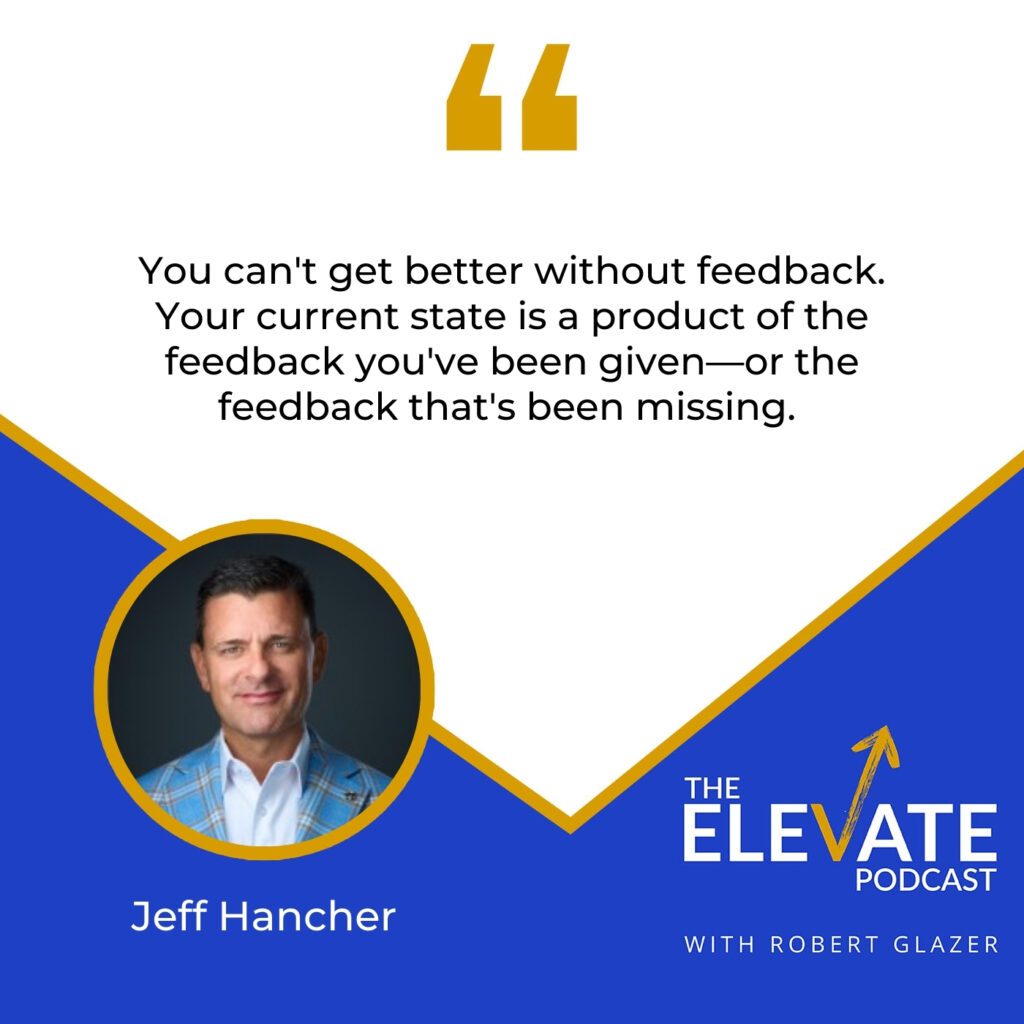
First off, you can’t get better without feedback. Everybody reading this is a product of the feedback they have been given or the feedback that has been missing. That’s who we are. If you’re not where you want to be, you haven’t been given the proper feedback, or you have, and you haven’t listened. There’s this dichotomy.
That’s a great binary. I love that.
Think about it. You could break that down to the social aspects, even, like the substance abuse, the opioid epidemic. How did they end up there? They weren’t ten years old and said, “Someday, this is who I’m going to be.” No, there was some misguidance there. Certainly, they made bad decisions. We can’t train, as leaders, in willingness. Think about this dynamic of Gen Z. I’m a parent of two of them, by the way. Are we talking more about the problem, or are we talking about the solution? They don’t take feedback well. Can we take a little accountability as leaders and say maybe we’re not understanding them well? Maybe we’re not delivering it. Maybe somewhere in the middle is the answer. By the way, this is the tip of the iceberg. There are more generations.
We have no red pen culture in schools. A red pen is traumatizing. As a writer, and I don’t know about you, when I get an edit back, and it’s marked all up, I’m like, “Great, that’s the editor’s job.” When I get an edited draft back, and I don’t see track changes, I’m like, “I don’t think they read it. I don’t think they paid attention to it.”
We’d better be craving it and creating it because it’s the only way to innovate. It’s the only way to move forward. We have to create cultures where feedback is healthy for everybody. It starts with setting the table. There are Boomers. There’s beyond Boomers. There are more generations in the workplace now than ever before in history. We’re leading multiple generations. That’s the beginning. You got quiet quitting. It’s costing the global economy $9 trillion.
I don’t know if we have that anymore because we have active firing now. That has probably offset the quiet quitting.
It’s the Wild West. It’s tough to lead. By the way, there’s a little naivety. There was a national poll from Gallup that told us 65% of leaders agree that they give effective feedback. They asked their subordinates. Only 21% of their subordinates said that they’ve even received any feedback in the last seven days. There is a gap here on what healthy feedback is. Acquiring talent has never been more challenging. Retaining top talent has never been more challenging.
We just don’t want to rock the boat. What if I give this feedback that they need, and they get upset, they cry, or God forbid, they quit? We don’t want to take those risks. Yes, it’s very fragile, then bake in the personal problems. “I’m going through a divorce. My mom was diagnosed with cancer. My kids are on substance abuse.” Guess what? This is the workforce that we’re leading. It’s fragile.
One of the things that I have noticed over the years, I became very frustrated in my organization because I would hear that Jeff and Sally had a conversation. They were on the same page. They clearly weren’t based on something that happened four weeks later. I’d look in the system. I’d look at the notes that people would say. I’d say, “I think Jeff was clear with Sally. I’m not sure what Sally is not getting,” or “Jeff told me he was clear with Sally. The notes in the system do not reflect that at all. Her job was on the line, and so I’m not surprised.”
We started doing these actual feedback sessions, where we would make up Law & Order ripped from the headlines. There would be one person who was doing a 90-day review for someone. They had to tell them it wasn’t working, and their job was on the line. The person on the other end is coming in and thinks that they should be promoted. The audience knows both sides of the narrative, but they only know. The conversation was horrible. We would do it in front of twenty people. They would start with a sandwich. They would dance around.
The Missing Piece: Training Leaders On The Core Feedback Framework
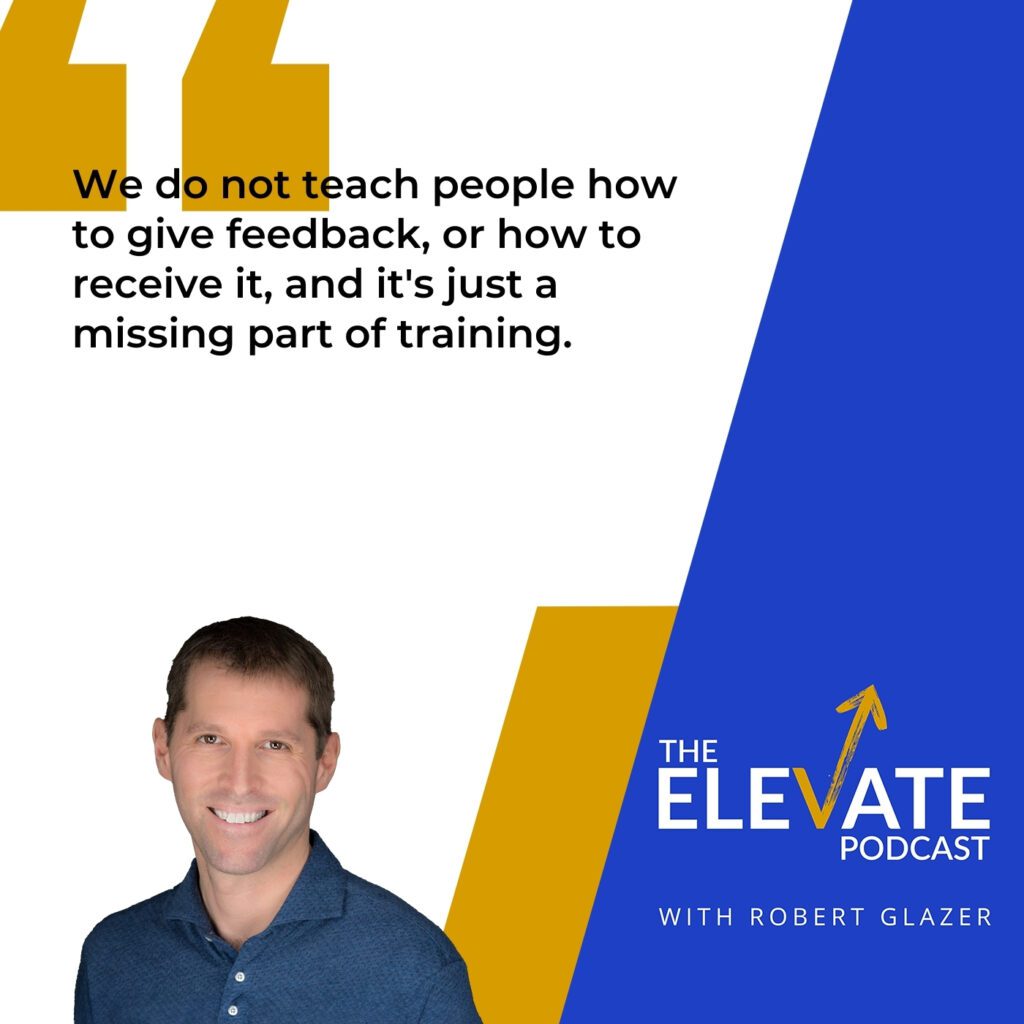
After 100 people went through this training, I would raise my hand and say, “How many in the audience think that Sally knows that her job is on the line after their ten-minute conversation?” No one ever raised their hand. The audience would give feedback to the manager who was doing it. They would go in the second time and do it totally differently. It occurred to me from this that I don’t think we teach people how to give feedback or how to receive it. It’s a missing part of training.
I’m going to say that the book is a good resource because I wrote it. It’s resonating with people because this is a missing piece. We do these workshops all over the place. We have twenty-year tenured leaders hitting us in the back of the room on a break and apologetically saying, “Nobody has ever told me this. This is wild to me.” Feedback alone is not the answer, although it’s a start. You can give wrong feedback. I’d rather you give wrong feedback than no feedback. We have somebody reading right now who is like, “Firm feedback? Not a problem for me. I have a stick, and I will use it. I beat people into submission.” You have the passive that’s like, “Feedback? Forget that.”
They’re the obnoxious, aggressive people in Kim Scott’s quadrant.
Yes, exactly that. Here’s what we know about the leaders who give healthy feedback. There’s one thing that they always do, which is the first pillar of any great framework of feedback delivery. You’ve got to set expectations. In that example that you gave, that never happened. Nobody ever said, “This is the standard. This is the expectation. It’s reasonable. It’s fair. You’ve been trained adequately to meet the expectations. Let’s seal it up with this one.” They understand why the expectation is good for them, not your balance sheet.
I always love it. The feedback has to be situation, behavior, outcomes, and a good framework. What happened? What was the behavior? I always say, “You have to understand why it was bad for you.” The whole Kim Scott genesis story is that she was told pretty brutally by Sheryl Sandberg that she was coming off in this meeting, saying “um,” and having a verbal crutch. Sheryl wasn’t doing it to be mean. She was saying, “Kim, you’re a rising star. When you talk like this, people don’t take you seriously. I want to help you with this. I want to get you a coach.” She ended up writing a bestselling book and going on to build a business on that.
That SBI framework, we talk about it a lot because it’s powerful. We talk about this flow because the framework is expectations, feedback, and accountability. It has to be. It’s in that order. We can’t just give expectations and then hope everybody does it. It’s not going to happen. We have to give consistent routine feedback, but even beyond feedback, here’s what we know. Not everybody is willing. There has to be this third piece, which is accountability. The problem is that when we give accountability without expectations and feedback, we’re a monster. When you have relationships with tough feedback, you’re giving a gift. This is the difference. That’s why all three have to work together.
The Timing Of Feedback: Weekly Check-In Vs. The Annual Performance Review
The problem is, every time you say something, I have three more questions in my mind. Let’s talk about the timing. Years ago, I was at the Ritz-Carlton. They said, “We have a rule. We adopt 72 hours, or you can’t bring it up again.” I thought that’s great because if the feedback is about stopping a mistake, the 90-day or the six-month check-in, think about it in a relationship. If I sat down with my wife and was like, “Here are all the things that you pissed me off six months ago,” this is not going to go well. We’ve been harboring this for six months. What are your thoughts about how fast feedback should be and the role of the quarterly check-in? My belief is that nothing in that check-in should be there.
I got a lot to say about this. I’m glad you asked. This is my anthem. First off, outside of it being criminal activity or gross harassment, it has to be dealt with immediately. There’s a time and a place for an investigation.
What is immediate? Let’s be explicit on that. Is that the same day? Is that 24 hours? Is that five minutes?
If you’re walking through the plant and somebody is lifting the box incorrectly, it’s now. The feedback is now. Somebody interrupts the leader in a training class and says, “This is the dumbest thing I have ever heard in front of everybody.” It’s not now. It’s right after the meeting. We address it in the meeting, though.
It’s not 90 days from now, after they’ve done it again the next day.
I’m not a fan of quarterly check-ins. This is an opinion, not a directive. When I get called into companies, it’s typically because they need a tourniquet. They’re bleeding out. Turnover is at 60%. Year over prior, revenue is down 20%. It’s a mess. I go through a series of questions. One of them is, “Does everybody in your company, everybody in the org chart, get a frequent routine one-on-one check-in with their leader?” “No, but we’re a feedback culture. We go and tell people.” “No, I’m talking about knee to knee or Zoom to Zoom, you’re having a conversation. We’re unraveling smart goals, individual development plans, and feedback on performance. My vote is weekly.” Here’s what I’m going to hear. “Weekly? We don’t have time for a weekly. There’s no way.” “You need more qualified leaders because here’s what we know.”
“I’m a coach, and I don’t have time to coach.” That’s basically what they’re saying.
Your greatest asset in any company is the mid-level leadership. As that core goes, so goes your competitive advantage, so goes your retention, and so goes your attraction. You want me to prove it? Take your best leader, watch them walk out the door, and see what happens in that department. They’re going to follow them right out the door because they’re following that leader. We have to invest in leaders. Those leaders have to reproduce in people. That’s spelled TIME. You’ve got to do it.
The greatest asset in any company is the leadership.
I don’t have an issue with the quarterly or semi-annually check-in. Maybe if you’re meeting every week, let’s reinforce what we’ve discussed and talk about timelines. The rule should be that there should be no fundamentally new information introduced into that.
Let’s not get started on the annual performance review. If you’re doing annual performance reviews and that’s when people get feedback, wipe them out. Don’t even do them. It’s more of a turnoff than it is effective. Whether you’re going with this quarterly check-in, I’m voting weekly. I’m coming off of that because I know the return is so strong. What we can’t do is give people feedback on performance once a year. That’s insanity. It’s a turnoff.
My experience is that there are three ways that people take feedback. One, they don’t. They ignore it and make the same mistake. I had names for all these at one point. Two, this is what you said before. They listen to the feedback. They thank you. Ninety days later, you’re having the same conversation. Three is they take it. You never have the same conversation again. There’s a new thing, but they don’t repeat that.
I would actually argue that the middle group is worse than the first group. In the first group, I know what I’m getting. I know that you’re not going to get better. I don’t care. The second group, we call them smile bleepers, a little bit. I don’t know whether they don’t want to or they can’t, but they’re like, “I got you. I’m going to work on it.” It’s the same thing 90 days later.
Compliance Vs. Engagement: The Three Ways People Take Feedback
The way we have to be thinking about that is, how do we engage their motivation? If you think about it in terms of a speed limit sign, we all know where that police officer sits in our hometown. When we get close to that spot, what do we do? We slow down. Sure enough, there they are. Next thing we know, we’re in the rearview mirror. Are they coming out? They’re not coming out. I don’t see them anymore. I’m right on the gas. That’s a compliance-driven culture.
There’s no engagement there. We just don’t want to get in trouble. If we can drive engagement, this is back to asking the right leadership questions in these one-on-one debriefs, questions like, “Why is success important to you?” Sean, whom I referenced, knew why. He knew what my internal motor was, what drove me. When he had that hard conversation with me, he drew those back to my recollection. I remember exactly one of the questions he said to me. He asked me, “Have your long-term goals changed?”
I said, “No.” He said, “You still want to have a family that’s different than the one you grew up in?” “Yes.” He goes through this list. I’m like, “As much as I want to be so angry right now, he’s so right.” He earned the right. We can have the toughest conversations that we need to have if we earn the right to have them. That’s what this is about. If you think about Mount Rushmore that we all have in our mind, these are people who I wouldn’t be who I am. They were tough on us, but we never questioned if they cared.
When they had to have a tough conversation, we weren’t mad at them. We were more disappointed that we let them down. When we can get to that place, the leadership effectiveness there, I’m a product of it. It drove me into leadership. We don’t have enough time on this show for me to talk about the stories of the amazing people that I’ve been able to lead through trauma.
You gave them feedback, and I’m sure they gave you feedback.
One of the greatest stories is a sales rep that I had, who was going through all kinds of adversity. He wasn’t a natural fit. I almost felt like I was looking in a mirror. He makes his first President’s Club. He comes in and shares some very personal stories about his upbringing and some medical challenges that he had. He said, “Hanch, I’ve got to tell you. There were days that I left the office, went into my car, and started punching the steering wheel, imagining it was your face.” I’m like, “Slow down. Are we getting violent here?” He’s like, “I knew that you cared. I often think, if your leadership hadn’t come in my path, would I be where I am?”
Not to make this about me, but here’s what we know. When you invest, does it mean that everybody is going to fall in line? No. That’s why we have the third piece, which is accountability. Remember, we can’t train willingness. There are people out there who are these raw talents that have potential in them that need to be dug up a little bit. If we can set the expectations, know that all feedback is not created equal, directive, supportive, and collaborative. When we’ve done all of that, there has to be an accountability piece. If you’re going to have speed limit signs, you’d better be giving out tickets. Otherwise, everybody is running amok, running into each other, and killing each other. No, we got to give tickets out. Why? Because it keeps the road safe, and it’s good for the people.
The Leader’s Toolbelt: When To Use Directive, Supportive, And Collaborative Feedback
How do I know as a leader when to use directive, supportive, or collaborative? Can you give me the use cases for each?
The aggressive leader who is reading is saying, “It’s always directive.” Believe me. It works for me. Let me caution that aggressive leader. Your results are good, so you don’t have ears for what I’m about to say, because look how good you’re doing.
You don’t want my feedback.
How much better could you be doing? That is my question. Directive feedback has its place. It’s for brand new employees, newly promoted employees, and for imminent issues, such as they’re about to walk backwards off the dock. That’s direct feedback. When you start giving direct feedback to a peak performer, high tenure, you’re creating a defensive posture. This is the leader reading that is saying, “I was right.” Here’s my question, leader. Do you want to be right, or do you want to be effective? The goal is not to be right in leadership. It’s to transform behavior. That’s what we’re trying to do.
When you’re a peak performer, high tenure, you’re going to be collaborative. Collaborative equals questions. When we ask questions, what we’re doing is we’re leading them to the answer they already know. Now, we’re coaches. We’re not directive micromanagers, but then they’re supportive. Supportive is this person who has been doing adequate or peak performance month after month after month, and then they crash.
What’s going on? Could you write them up? Yes, you could. Policy says you could. That would be directive. What you want to do is go in and be supportive. Michael Jordan’s coaches, when he went into a shooting slump, never said, “You’ve got to find the shooting pocket, Michael. The elbows are going to come in. You follow.” No. Why? He’s a great shooter. The best coach says, “Are you cramped? Is there something going on? Do you need hydration? What do you need from me?”
Ultimately, at the end of the day, they’re offering support. They’re probably going to end the conversation with Michael Jordan by saying something like this. “Just keep shooting.” We got to know when to give supportive, when to give collaborative, and when to give directive. There’s an amazing flow chart in the book that you can cut out and put in your cube. This is it. We’re going to go this way. It’s right there. If you get nothing else, know this. All feedback is not the same. You’ve got to know it’s a tool belt. The more you know when to use it, the more effective it’s going to be.
All feedback is not the same. You’ve got to know it’s a tool belt, and the more you know when to use it, the more effective it’s going to be.
FEAR: Why Is Feedback Avoided, Feared, Or Diluted?
That’s super helpful. I want to step back because we missed this. One of the reasons you said it fails today goes a little bit into the dichotomy you said earlier. Feedback is avoided, feared, or diluted. Before moving forward, let’s go back up and cover why it is avoided, feared, or diluted. What are the examples?
We talk about the acronym FEAR in the book. In the workshop, we talk about feedback avoidance. Why is it that people aren’t doing this? The F is fallout. What if I have this hard conversation and it doesn’t go well? They’re afraid of ruining their reputation as a nice boss or whatever it might be. There’s the emotion, the E. What if I have this conversation, I don’t craft it the right way, and they throw a chair, punch a wall, or the worst is if we make them cry? By the way, cliff note, if you haven’t made somebody cry yet in leadership, you might not be doing it the right way. It’s not because you look to make people cry. It’s just inevitable.
There’s the A, which is amateur. Amateur doesn’t mean tenure. Amateur means I don’t have a lot of experience. I don’t feel equipped to give feedback the right way, especially when this person has been doing this job way longer than I’ve been leading. They’re insecure, but then there’s the R, which is retaliation. What if I do this, it’s not done right, and they go report me to my boss or to HR? I don’t need that kind of headache. Based on FEAR, I’m going to hope this thing fixes itself. What we know is it’s not true. The antidote to feedback avoidance is asking this question. What if I don’t have this tough conversation?
It doesn’t get easier. My number one learning through failure in leadership is the lie that we tell ourselves that if I avoid this uncomfortable conversation, maybe I’ll have a less uncomfortable one. You only have a more uncomfortable one.
You’re robbing somebody of their potential. That’s what we have to think about. What if we don’t? One is what’s right in front of us, which is that we know it’s not going to get better. I’ve gotten emotional thinking about that moment with Sean. You look at my life after that conversation. If he were to let me go down that path, who knows? I might have ended up picking up a bottle, going back to the sauce. Who knows? I went on for eight more promotions.
I end up having enough confidence to quit that company, start a podcast, launch a company, and write a book. I don’t know if all that happens if this one moment in time doesn’t take place. As leaders, we have to invest in doing this in a healthy and effective way because it transcends business. There are people and families that are counting on us to lean into these tough conversations that can transform lives. That’s why I’m passionate about leadership. By the way, it’s great for business.
This idea of safe cultures is everywhere now. You and I both believe a lot in this concept of psychological safety. I always say it’s the most discussed, least defined thing out there. What is psychological safety, and what isn’t, particularly in the context of egos and discomfort?
Beyond Sensitivity: Why Trust Is The Real Foundation For Open Feedback
I might be the wrong one to ask because I’m not that empathetic about it, honestly. We won’t make this political. Believe me. I remember hearing that they were going to make basic training in a way that you could flash a card. The drill sergeant would not go as hard on you. I thought to myself, “I’m about to have a mental breakdown. I need you to step away so that I don’t lose my ever-loving mind.” I thought to myself, “I am so glad that I went through basic training before this all went down.” In my mind, I’m thinking to myself, “If I’m ever taken hostage, I’m not going to get a card to flash.” There’s a place where we have to create cultures of trust and open feedback. People should be very comfortable going to a boss or a senior leader and saying, “I don’t agree with the direction.”
We have to create cultures of trust and open feedback.
That should be welcomed. It should be okay. This tiptoeing around sensitivity, I’m not a huge fan. We got to know our people. I hate broad brush. This is how we’re doing things. I like to find Joe and meet Joe where he is. I like to find Robert and meet Robert right where he is. I want to develop mid-level leaders who have the confidence to lead people, not manage a policy or a process, although we need those things. When you lead people, the rising tide is going to lift all the ships. I’m for culture, hear me, but I’m not for this being overly sensitive because there are people on your team. They don’t need that. I didn’t need that from Sean that day. He earned the right to have a tough conversation.
We need to be very open to that. What we need are leaders who are comfortable doing it. When they deliver it, we hear something like this. “Thank you.” You think about this. Robert and I are going to a trade show in Nashville, making this up. We’re going to sell our books. We’re going to have the marketing and the displays. We got our elevator pitches down. We’re investing a lot of money to be in this trade show. We’re closing up the conversation, what we’re going to wear, and our logo shirts. I say, “Robert, when we’re walking into that trade show, if I happen to smell maybe a bad odor on your breath, would you want me to let you know?” What would you tell me? You would want to know.
Yes.
I would say, “Why would you want me to let you know, Robert?”
I assume other people are going to notice. I’d rather deal with it.
What I know about you, Robert, is that you’re a believer in first impressions. You’ve told me this. I also know how important it is for you to get your content in the hands of people because you know it can transform lives. You have my full commitment that if we’re walking into that trade show, I’m going to be on the lookout for you. Fast forward two weeks. We’re walking into the trade show. Robert has hit a couple of coffees on the drive in. I smell it.
By the way, Robert has minty fresh breath for the record. We’re walking in. I smell it. I say, “Robert, do you remember a couple of weeks ago we were doing final planning, and you asked me to let you know if your breath had some level of bad odor? I got to let you know that it does, but great news. I brought mints. I want you to have one.” I hand you the mint, Robert. What do you say to me?
Thank you.
I say, “It’s my pleasure.” Check this out. I’m at a convenience store getting some snacks, whatever they might be. There’s a guy behind me. I never met him before in my life. He has the same-smelling breath that Robert did going into the trade show. I do what any good citizen would do. I turn around and say, “Sir, I thought you would want to know your breath stinks.” This dude would probably be punching me.
He punches you in the face.
“Who are you to tell me? I didn’t ask.”
There’s no relationship.
The data is the same. By the way, I was right. It’s his fault. He can’t take feedback. No, I didn’t earn the right to give it. We got to own that because the data is the same. In one situation, I’m being thanked. In another one, I’m being punched. It’s the same data. This is the framework of the book. When we capture this, we can say what needs to be said. There’s gratitude given back. We end up on somebody’s Mount Rushmore.
Challenging Gen Z Assumptions & Reality Gap
I’m curious about your stance on this because you’ve highlighted the gap between some of the assumptions about Gen Z and the reality of their lives. I know managers are struggling with how to win their trust and performance. Where are veteran leaders misfiring? Where do they need to hold the line? Where are they not meeting them where they are, in terms of being effective? I’m assuming you have contradictory viewpoints on this based on what we’ve talked about so far.
I’m a parent of Gen Z, so I’m here for it. First thing I would tell you, if I may, I’ve got to give a plug to my friend and mentor, Dr. Tim Elmore. He wrote the book on this subject about leading the generations. He has a book coming out in November of ’25 called The Future Begins with Z. We had Tim in for our executive mastermind to talk about this because it’s a hot topic. We have to give some leash here to this next generation because guess what? Gen Z is in our future. Whether we like it or not, they’re going to be there.
The key to leading Gen Z is a level of autonomy, telling them what outcomes we want and coaching them towards the outcomes. There’s got to be a level of autonomy because Gen Z has a free agent mentality. I’ll do a little bit here. I’ll sub here. I’ll 1099 here and all of this stuff. We have to give them some level of freedom. By the way, it might not be that they’re lazy. They get this label a lot. You think they’re lazy because they’re leaving right at 5:00, but what you might not know is that they’re leaving to go to their second job.
We got to dig into this. Whether it’s Gen Z, the Boomer, or whatever it might be, inside every person is a belief that everybody wants to get better. They’re one great leader away from having a totally different life. Although there are nuances, the framework is consistent. Understand Generation Z. They’ve had a lot of challenges. They grew up in a pandemic. The older Gen Zs were born right after 9/11. There’s some chaos.
We laid them all off during the pandemic. Why should they trust us? Why should they trust employers? You said we were great. Next thing you know, I was the first one out the door. We have to look at this in a very emotionally intelligent way. Always remember, we’re not leading a generation. We’re leading a person because how dare we clump everybody into a group? You have to be aware of some of the uniquenesses of these generations as well. Healthy bias is the answer.
We’re not leading a generation. We’re leading a person.
The Single Most Transformative Feedback: Overcoming Insecurities And Imposter Syndrome
Jeff, we could do this forever. I’m going to bring it to a close with my favorite multivariate question. You can answer this from feedback. Actually, I should alter this. I usually ask, “What’s the mistake you learned the most from?” I should ask you, “What’s the feedback that you learned the most from?” You talked about that conversation, but is there some other point in your life, personally and professionally, a feedback that you learned the most from?
It was feedback on my insecurity and lack of confidence. I still battle it. I’m going to be transparent. I’ve won all the awards. I’ve done all this stuff, but I still battle sometimes with this poverty mentality. I throw up through imposter syndrome often. Call it trauma. Call it whatever you want, but I’m being honest. I’ve had leaders along the way who said, “I need you to go out there and own who you are. Let me remind you who you are. You have to go out there because you perform better.” I needed this support. I had to grow these legs, so this feedback has been instrumental for me.
One of my favorite quotes says this. “If you lack confidence in yourself, you’re twice defeated in the race of life, but with confidence, you have won even before you start.” Getting confidence is very hard, but not having it is harder. We get confidence in two ways: who we surround ourselves with and what we consume. This will give you the muscles that you need to lean into the toughest things. That feedback single-handedly has transformed my life.
Jeff, where can people learn more about your work?
I am easy to find. It’s Hancher like Jolly Rancher. JeffHancher.com. There, you can find links to the podcast and the workshops. If you’re interested in the book, I would recommend going to FirmFeedbackBook.com. We got some free bonuses if you get it through that site. We would love to stay connected with you. I appreciate the opportunity, Robert.
Thank you for joining us. You have so many tactics. It’s hard to keep track. I hope people had their notepads out or were somewhere safe where they could write down these lessons.
No doubt. Thank you, Robert. Thank you, everyone. I appreciate you all tuning in. If I can support or serve any of your audience in any way, we’re definitely here for it.
If you enjoyed this episode in general, I have a small favor to ask. Would you mind taking a minute to share this conversation with someone you think would appreciate it? If the episode made you think or see anything differently, hit the share button and text or email it to a friend. Thanks for helping us spread the word. Thanks for your support. Until next time, keep elevating.


