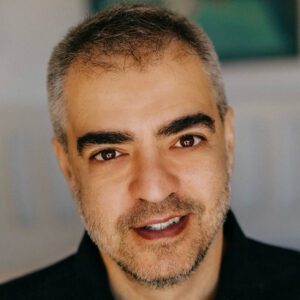

Ali Horriyat is working to bring more compassion to the world. He is a former hedge fund owner who sold his $3 billion dollar fund to go all in on mental health and compassion. He is the founder of Compassiviste, a global network of humanitarian projects and philanthropic networks. He is also the author of 13 books on a wide range of topics, including poetry and personal essays.
Ali joined host Robert Glazer to talk about giving up on his finance career, rededicating his life to mental health and wellness, and much more.
—
Listen to the podcast here
Ali Horriyat On Why He Gave Up His $3 Billion Hedge Fund And Changed His Life’s Purpose
Welcome to the show. Our quote is from Steve Maraboli, “A kind gesture can reach a wound that only compassion can heal.” My guest is Ali Horriyat, is working to bring more compassion to the world. He’s a former hedge fund owner who sold his $3 billion fund to go all in on mental health and compassion. He’s the founder of Compassiviste, a global network of humanitarian projects and philanthropic networks. He’s also the author of thirteen books on a wide range of topics, including poetry and personal essays.
Ali, thanks for joining us on the show.
Robert, thank you for having me, and I’m glad to be here.
The Road Less Traveled: Ali’s Early Years And Drivers Of Success
Your career’s taken an interesting road, and we’ll talk about that. I like to ask this question in general, but I’m particularly curious in your situation. What did your early years look like? What were you interested in? What drove you towards the type of success that you had? A lot of times, it’s from not having something or wanting to keep it.
I grew up in Dubai. I was born in Dubai. I attended boarding school as well in Switzerland. I grew up very wealthy in a wealthy family. It was definitely not a rags-to-riches story. What drove me also was not so much the financial aspect of it, it was more so the freedom that it gave me to pursue all the things that I’m pursuing now. The story is like that parable of the American industrialist who goes to a seaside small town and tells a fisherman the story.
You’d be good. Get an extra boat, grow your fleet.
You can have more time to do what you’re doing now. That’s my story, essentially. I was working hard so I could go out and do all the things that I really care to do, but I never got around to doing. My life was work. The free time that I gave myself was really just traveling the world, learning about different cultures, understanding the world from different viewpoints, trying to help where I could, trying to make a little bit of changes here and there, educate myself. Those are the things that mattered. The work got in the way. My line of work was awful for what I wanted to do, because let’s say you’re betting hard on gold. You’re hoping for a catastrophe. You’re hoping for some war somewhere. You’re hoping for something because gold doesn’t just shoot up.
You can have more time to do what you’re doing now.
You need an external, you need a macro event.
You need something deadly. Here I was doing this work, hoping for the deadly. On the flip side, I was thinking a little bit of my profits and saying, “We’ve got to help these people.” It’s contradicting to say the least.
From Construction To Currency: How Ali Fell Into Finance
What did you study in school?
A lot. The studying, I’ll tell you this before I tell you what I studied. The reason I stayed in school for a decade was not really because I wanted to get my PhD or anything. It started with this. Like many people back then from the Middle East, you went to North America or Europe, you got an education in business, you came back, and you ran the family business.
Was the family business an investment fund?
No, it was actually in construction and development. The investment, I’ll tell you how I fell off to that. What happened is I went to school to do economics, and I did my economics degree. I did my bachelor’s, my four years, got my degree, and came back home. Here I had grown up partially in Europe, partially in North America. I came to learn at a young age because I graduated from high school at 15, and I graduated with my first degree at 19. I was still very young. I started seeing these differences here back home and in North America with the way people were treated, the labor force, and all of those things. I just wasn’t happy with it. I got into little tips with my family all the time about just human rights issues, essentially back then, which now are resolved. Now they’re fine, but back then it wasn’t.
Dubai’s had a huge modernization. I guess a lot of people know Dubai today. What did Dubai look 20 years ago, 25 years ago?
I know. If you look at Dubai 40 years ago, it was just a plain desert. That growth initially didn’t come with all of the infrastructural legal aspects of it. It just started growing. That was when I got thrown into it, and I was like, “No, this isn’t how they do it back in Switzerland or back in the UK or back in Canada or the US.” I said, “No, I cannot do this. I cannot be here. This is in my scene.” I went back.
To go back, I had to say that some event is taking me back, and I said, “Look, I got admitted to my master’s program. I’m going back.” I went back and I did a philosophy degree. It wasn’t the master’s degree. I had to finish my undergrad to do the master’s. I did the undergrad, did the master’s in philosophy because I liked philosophy. One of my professors said, “You should go into political science because you say a lot of things that are interesting.” I said, “Okay.”
You debate a lot.
I said, “Sure, why not?” “This or go back home again?” I said, “This.” I did that. That led to a graduate course in international relations, the higher level of things. I thought, “I’m not going to sit here and get multiple PhDs. I need to do something with myself.” That was the point where I said, “Dad, I’m not coming back home. I like living on this side of the world.” Again, they were fine with it. I thought, “I’ll go get a job. I was excited.” I had applied to a few places within my degree in education. They wouldn’t hire me because I was overqualified and I had no job experience. I’d never worked a day in my life by then.
Overqualified And Unemployed: The Unexpected Start Of A Trading Career
How can you be overqualified and not have job experience? I understand one of those, too.
Overeducated.
Overeducated, okay, got it.
They turn around and say, “You’re overqualified for this entry position.”
These were finance roles, or what were you looking at?
Some of them were finance roles. Some of them were government roles. There were different roles that I applied to. Literally none of them accepted to even take me in for free. I said, “I’ll work for free. Just let me get involved.” They said no, and so at that point, I said, “I got to do something.” I had no prior knowledge of trading or any of that stuff. I’ve done my economics.
I’ve gone for an MBA, but really, it doesn’t prepare you for trading. Traveling a lot as I was younger with my dad and going to exchange places all the time, because when you went to Europe when I was younger, you’re talking about Deutsche Marks and Swiss francs and French francs, and every country and region had its own currency. They changed it on a daily basis. You start learning these things. I knew a little bit about that.
A lot more arbitrage opportunities.
I started learning from my dad when you would exchange to what, and all of these things. I used that. I was like, “I’ll just start trading for myself and see what happens.” I started doing that just for the fun of it until I found a job. I never got to find a job.
Did you run into Nassim Taleb in your world?
No, but I know who you’re talking about, but never in the same space.
Some of his books are anti-fragile, and Fooled by Randomness are amazing read.
That’s how I got into that world.
You had a lot of success in that world. You said you left a $3 billion fund. Tell me, was that your fund? How did it get to three billion?
It started with me trading a little bit of money and a bunch of my friends who went to school with me, and they started noticing, “You’re doing well.” By you’re doing well, I had done well. I bought a Porsche for myself. I remember. They saw that car, and before that, I had an SUV. I had a Tahoe. It was a big difference. They’re like, “How’d you do that?” I said, “I’m just trading.” I showed them, I said, “This is what I’m doing, look.”
They’re like, “Can we give you some money? Just put it in your money.” I said, “Sure, why not? I could lose.” They’re like, “It’s fine.” One thing led to another. Friends brought their friends, brought their families, and their grandmothers, and started refinancing and remortgaging their homes because it was good money. One day, I got a knock on the door. It’s the authorities. They come to me and they say, “You cannot have this running out of your personal account. This is a lot of money now.”
This was the authorities in where?
In Canada. They came in and they said, “This cannot work out this way. You cannot have random people from all around just wiring money into your personal checking account. You’re using that.” My lawyer said, “What do you need to do? We need to set up a fund. That was the beginning of the fund.” The fund gets set up, and the funds get transferred. It stayed that way until I got another break from the authorities again. They did an investigation for like cheating and inside trading on me because I was doing so well. They thought he had to be cheating. When it came to the point that they took that back and said, “He’s not cheating. He’s doing that well.”
That was marketing for you.
Yes. That was free barking for me, and the phone wouldn’t stop ringing. That’s when the office expanded and we actually got people in, reception, and staff, and everything else. That’s when it started growing. It started blowing up. From overseas, I got funds as well, sovereign funds, other things. One thing led to another, and it really grew.
The Breaking Point: When Success Becomes Redundant
You have multiple funds, and you have a fair amount of success with it. You’re doing well. You decide, “I don’t want to be at the top or near the top, I don’t want this to have a breaking point.” What was the breaking point? Was it a straw that broke the camel’s back, or was there a specific moment, or was it just the accumulation of a lot of different things?
The straw that broke the camel’s back in the specific moment, same thing. Essentially, that did happen, but it was a multitude of things that led to the straw that breaks the camel’s back. It started with, “Here I am, I’m getting really successful, and life changes.” Obviously, the material life and everything that comes with it. Start, you’re hanging out with celebrities. Your dating pool changes. Your travel pool changes, everything changes.
I was loving it at the beginning, like anybody would, because it was a whole level above what I was used to, even growing wealth. This was also in the West. It’s very different than many people in the Middle East will have a Ferrari and they’ll grow up in a mansion. When you start hanging out with soccer players, used to watch on TV, it becomes a different scenario. I got bought into that whole lifestyle. I enjoyed it for a while. It became redundant, and it became very shallow, and it wasn’t meeting any standards of my own personal will or growth within.
It didn’t really do anything. I got to a point where financial growth was great when it was going from $10,000 a month to $50,000 a month, $100,000 a month income, because you really can experience a lot more with that money. When you’re making $800,000 a month or $2 million a month, there isn’t that much more you’re doing with that money. No extra levels get opened for you at that level. Everything’s just repetitious and the same. If you don’t have a purpose beyond making money, it gets boring.
Similarly, it is an unwinnable game. I’ve heard people say that because there’s always someone who’ll have more, and then you feel inadequate despite what you’ve done.
Even if you’re not in that state, there were people who were my clients. Some of them liked me just as a person. They throw in a little bit of money at me. For me, it was a huge amount of money for them was pocket change. I was never in a position to say, “I’m going to go and challenge Mr. or Mrs. so-and-so.” I knew that was a different ball game. Having said that, like I said, there wasn’t a car they could buy that I couldn’t buy. There wasn’t a flight they could get on that I couldn’t. There wasn’t a hotel they could go to that I couldn’t. For me, there was really nothing more to gain from this experience.
If you go back, I’ve spoken to people on this podcast and otherwise, and I think people don’t believe that outside of the circles, but sometimes getting all of that, like you think it’s going to make you happy. Like you think the ability to buy this ticket or whatever. I’ve seen various quotes of this. When your happiness is tied to a destination, you usually have a problem because you get there, and not only does it not make you happy, but most high achievers then just move the line as soon as they get to any of their goals.
You start out with this idea of “I want to go to the ball gate” and then it becomes “I want to be able to afford the tickets to the playoffs.” It becomes, “I want four seat tickets,” and then it becomes, “I want to be part of the ownership of the team.” When does it stop? It never stopped. That started happening. At that time in my life, mind you, I was very athletic. Because of my athleticism and because of my background, growing up in Dubai at the time, I wasn’t exposed to drugs and alcohol, and a lot of gambling and a lot of things that money supports.
I saw a lot of my friends at that level, whether in different industries or in my industry, not necessarily from the stress of trading and the Wall Street image, but even dentists who are doing really well. They started going into either gambling or cocaine. Something was giving in the midst of all this. I wasn’t about that. I didn’t do any of that. My thing was to travel. I love traveling. I liked cars. Race on the weekends and stuff.
At that level of money, that’s really not a cost. At that point, it became, like I said, boring, and I started seeing people falling off, and I was like, “I don’t want to be that. I don’t want to be like this person. This person’s going into rehab.” I helped this person. I drove them to rehab, that’s sad. I thought there must be more to life. A couple of incidents I went through changed my perspective. At first, I didn’t quit. I decided to take a moment to rethink what I want to do on a bigger level. I did that. One day, I got up and I got on a plane, just a random, spontaneous decision.
When I got to the airport, I looked at the departure board and all the flights were leaving in 6, 7, or 8 hours. I knew I wasn’t going to wait. I was going to go back home and go back to work the next day, but I needed to just separate myself from everything for a minute. There was only one flight, and it was going to Ecuador, and it was about two hours to go. I was like, “I got to go there wherever.” I’ve never been to Ecuador. For some reason, I thought it was right by Costa Rica or something, a few-hour flight. I get the ticket, I go in and I get on the plane and the pilot says how long the flight. I’m like, “It’s a day-long flight. It’s far.” Anyways, I get to Quito.
A Spontaneous Trip To Ecuador: The Catalyst For Change
No plan, connections?
No plan, nothing. I left my car at the airport. I left my car in the parking lot, got on a plane. There was an incident that caused me to be like, “No, I need to take a moment to change. I need this now.” I get there and I go into the hotel, I go out, and go for a little walk the next day. I come back and I tell the receptionist, “What do you guys do here for fun?” It’s not like a happening city. It’s not Barcelona. I said, “What do you guys do for fun?”
He’s like, “We just hang out, friends.” Like typical hotels, they bring you out the map and they start drawing circles where you need to see and the cathedral, and everything else. I said, “No, I could do that on my own. I want to know what you guys specifically, what are you doing tonight? I’m going to come hang out with you.” He said, “Sure. My cousin’s going to come pick me up when my shift finishes, and then we’re going to go to another person’s house. You can come with us if you like.” I said, “Yeah, sure. Thank you.” They took me out.
That night changed everything, because I went to this person’s house, and these were young people that were in their mid-20s. I go to this home, and the parents are there as well. There are hummingbirds everywhere, and there are trees and fruit, and there’s a river. There’s a whole green mountain. This house is at the base, it’s just so beautiful, nature. Lovely. I get talking to the dad, and he says, “You’re from Canada.” I said, “Yeah.” He’s like, “It’s a nice country.” I said, “Yeah, it is. It’s beautiful.” We start talking, and I said, “You bought this house.” He said, “Yeah.” That side of me comes out quickly. I need to know how much the house is worth. What do you do? How much do you make?
That sounds like the fishing village story coming up.
That’s what happened. I said to him, “You bought this.” He was like, “Yeah, this is all mine.” He points to the mountain, and I was like, “What do you mean?” He’s like, “From the top of the mountain to the end where the river curves.” I was like, “All of this.” He’s like, “Yeah.” I’m like, “How much did you pay for that?” He’s like, “It was expensive.”
I said, “How much?” “$85,000.” I was like, “You bought this whole mountain and this whole, like the hummingbirds, the trees, the fruits, the river, all of that for $85,000.” I’m like, “Look, what do you do?” He’s like, “I’m retired. I used to be a doctor.” I was like, “What do I do now?” He’s like, “I enjoy my life. The seasons change, and here you get so many different topography. You drive a few minutes and you’re in a completely different setting, nature-wise. You get to see a lot of you get to experience a I love it.”
That was the moment that I was like, “I don’t need a billion dollars to be able to be happy. I really don’t. I need to just breathe and take a step back and start enjoying life, and I can do that.” I stayed there for about two weeks, and I got scared of going back to Canada because I thought I’d go right back into what I was doing. From there, I decided I was going to change my life. That was the moment I said I’m going to change my life.
This is part two of the story. That was all a lie because I realized going into the philanthropic motor valley was not really me trying to say I need to tell people this is not what it’s all cooked up to be. I need to tell people this is not what it’s about. Happiness is not this. What ended up happening is I started dictating what I want to do with my money. It was like billionaire philanthropy, my name on the board. I see how it goes. I know what these people need.
I’m not listening to anybody. I got the money, you do what I tell you to do. That mentality. I caught myself doing that early. I said, “I know what the problem is now. It’s not work. It’s none of that. I’m just as addicted to my friend was to cocaine. I’m just addicted to money. I cannot separate myself from the power that gives me to be able to do the things I want to do through that power, through that momentum. The use of it.” It’s like having a gun. You control your audience at that moment. With that amount of money, you control your audience at that moment.
Unchecked Capitalism And The Search For True Purpose
It’s interesting. There are a lot of criticisms of capitalism, and capitalism has a lot of faults, particularly unbridled capitalism, but in terms of systems in the world that have proven to be there’s ways to run societies and there are some proven ways and some unproven ways. Now you have a lot of anti-capitalists. I don’t think that’s your stance. I your stance was more, but what does it look like when it’s unchecked is the word I’ve heard you use.
That’s what it is. Look, I’ve said this before. You bring Adam Smith back from the dead, and you tell him this is capitalism. He’ll say, “No, this isn’t what I was talking about.” Just like if you bring Karl Marx back from the dead and you tell him this is communism, and you’ll say, “I never even said communism.” It’s like they never advocated for these things. This happened because we just went crazy. This is what happens when you just shoot off the edge.
The idea of capitalism was to let’s allow people to innovate. Let’s give them the capital and the requirements and all the resources so that they can come up with all these wonderful things for the benefit of society as a whole. That benefit changed from society as a whole to 0.1% of society who can afford these lovely innovations. That became an issue that I don’t think anybody advocated for, except for the person in the moment living in there, accepting it. When it gets really ugly, we shift like that pharmaceutical guy. I forgot his name.
Sackler.
No, not that. I forgot his name.
Elizabeth. There are so many of these.
No, that’s different. That was fraud. I had medication that was $17, turned it to $20,000.
The insulin or whatever it was.
The right to do, that’s just capitalism, then this is no, this is insane. We cannot allow this capitalism. It’s just the next level. That’s all it was.
I saw a Harvard professor last year. I went to something with my daughter. History definitely rhymes if it doesn’t repeat itself. One of the things he pointed out is the things that we are seeing today, and some of the strife, and a lot, they have almost always appeared historically when wealth imbalances have reached this level. This is not unprecedented, and it’s happened before, and it hasn’t ended very well, whether it was in France or the US or otherwise.
All sorts of things happen. The thing is, I’ve come to the point now, I mean, we’re talking I realized I’m addicted to money, that’s when I gave it all away because I realized what I was doing, whether I was in the office trading or whether I was going to take my money and do this capitalistic philanthropy like many people have now quit their jobs, written a book and come out and said, “I’m a philanthropist and I’m going to change. I’m to give a billion meals or this and that.” I say, “That’s great, but show me the impact. What’s your exit strategy here?” I come from that world where if you’re going to do something, it shouldn’t really matter that you fed five people on a Sunday because those five people on a Sunday need food on a Monday.
It shouldn’t be about you.
It shouldn’t be about you saying, “I fed those people on a Sunday,” but it should be about you at least being able to say, “Hello world, look at my website or look at my social media, whatever it is that I’m my platform that I’m amplifying this through. There is a way that I think as a community, we can all come together and make sure that the 23,000-plus people who die every day from starvation don’t. I’ve come up with an idea, let’s come together and do it.” That to me is an exit strategy because the moment those people are not dying, there’s no need for this system.
Capacities: Blending Compassion, Activism, And The Arts
This is a variation of give the man a fish or teach the man a fish. You created a Compassiviste. Talk a little bit about it, and it’s unique. It’s got a lot of different pieces. What’s the mission, and how does the work of that organization embody some of the things that we’ve been talking about?
Compassiviste is a word I coined, and it means the compassionate activist because a lot of people today are awakening to compassion, and they have been for centuries and millennia. Religion is all about compassion. All these missions, I mean, forget about the atrocities of organized religion, but generally, a lot of people are going into places to help and compassion. Compassion is a good thing, but I found the problem with compassion, and this is what compassion is about. The problem with compassion is that you and I can be walking down the street and see a homeless person sitting there freezing to death in the middle of a New York winter.
You can have compassion for him, but it doesn’t help much.
We could cry tears as we walk along, and it will not change that person’s position at all. What does it take to actually change that person’s position? Some activism. We need to act on our compassion. We have compassion, now we need to act on it to make the change. Compassiviste essentially comes in and says, “Start with your compassion.” Going back to a Buddhist model, when your mind works in modules, keep compassion as a steady module in your mind.
Don’t let it shift, because when we go to a shoe store, we try to bargain for the shoe, for example, because it’s got a scratch on it or something. That’s our economic module taking the lead. Everywhere we go, we have a different module that jumps in. It’s like, let me capitalize on this situation for the best outcome. If you leave your compassion module on all the time and leave those as secondary and tertiaries, then you always lead with the best interest of the whole.
Act on that compassionate model. Act on that. Be an activist on that. The E at the end of Compassiviste is essentially reminding us that this is where the feminine power of the universe, the love that everything is built with, whether you look at it from a Darwinist perspective or an atheist perspective or God and religion and organized religion, however you want to look at it, everything must have been created with some momentum of love.
Otherwise, why have fruits? Why have life? Why have all these beautiful things that we’re seeing in the world if we don’t destroy it? I believe in all of that. I believe it comes from the feminine. It comes from the ability to give life, to bring life, to make life. That’s within all humans. It’s not a man, woman thing. It’s a spectrum. I could be in touch with my feminine side.
I could be in touch with my masculine side, and I could still be a man or a woman. That’s what Compassiviste is about. What we do in the organization is we start with projects that affect the whole in the sense that today we’ve been awakened. It’s not that it just started, but we’ve been really awakened to climate issues, to global warming. It’s a serious issue.
Even for those people who don’t feel like they debate the cause of it. I think people are starting to say, “Look, something is changing and we’re going to have to live in this some way.” The US government, particularly, I think, is very not governments are very bad. They will not spend money on prevention. There are unlimited funds for remediation once you have a disaster.
The whole coast of California can go up in wildfire. We’ll come and rebuild it, but we won’t spend 20% of that.
Putting sprinklers in.
We won’t do that. That’s just how it is.
It’s just a political will thing to, because a lot of prevention. You don’t know when it’s going to pay off. It’s like insurance.
That’s the problem. When you have a government that’s in for four years, they cannot do good things for the next government that just came in and gets the trophy. Putting all that aside, though, regardless of whether you think climate change is a hoax or if you think it’s based on some science, that doesn’t matter. What matters is something’s giving, something’s happening. We’re seeing these disasters going on. I think to myself, can I go out there and tackle poverty in for example, in LA on the streets, or any other cause that’s very centralized and compartmentalized, so to speak, when I know even if I fix that entirely, the next flood will just kill all of us.
You’ve picked this as your beachhead.
Yeah. Also, we come in through the arts. If you notice in our works, we have film, have books, we have all sorts of arts involved. We present a lot of our programs through the arts. The reason for this is, I believe, like you mentioned earlier, if you look at history, every major change, a social change that has occurred in the world has been precedented by an artistic presence of this will to change.
Whether it was through philosophers who got decapitated or prophets who were crucified or whatever it was, something happened that the state was like, “Shock, and then society caught up to it.” I get that we need this change. Even in science, Galileo and others. There’s always the arts that express the need for this change and bring you some perspective to it, and then the changes happen.
If we kill the arts today, we’re not going to reach those voices and those needs for change from a strictly engineering perspective, because engineering builds what the art imagines. If we cannot imagine it, we cannot build it anymore. I think we’re killing that space. Compassiviste reinforces that.
If we kill the arts today, we’re not going to reach those voices and those needs for change.
We have our Compassicon or convention in 2025, or about this time next year. What we’re doing there is every year we’re going to different city in the world to really activate people into coming into themselves with compassion and activism and the arts and major global issues and bring their voice and bring their activism to us so that we can create those communities and connect them globally to make a change.
When you think about the arts and climate change, it part of the design solution? Is it part of, like, how does the arts mix with something like that?
You said solution, we do twofold. On the one hand, for example, we have a carbon labeling program. What we do is imagine you have Coke, you have Pepsi, both can say one can say 3 grams of carbon, one can say 2.7. What do you think is going to happen? There’s going to be a war to see who has the least because you want a better one. You’re helping with the solution there.
We have a TV show that’s helping with the solution. You have the arts. What’s the arts doing? Imagine you had social impact films that were telling people the story of what’s happening, or through a specific narrative, be it in Utah, be it in Brazil, be it in India. Tell a real story through that, whether it’s a documentary or a feature film. People aren’t really investing in that because Fast and the Furious number whatever the next one is, is going to be the moneymaker, the next Star Wars is going to be the moneymaker.
You cannot go to the studios and get paid for those things, because social impacts are not for us, we have the big budget. You want to rebuild a space that people are like, “That’s the movie I want to watch.” When they repeatedly go to the movies or get it at Netflix, and those are skyrocketing in sales, it’s going to shift the market. You need to really bring the education out through the arts as well.
There’s really a lack of education. We’re all out there on our social media and everywhere talking about climate change. You ask people what carbon is measured in, and they cannot give you the value. They cannot give you the scientific value. What speed measure did not get kilometers per hour, miles per hour? A lot of people know because the education has been passed along. Calories. People know what calories are.
It comes to climate change, most people are hard pressed to give you an answer to what it is. You could say, “Is it kilograms per meter cubed?” They’ll start thinking whether it is. We need to bring that education to the table. I think that should come through the arts. That’s where the arts come in. It feeds you the education, and it feeds you that spiritual will to say, “I need to be a part of this. I cannot watch this film and not be involved.”
The Kitchen Model: Nourishing Body, Mind, And Community
Tell me a little bit, I read about the octopus and also the kitchen model. Explain a little bit about both of those.
The kitchen model, the kitchen is the idea that we have a free kitchen. Again, multiple around the world. What we do is we bring in local farmers, local agricultural food into the kitchen, and we make vegan food in the sense of not vegan in the sense of getting garbage that’s made just not to have meat in it, and from the supermarket.
Highly processed.
Not that, but real vegetation, real foods. Get celebrity chefs, local chefs involved to make the menu for the month and teach people that, for example, a lot of people don’t know this, especially when you’re wealthy. This comes from being wealthy before. You would go in the middle of winter to a restaurant and still be able to order a, I don’t know, cucumber and watermelon salad, a purely summer produce. There’s no reason you should be in New York or Toronto or Montreal or freezing places having that. It’s overkill. You want to teach people what they should be eating in their environment and their locale.
It’s like indigenous.
You understand why your body needs the squash more than it needs the watermelon in the middle of winter. It does all of that. It’s free because everybody’s collaborating together. It’s built on a donation model where the people say, “You come with your daughter, you enjoy a dinner there, you make a reservation, you come and you enjoy dinner, you learn all of these things. On the app, you take home the recipes and you can make them a home, and where all your farmers are and how far you are from them and everything.”
The other aspect of it is that on the other side of this, we have the homeless community. They can come in, there’s a whole section for them to get checked by our medical staff, to get clothing, to take a shower, to get a haircut or anything they want, beautification wise, to give them some renewal of spirits and happiness or something that we can do to get them confident to come back into the world, so to speak, the social world.
To be part of that dinner, sitting with other people and families and starting to converse, and I didn’t say this before, I should have, this comes from when I used to be at my office. I used to take some lunches. I had to go down, and I don’t know why I’ve seen this in many cities around the world. I’ve seen it in New York and Toronto, and London. Around the financial district during the daytime. There are a lot of homeless people.
San Francisco. There’s a lot.
There’s a lot of money transfer there. Basically, I used to pick one of them and say, “Let’s go have lunch.” I used to take them with me to lunch to hear a story, to see why this person’s on the ground here. I realized after years of doing this that they’re not all what they’ve told me about them. They’re not all drugged-out crazies that should be in hospitals. That’s the image they tell you, especially being an immigrant, they tell you, be careful, these are druggies. You don’t learn. I started realizing, no, these people, most of them, are fine. If they had not missed that one payment or they had not screwed up, that tiny little thing could have saved them. This was maybe for about 70% to 80% of the stories that I heard.
A lot of things are timing, or I’ve seen people’s strategy, a trading strategy that was brilliant on a Friday, and it would have wiped you out on a Monday. You’re either going to be a hero or a goat, and it was more the winds of fate.
When I came up with the kitchen idea, I said, “If people can see what I saw through the storytelling of the homeless that are sitting with them at the tables and they’re mingling together, so to speak, in community tables having these dinners, they may be able to support within their community and society, maybe helping reintegrate these people back into society, maybe giving them jobs, maybe trying to help them somehow or however it is something will come out of it.”
When you feel personally involved with someone, it makes a very big difference in staring out your window and seeing a homeless person at 28 floors below you that you don’t even know. There’s that aspect of it. There’s an art channel. The art channel is essentially that every month, we will curate our artists to come together and give us their paintings about a specific topic.
It could be children’s rights, it could be animal rights, it could be something very specific within children’s rights, for example, and we’ll put that in that too. As you finish your dinner, you go through the experience chamber, which includes a hallway of the arts, and then there’s a whole discussion that opens up to the floor by seeing those. Nobody can buy the arts. They’re not for sale. They’re for everybody to see.
Nobody can buy the arts. They’re not for sale. They’re for everybody to see.
That makes them worth more.
You pay a little bit to keep this going. You donate. Just like in the UK. In the UK, you go to all the museums and they’re free, but they actually get enough funding through people donating because people respect that ability to do this. Whoever can actually donates. You do that, and the artists get paid. They can now, through that payment, do what they want to do in the arts, express themselves. An amazing artist doesn’t have to sit just to pay rent and eat, but has a website that says, “I’ll draw your cat or a portrait of your dog.”
Now they can actually go out and do exactly the art that they want and express themselves in the ways that they want, and bring out meaningful art. We’re promoting the arts with that space as well. In the middle, there’s a whole other style of experience center with a roof that’s open and closed so that you can go through the seasons and go through all the tempers with the homeless community. When you come there to have dinner with your daughter and it’s winter, it’ll still be cold. You can appreciate what’s going on.
If it’s raining, it’ll still rain. You can appreciate what’s going on. We want it to be that way so that we give people a real understanding of the situation and a real understanding of the waste of food and how we can fix this and how to really understand Whole Foods models and other places and to bring back some equity into the world of food and the slavery that occurred because of it. A lot of education is there so that people can understand what they’re eating. On top of it all, the nutrition is as well. I notice a lot of wealthy people in my time would still eat McDonald’s.
The Octopus Ecosystem: A Global Network For Wholesome Change
It’s just when I look at that, I think, “You of all people should only have the best quality food.” Unfortunately, this is the world we live in. You should have the best quality food. Why are you having a beer in McDonald’s? It’s a lack of education, so to speak. That’s what the kitchen is about in a nutshell. There’s more to it, but that’s it. The octopus is essentially Compassiviste. Compassiviste is an ecosystem. When I did my philosophy master’s, I did it because when I finished my philosophy degree, which I had to do to get into the master’s, one of my elective courses was Spinoza, this philosopher called Baruch Spinoza.
I knew nothing of him. I took the course, and it was really fascinating because he started talking about the world as one, everything interconnected. All is God, and everything’s an attribute or an extension of God. To me, that was like a very wow ideology because I grew up boarding school Catholic, home Muslim, and by the book. I go to Canada, and I’m in a huge environment of a lot of Orthodox Jewish people. I learned about that as well, but never did I expand into anything else. It was always the Abrahamic culture.
Slowly learning about Buddhism, other things came into play for me. When I did my master’s, it was connecting Spinoza to Sufism in Islam and to Buddhism and to the ideology of interconnectedness and how every one of our emotions affects everything in the world. That became the basis of the octopus because the octopus, as an animal, is like an ecosystem. It has this big bulbous head with a big brain in it, but then in each tentacle, it’s got a little brain. When the big head says, “Guys, we’re hungry.”
We as a collective are hungry. The little brains say, “You two walk. You two look for the food. You two grab the food.” Each tentacle is doing something, but it’s doing it in a collective understanding. It’s not just random. They’re doing it at will, not like our legs or arms. I have to tell my hand to move for it to move. It cannot decide that this is a good time for me to start moving. It just follows a command. The octopus’s tentacle decides on movement based on the need that is given to it as a command. That’s the way I look at it as an ecosystem.
I thought in Compassiviste, it’s very similar. The publishing house brings authors in, tells amazing stories, raises people’s understanding about publishing, print, the problems, the slavery problems of publishing, and a lot of other issues socially, and how we can mitigate those issues. At the same time, any profit that comes in goes to nobody because it goes straight to Compassiviste Foundation, our nonprofit arm, our charity. That charity starts integrating and collaborating with these funds, too, with other organizations to make the changes that can become wholesome global changes.
When we have causes in the foundation, I’ll give you a quick example. We’re working with the University of Sheffield out of the UK on a refugee camp in Jordan. Syrians fleeing the war come there, and they’re starving, they’re hungry, and there’s no vegetation in that area because of the terrain. Professor Tony Ryan, who is a great chemist of our time and he’s done a lot of work on aquaponics and other forms of alternative agriculture. He thought, “We’re going to use the discarded mattresses as the soil for the bedding to grow plants.”
We started doing that. Next thing you know, these people have food now. When I came in was basically this model can basically we don’t need the camp anymore. What we need to do is buy these people land, give them this model, build them some homes, give them some prefab homes on a big piece of land, co-op, let them do their farming and let them expand and have schools and hospitals and all these other things and promote the economy and the social scale of wherever they’re in. imagine Bangladesh, imagine Calais, imagine all these.
Imagine the southern border of the United States. Imagine all those places you were able to replicate where you’re giving people this life. That’s what we invested in the nonprofit. We invest in models that we can take, show the world that this works. If 5 million people came in and gave me $50 each, this could be replicated in A, B, C, and D places of the world. At that point, when you have a model that you can show, if I showed you that model and it worked and there was five years of evidence behind it, you wouldn’t have a reason to say, “I’m not investing in this.”
That’s how we do it. The Octopus is like this collective that uses its energies in different places through music, through festivals, through carbon labeling, all of our 14 different programs that we have right now to bring in the publishing house, the foundation to bring home all of that energy in and use that as the activism momentum to make a difference in the world so that we don’t have to go and stand in the middle of behind the fences at G7 and swear at every leader that comes in. It makes no difference. We’ve been doing it for twenty years. It makes no difference. We need to change.
Connecting Globally: Where To Find Ali And Capacities
We’re good at protesting. We’re less good at doing.
We need to go back to doing.
Where can people learn more about you and the foundation in your work?
Compassiviste.com. That’s our website. Within that website, it opens up to all the other spaces that we’re in. Compassiviste, being a unique word, we got lucky and we have that as our handle for all social media. Add Compassiviste everywhere. You can always reach out at Ali@Compassiviste.com. Somebody will answer. You can get involved.
We’re not big on social media because that’s on me, because I don’t believe in that too much. I believe in the actual do. The do for us is we’re investing all of our funds into the conventions. When you have conventions with 20, 50,000 people going in throughout a week, you’re really touching people with something that they take with them. That’s where we’re going to make those connections.
That’s where we’re going to get people to touch and say, “I’m going to be involved in this.” We have our ACT app, which connects people in that way and builds on that activism to do something in the world. That’s what’s going on. We do pull some things here and there, and we do engage people, but really our strength is going to be in the real interactions that people are going to have. That’s where the power of confessities wants to be.
Ali, thank you for joining us. You have a remarkable story, and I have a lot of respect for how you’ve figured out how to align your life to your values.
Thank you very much for having me, and thanks for this talk.
To our readers, thanks for tuning into the show. We’ll include links to Ali and his work on the detailed episode page at RobertGlazer.com. If you enjoyed our episode, I’d appreciate it if you could leave us a review, as that helps new users discover the show and hear from guests such as Ali. Thank you again for your support. Until next time, keep elevating.
Important Links
- Ali Horriyat on LinkedIn
- Ali Horriyat on Instagram
- Ali@Compassiviste.com
- Fooled by Randomness
- Compassiviste Foundation
- Compassiviste
- Compassiviste on Facebook
- Compassiviste on Instagram
- Compassiviste on X
- Compassiviste on YouTube
- Compassiviste on LinkedIn
- Robert Glazer


